Lamborghini Miura: The Car That Invented the Supercar
Before the Lamborghini Miura, there were fast cars. After the Miura, there were supercars. This is not an exaggeration.
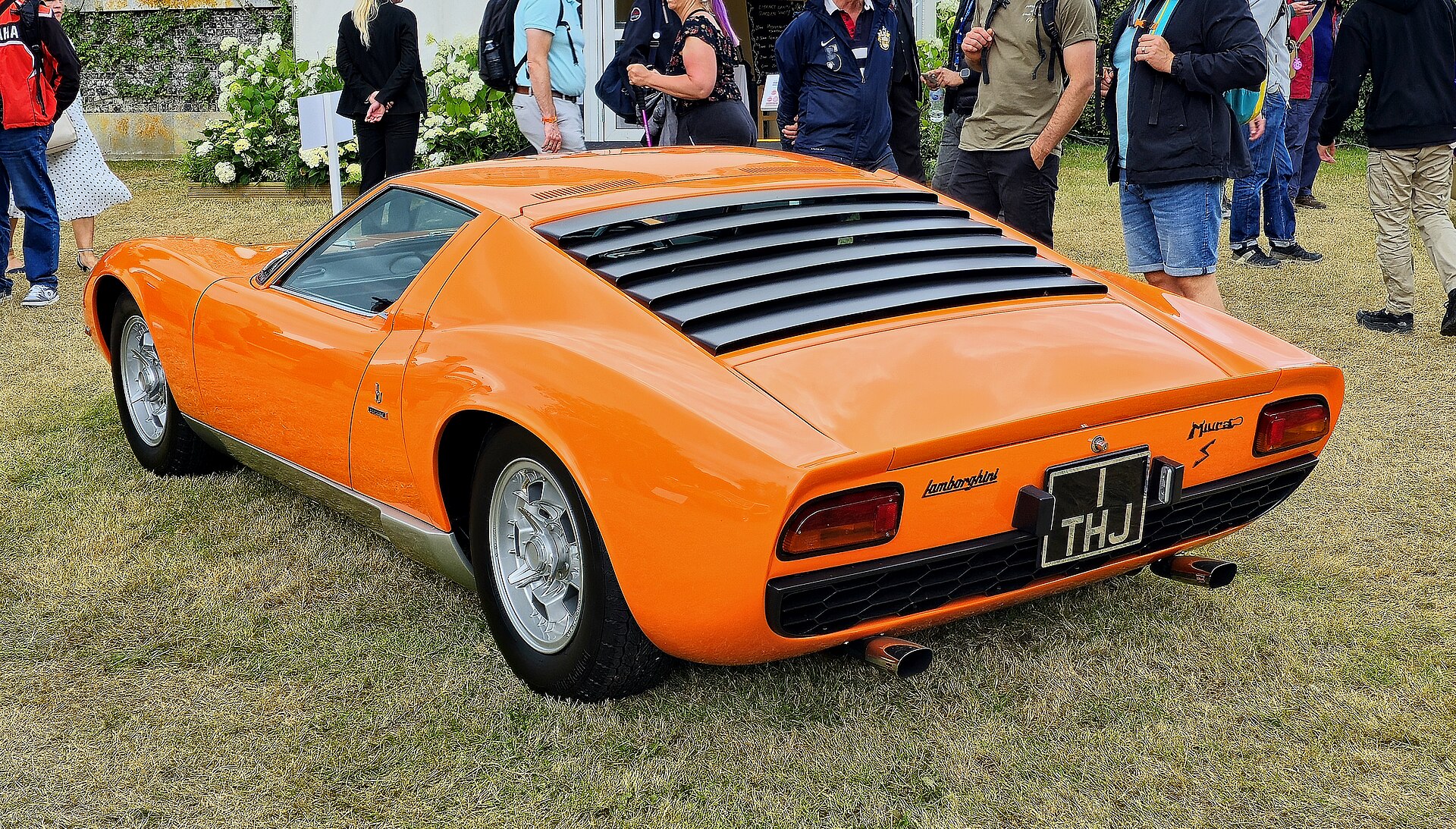
Before the Lamborghini Miura, there were fast cars. After the Miura, there were supercars.
This is not an exaggeration. The Lamborghini Miura, unveiled in 1966, was the first road-legal production car to place its engine in the middle — behind the driver, in front of the rear axle. Every Ferrari, every McLaren, every Pagani, every Bugatti you have ever admired traces its layout directly back to this car.
The Miura didn’t just change Lamborghini. It changed the entire automotive world.
The Origin: Three Young Engineers and a Dream
The story of the Miura begins with a rebellion.
In 1963, Ferruccio Lamborghini founded his car company in Sant’Agata Bolognese. He hired talented engineers including Gian Paolo Dallara, Paolo Stanzani, and Bob Wallace. In 1965, on their own time and without official permission, they began developing a revolutionary chassis — a steel platform with a transversely mounted V12 engine placed in the middle of the car.
This was unheard of for a road car. Mid-engine layouts existed in Formula 1, but nobody had ever put a mid-mounted V12 into a street-legal production car.
Bertone and Marcello Gandini: The Body
Gandini was 25 years old. The Miura would be his first major project. What he drew was unlike anything that existed — low, wide, dramatically curved, with “eyelashes” over the headlights that gave the car an almost human expression.
The completed car was unveiled at the Geneva Motor Show in March 1966. The reaction was shock. Enzo Ferrari reportedly sent people to study the car. He was not pleased by what he saw — the beginning of a rivalry that would define both brands for the next 60 years.
The Engine: V12 Turned Sideways
The 3.9-liter V12 was mounted transversely in the middle of the car. The original P400 produced 350 horsepower — extraordinary for 1966. Top speed was 280 km/h (174 mph), making the Miura the fastest road car in the world at launch.
Three versions: P400 (350hp, 275 units), P400 S (370hp, 338 units), P400 SV (385hp, 150 units — the definitive version). Total production: approximately 764 units.
The Jota: The Wildest Miura
In 1970, Bob Wallace built a one-off variant — 440hp, 700kg lighter than standard. Lamborghini never officially sold the Jota, but wealthy owners demanded “SVJ” conversions. The original Jota was destroyed in a fire in 1972. The SVJ name would later be revived for the Aventador SVJ.
Why the Miura Matters
The Miura proved that a mid-engine layout could produce superior handling in a road car. After it, the entire industry followed. Ferrari launched the mid-engine Dino 246 GT in 1969. Lamborghini’s own Countach replaced the Miura in 1974. Every Ferrari supercar since — the F40, F50, Enzo, LaFerrari, F80 — is mid-engined. Every McLaren. Every Pagani. Every Koenigsegg.
The Miura’s Legacy Today
Today an SV sells for $2.5–3.5 million at auction. From the Miura’s transverse V12 to the Revuelto’s 1,001hp hybrid V12, Lamborghini’s flagship has always carried the spirit of those three young engineers who built something impossible in 1965.
Along the way came the Aventador SVJ, the Veneno, the Sián, and the Huracán Performante — each one pushing Lamborghini’s boundaries further. But it all started here, with the Miura.
Specifications: Lamborghini Miura P400 SV
1971–1973, 150 units (764 total all variants); 3.9L V12, transverse mid-mounted, 385hp at 7,850rpm, 400Nm; 5-speed manual, RWD; kerb weight 1,245kg; 0–100 in ~5.5s, top speed 290 km/h. Original price ~$20,000 (1971). Current value: $2.5–3.5 million+ (SV).
The Miura invented the supercar. But which Lamborghini perfected it — the Countach, the Aventador, or the Revuelto? Tell us in the comments.
Related reads: Aventador SVJ · Revuelto · Huracán Performante · Sián · Veneno · Ferrari vs Lamborghini · Investment Guide · Lamborghini: The Complete History