Aventador SVJ: The Last V12 Legacy of Lamborghini
Introduction — The Last Pure V12 Lamborghini The Aventador SVJ is not just a version of the Aventador. It is the end of something.
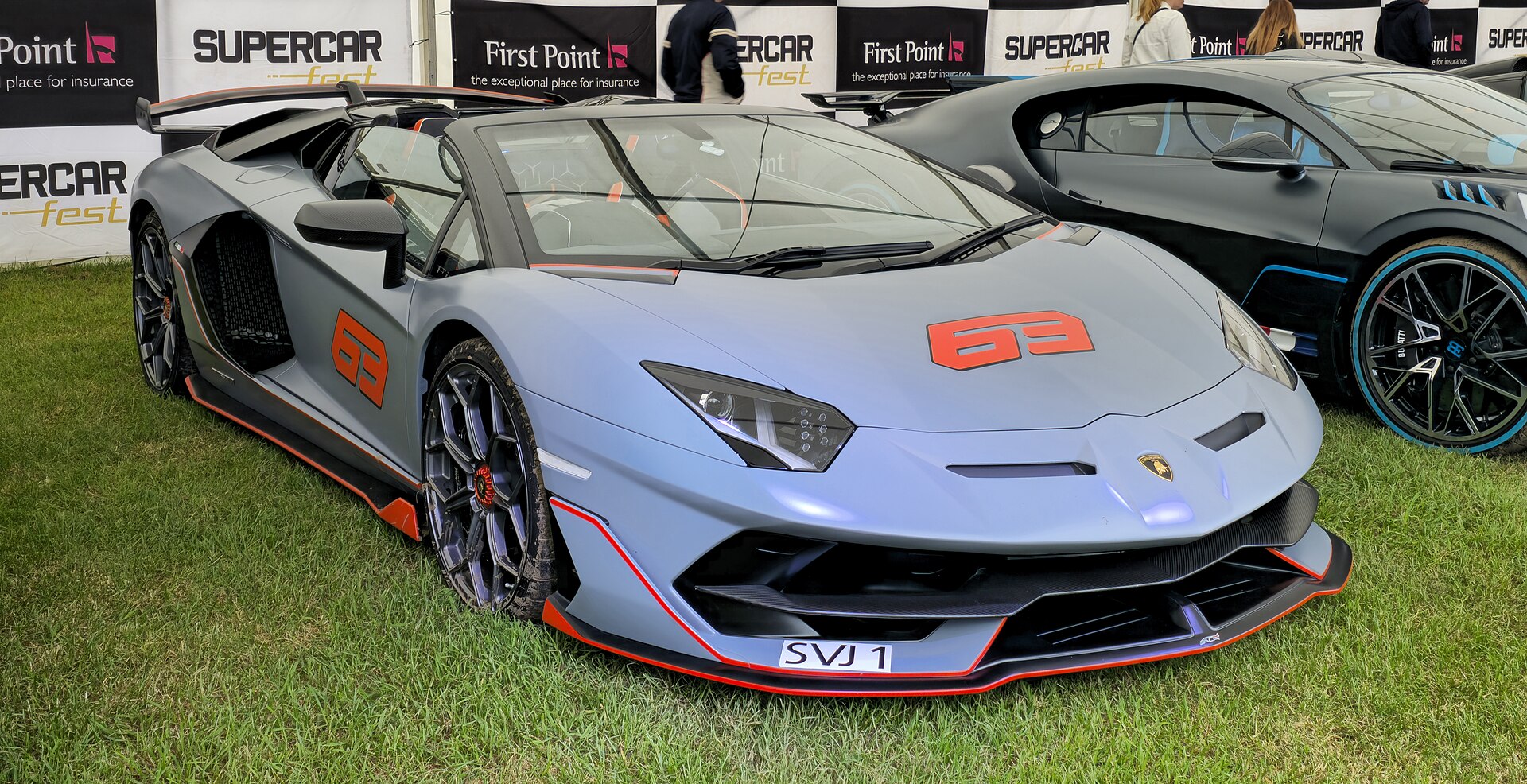
Introduction — The Last Pure V12 Lamborghini
The Aventador SVJ is not just a version of the Aventador. It is the end of something. It is the final and most extreme expression of Lamborghini’s naturally aspirated V12 before electrification, hybrid systems, and software dominance permanently reshape the landscape. It is the moment when Lamborghini took its most brutal creation and taught it control. SVJ does not stand for a trim level. It stands for Super Veloce Jota — Lamborghini’s historical code for the most radical, race-inspired versions of its cars. The SVJ is not a road car that happens to be fast. It is a race philosophy that happens to be legal.
Why the SVJ Exists
The Aventador platform was always excessive. Huge engine. Huge presence. Huge power. But excess alone was no longer enough. Ferrari was becoming hybrid-intelligent. McLaren was becoming aerodynamically surgical. Porsche was becoming computationally precise. The SVJ exists because Lamborghini understood something critical: Raw power without control becomes irrelevant. The SVJ is Lamborghini’s attempt to discipline brutality.
The V12 as a Cultural Monument
The naturally aspirated V12 in the SVJ is not just an engine. It is a monument. It represents:
- Lamborghini’s historical identity
- The refusal to abandon acoustic emotion
- The physicality of combustion before electrification
In an era where engines are being silenced, the SVJ shouts. Not because it wants attention. But because it wants to be remembered.
Aerodynamics as Structural Intelligence
The SVJ uses the second generation of Lamborghini’s ALA system (ALA 2.0). But unlike the Performante, here the system must control far more mass, power, and inertia. ALA 2.0:
- Actively manages airflow front and rear
- Adjusts downforce dynamically
- Reduces drag on straights
- Increases grip under braking and cornering
The car is constantly reshaping itself to remain stable. Without this, the SVJ would be undriveable. With it, it becomes controlled violence.
Managing Mass and Inertia
The Aventador is heavy. Physics does not forgive mass. The SVJ fights inertia through:
- Extensive carbon fiber use
- Lightweight exhaust systems
- Forged wheels
- Aggressive suspension tuning
It does not become light. It becomes responsive. This distinction matters. The SVJ does not feel light. It feels urgent.
Nürburgring as a Declaration
When the SVJ set its Nürburgring lap record, it was not marketing. It was validation. It proved that Lamborghini could compete not just emotionally, but technically. It proved that excess could be engineered.
The Meaning of the SVJ
The SVJ represents the final synthesis of Lamborghini’s analog soul and modern control systems. It is not the future. It is the farewell. It is Lamborghini saying goodbye to the era where engines were the main characters. From now on, systems will be.
Conclusion — A Controlled Apocalypse
The Aventador SVJ is not beautiful. It is not elegant. It is not refined. It is the sound of an era ending. It is brutality given structure. It is chaos given discipline. It is the last great mechanical Lamborghini.
Technical Specifications — Lamborghini Aventador SVJ
Lamborghini Aventador SVJ: manufacturer Lamborghini; production years 2018–2021; production units approx. 900 coupés and 800 roadsters; layout mid-engine, all-wheel drive; engine 6.5-liter naturally aspirated V12 producing 770 hp at 8,500 rpm and 720 Nm of torque; 0–100 km/h in approx. 2.8 s; 0–200 km/h in approx. 8.6 s; top speed over 350 km/h; transmission 7-speed single-clutch automated manual (ISR); chassis carbon fiber monocoque with aluminum subframes; kerb weight approx. 1,525 kg (dry approx. 1,525 kg); suspension pushrod front and rear with adaptive dampers; brakes carbon-ceramic discs with 6-piston front and 4-piston rear calipers; aerodynamics ALA 2.0 active aerodynamic system with dynamic front and rear airflow control.
Related reads: Lamborghini Huracán Performante · Lamborghini Temerario · Lamborghini History