Ferrari F40: The Icon of Raw Supercar Performance
Introduction — When Speed Was Still Mechanical The Ferrari F40 is not just a supercar. It is a moment in history.
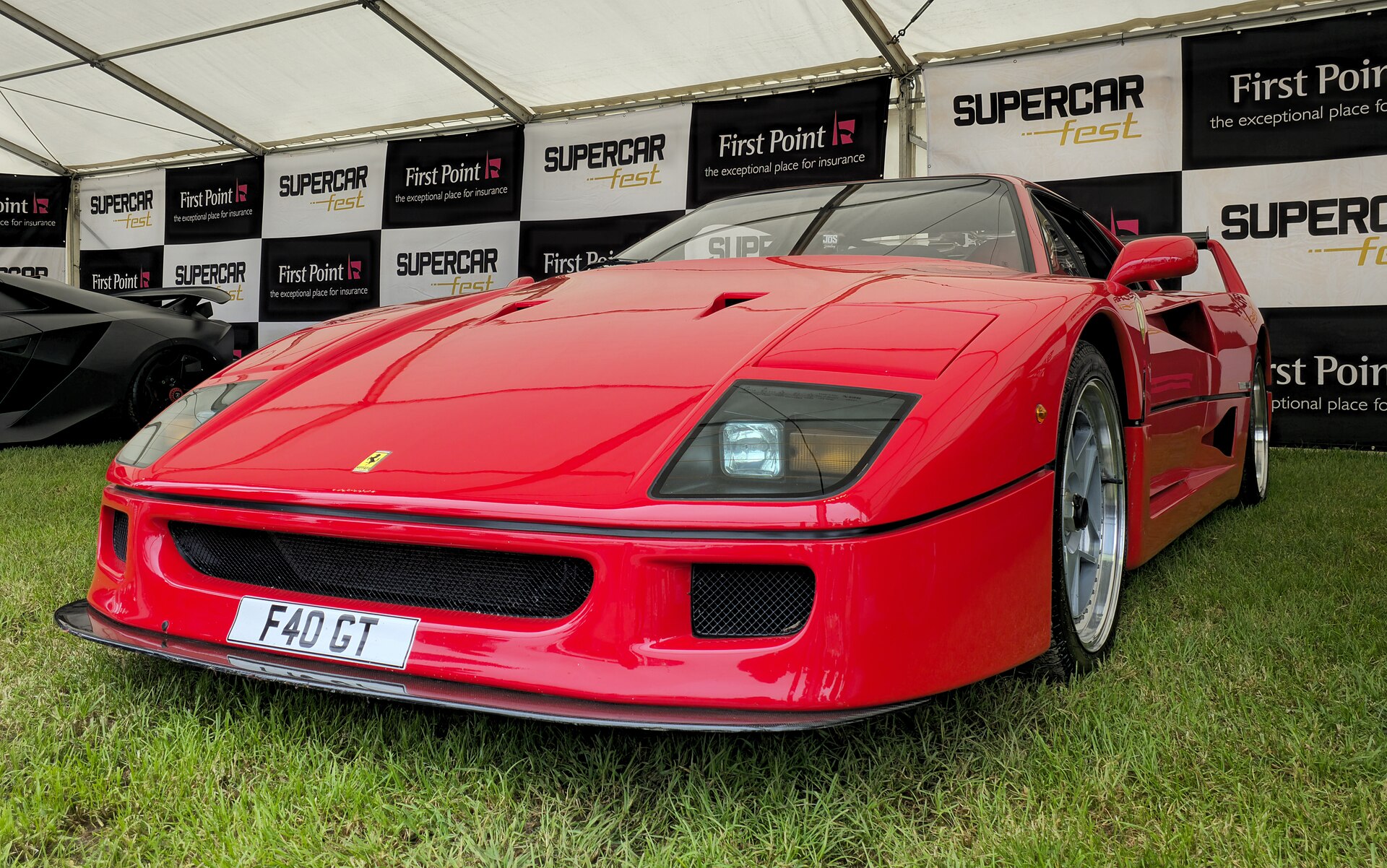
Introduction — When Speed Was Still Mechanical
The Ferrari F40 is not just a supercar. It is a moment in history. Launched in 1987 to celebrate Ferrari’s 40th anniversary, the F40 was the last Ferrari personally approved by Enzo Ferrari himself. It represents the peak of an era when performance was raw, mechanical, and unforgiving — before electronics, software, and digital mediation. The F40 is not refined. It is honest. And that is precisely why it became a legend.
1. A Car Without Filters
The Ferrari F40 was built with a single purpose: to be fast. Not comfortable. Not luxurious. Not forgiving. Just fast. There is:
- No traction control
- No ABS
- No power steering
- No sound insulation
- No driver aids
Only the driver, the machine, and physics. This makes the F40 not just a car, but an experience.
2. Lightweight Before It Was Fashionable
Long before “lightweight” became a marketing term, the F40 was already built around mass reduction. It used:
- Carbon fiber and Kevlar body panels
- A tubular steel frame
- Minimal interior trim
The result: extreme performance with relatively modest power. It did not rely on brute force. It relied on efficiency.
3. Twin-Turbo Brutality
The F40’s 2.9-liter twin-turbo V8 produces around 478 horsepower. By modern standards, that number seems small. But the delivery is violent. Turbo lag, followed by an explosive surge of power, defines the F40’s personality. It does not gently accelerate. It attacks. This makes the F40 demanding — and deeply rewarding.
4. A Cultural Icon
The Ferrari F40 is not just admired by car enthusiasts. It is admired by culture. It appears in:
- Films
- Video games
- Posters
- Art
- Childhood dreams
It became the visual definition of a supercar for an entire generation.
5. Why the F40 Still Matters
In a world of software-driven performance, the F40 reminds us that:
- Speed can be physical
- Control can be earned
- Danger can be meaningful
- Perfection does not require perfectionism
The F40 is imperfect. And that is why it is perfect.
Conclusion — A Mechanical Soul
The Ferrari F40 is not about numbers. It is about feeling. It is the sound of turbines spooling, the vibration through the chassis, the smell of fuel and rubber, and the knowledge that nothing is protecting you except your own skill. It is the last analog supercar. And it will never be repeated.
Ferrari F40 — Technical Specifications
Ferrari F40: manufacturer Ferrari; production years 1987–1992; production units approx. 1,315; layout mid-engine, rear-wheel drive; engine 2.9-liter twin-turbocharged V8 producing 478 hp at 7,000 rpm and 577 Nm of torque, 0–100 km/h in approx. 4.1 s, 0–200 km/h in approx. 11.0 s, top speed 324 km/h; transmission 5-speed manual; chassis tubular steel frame with carbon fiber, Kevlar and aluminum body panels; kerb weight approx. 1,100 kg; suspension double wishbone front and rear; brakes ventilated discs with no ABS; aerodynamics fixed body aero with rear wing producing significant downforce, no active systems.
Related reads: Ferrari F50 · Ferrari History · How LaFerrari, P1 & 918 Spyder Revolutionized…