McLaren W1: The 1,275 HP Hypercar That Carries the Legacy of the F1 and P1
The McLaren W1 is not just a new hypercar. It is the third chapter in the most exclusive and storied lineage in supercar history — a direct successor to the McLaren F1 and McLaren P1, and the most powerful, …
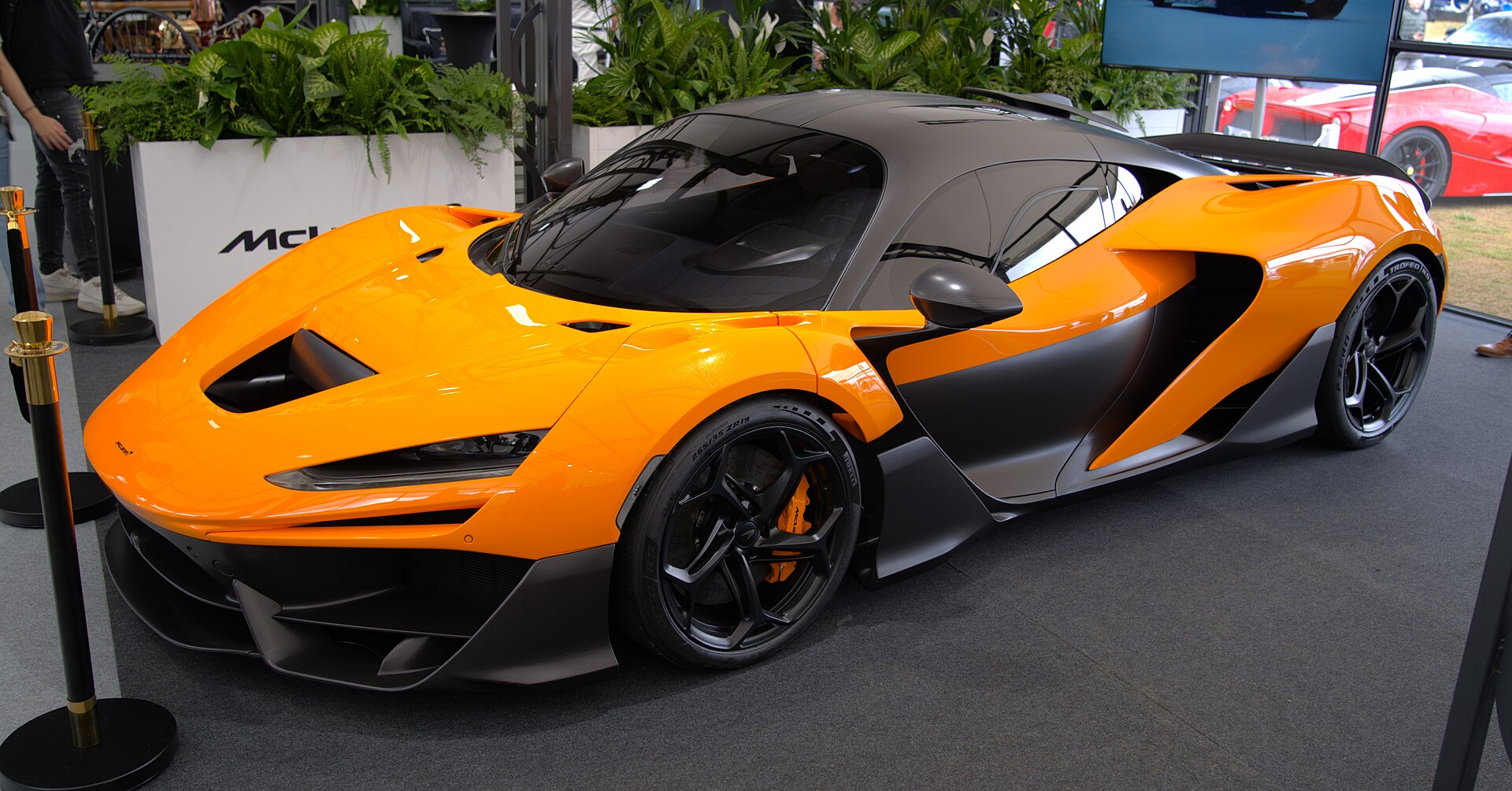
The McLaren W1 is not just a new hypercar. It is the third chapter in the most exclusive and storied lineage in supercar history — a direct successor to the McLaren F1 and McLaren P1, and the most powerful, most aerodynamically advanced road car McLaren has ever built. Unveiled on October 6, 2024, exactly 50 years after McLaren’s first Formula 1 World Championship victory, the W1 carries the weight of an extraordinary legacy — and surpasses it completely.
The Legacy: F1, P1, W1
To understand the McLaren W1, you must first understand what came before it.
In 1992, the McLaren F1 redefined what a road car could be. Designed by the legendary Gordon Murray — who later built the T.50 — it held the title of world’s fastest production car for a decade and is still considered by many to be the greatest supercar ever built. In 2013, the McLaren P1 introduced hybrid technology to the hypercar world, combining a twin-turbo V8 with electric motors for 903 horsepower and a driving experience that stunned the automotive world.
The W1 is the third member of this “1” family — and McLaren’s brief was simple: be worthy of the name. With 1,275 horsepower, ground-effect aerodynamics borrowed directly from Formula 1, and production limited to just 399 units, the W1 more than earns its place in this legendary lineage.
Engine and Powertrain: The Most Powerful McLaren Ever Built
At the heart of the McLaren W1 sits an entirely new engine — the MHP-8, a 4.0-litre twin-turbocharged flat-plane crank V8 developed from scratch with a singular goal: maximum performance per cubic centimetre. Producing 916 horsepower on its own at a screaming 9,200 rpm redline, the MHP-8 is the most powerful engine McLaren has ever produced, delivering an extraordinary output of 230 horsepower per litre.
Complementing the V8 is McLaren’s new E-Module — a radial flux electric motor paired with a 1.4 kWh battery pack that adds a further 342 horsepower. Remarkably, the entire E-Module weighs just 44 pounds — 88 pounds lighter than the hybrid system in the P1. The result of this obsessive weight focus is a total combined output of 1,275 horsepower and 988 lb-ft of torque, delivered exclusively to the rear wheels through an eight-speed dual-clutch transmission with an electronic differential.
That last detail — rear-wheel drive only — sets the W1 apart from every other 1,000 horsepower+ hypercar on sale today. The Ferrari SF90 XX, Lamborghini Revuelto, and Bugatti Tourbillon all use all-wheel drive. McLaren chose rear-wheel drive deliberately, following the philosophy of Formula 1 cars and saving significant weight in the process.
Key Performance Figures
| Specification | Detail |
|---|---|
| Engine | 4.0L Twin-Turbo V8 (MHP-8) + E-Module |
| V8 Power | 916 hp at 9,200 rpm |
| Electric Power | 342 hp |
| Total Power | 1,275 hp (938 kW) |
| Torque | 988 lb-ft (1,340 Nm) |
| Drivetrain | Rear-Wheel Drive |
| Transmission | 8-speed dual-clutch |
| 0–60 mph | 2.7 seconds |
| 0–124 mph | 5.8 seconds |
| 0–186 mph | Under 12.7 seconds |
| Top Speed | 217 mph (350 km/h) |
| Dry Weight | 3,084 lbs (1,399 kg) |
| Power-to-Weight | 911 PS per tonne |
| Production | 399 units (sold out) |
| Base Price | ~$2.1 million USD |
Aerodynamics: Formula 1 Ground Effect on Public Roads
If there is one area where the McLaren W1 truly stands alone among its hypercar rivals, it is aerodynamics. McLaren has spent 350 hours developing the W1 in the wind tunnel — more time than many dedicated racing programs — and the result is the most aerodynamically sophisticated road car the company has ever produced.
The W1 is a ground-effect car, exactly like a modern Formula 1 machine. Large channels beneath the bodywork accelerate airflow from the front to the rear of the car, generating a powerful suction effect that pulls the car down onto the road at speed.
In Race mode, the full aerodynamic system deploys with dramatic effect. The ride height drops by 1.46 inches at the front and 0.7 inches at the rear. The rear wing — McLaren’s Active Long Tail, inspired directly by the 1997 McLaren F1 GTR Le Mans racer — extends 11.8 inches rearward, increasing its working area and generating up to five times more downforce than in standard road configuration.
Total downforce in Race mode reaches an astonishing 2,205 pounds. A DRS button on the steering wheel — just like in Formula 1 — adjusts all wings and vents simultaneously for maximum straight-line acceleration.
The Aerocell: A New Kind of Carbon Fiber Monocoque
The W1’s chassis — called the McLaren Aerocell — represents a fundamental rethinking of how a hypercar monocoque should be designed. Rather than treating aerodynamics and structure as separate engineering problems, McLaren has fused them into a single solution.
The Aerocell integrates the seating position, the ground-effect channels, and the new Anhedral doors — which open upward and inward in a dramatic fashion while simultaneously functioning as aerodynamic devices, directing airflow over the front fenders.
Interior: A Private Jet Meets a Formula 1 Cockpit
The seats are molded directly into the Aerocell monocoque — they do not move. Instead, the pedals, steering wheel, and controls all adjust to fit the driver, exactly as they do in a Formula 1 car.
The steering wheel carries just two buttons: one for Race mode and one for DRS. Most switches are mounted overhead, giving the cockpit a distinct private jet character. The entire interior communicates one message: this car exists to drive, and everything else is secondary.
Price and Exclusivity: 399 Cars, All Already Gone
The McLaren W1 was priced from $2.1 million USD at launch. McLaren limited production to just 399 units. Every single allocation was claimed before the car was even officially revealed.
The McLaren F1 originally sold for $1 million in 1992 and now commands between $15 million and $20 million at auction. The P1 has already tripled in value since its 2013 launch. The W1 will almost certainly follow the same trajectory — it could become one of the most important collector car investments of the decade.
McLaren W1 vs. The Holy Trinity Reborn
The original Holy Trinity of hypercars — McLaren P1, Ferrari LaFerrari, Porsche 918 Spyder — defined an era. A decade later, a new Trinity is forming: the McLaren W1, the Ferrari F80, and the Porsche Mission X.
Of the three, the McLaren W1 is the only one already fully revealed and in production. Its rear-wheel drive configuration, ground-effect aerodynamics, and obsessive focus on driver engagement give it a character entirely its own.
Why the McLaren W1 Matters
The McLaren W1 matters because it proves that the pursuit of pure driver engagement — unfiltered, rear-wheel drive, ground-effect performance — still has a place at the very top of the hypercar world in 2024.
Every other 1,000+ horsepower hypercar uses all-wheel drive for traction and stability. McLaren chose the harder path deliberately, trusting its aerodynamics and its drivers to manage 1,275 horsepower through the rear wheels alone.
The McLaren F1 was the greatest car of the 1990s. The P1 was the greatest hybrid hypercar of the 2010s. The W1 has every ingredient to be the defining hypercar of the 2020s.
Which hypercar would you choose — the McLaren W1, the Ferrari SF90 XX Stradale, the Lamborghini Revuelto, or the Bugatti Tourbillon? Drop your answer in the comments!
Related reads: McLaren P1 · McLaren Senna · McLaren Speedtail · McLaren 600LT · The Holy Trinity · McLaren: The Complete History