McLaren 600LT: The Lightweight Performance Revolution
Introduction — The McLaren Longtail Legacy At the heart of McLaren’s philosophy lies an obsession with one idea: performance through engineering purity. And when McLaren says “pure,” it doesn’t mean simplistic.
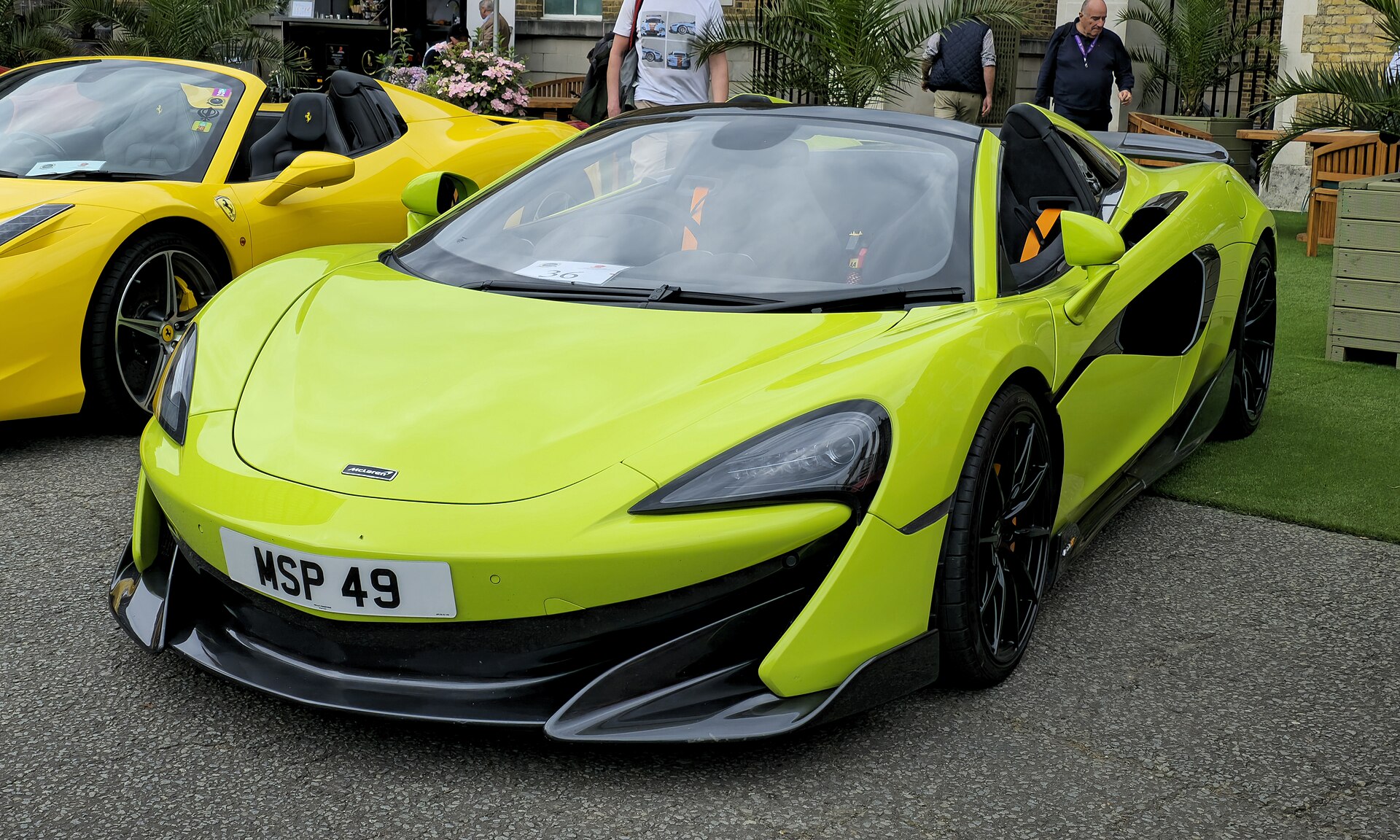
Introduction — The McLaren Longtail Legacy
At the heart of McLaren’s philosophy lies an obsession with one idea: performance through engineering purity. And when McLaren says “pure,” it doesn’t mean simplistic. It means ruthless optimization — every gram considered, every system sharpened, every inefficiency banished. In 2018, McLaren unleashed a machine that distilled this philosophy to its essence: the McLaren 600LT. Part of the “LT” family — Longtail — the 600LT was not just a more powerful version of an existing model. It was a surgical upgrade: lighter, aerodynamically sharper, faster, more engaging. In a world where many supercars pursue headlines with outrageous horsepower figures, the 600LT pursued focus. This is a story of how lightweight engineering became a performance weapon.
The Birth of the Longtail Line
To understand the 600LT, you must first understand the roots of “Longtail.” The name dates back to the McLaren F1 GTR Longtail, a racing car adapted from the legendary F1 road car. Engineers extended the rear bodywork to improve airflow and reduce drag for endurance racing. The result was an even faster, more stable machine on the world’s toughest circuits. Fast forward to McLaren’s modern era, and the Longtail identity was resurrected as a symbolic designation for McLaren’s track-oriented, lightweight road cars. It isn’t an arbitrary badge — it is a commitment:
“Less weight, more speed, deeper engagement.”
600LT was the second modern Longtail after the 675LT, and it carried the baton with ferocity.
The Philosophy: Less Is More
Ferrari can add horsepower. Porsche can refine handling dynamics. Lamborghini can craft spectacle. McLaren, especially in its Longtail variants, chooses reduction. 600LT’s formula boiled down to three pillars: 1. Weight Reduction Remove mass wherever possible. Avoid padding. Avoid compromise. 2. Aerodynamic Efficiency Increase downforce intelligently without excessive drag — and do it with rigor. 3. Driver Engagement More than just numbers on a spec sheet, the 600LT was designed to connect with its pilot. Every element, from carbon-fiber panels to suspension valving, was optimized for track bias — even if the car could be driven on the street.
Engine and Powertrain — The Beating Heart
At the core of the 600LT lies McLaren’s most celebrated engine architecture of its generation: A 3.8-liter twin-turbocharged V8. But this is not just a powerplant — it is an expression of McLaren’s engineering ethos. The 600LT’s engine produces:
- 600 PS (592 hp)
- 620 Nm of torque
- A redline that demands revs but rewards precision
The placement is central: the engine sits behind the driver and ahead of the rear axle, maximizing balance and responsiveness. The power is delivered through a 7-speed dual-clutch transmission, electronically controlled to provide:
- razor-sharp shifts
- minimal interruption of torque delivery
- downshifts that extend with rev matching for drama and stability
Unlike some supercars with overly artificial launch modes, the 600LT’s gearbox feels like an extension of the driver: precise, predictable, and instantaneous.
Less Weight, More Everything
Mass is the enemy of performance. It blurs focus. It wastes energy. It slows response. So McLaren attacked weight with surgical precision:
Structural Weight Savings
- Extensive use of carbon fiber in body panels
- Lightweight front and rear bumpers
- Lightweight seat structures
- Reduced sound deadening
Component Optimization
- Reduced mass in suspension components
- Lightweight wheels
- Optional carbon-ceramic brakes (lighter and more durable)
The result: a weight reduction of over 100 kg compared to the 570S, the 600LT’s closest relative. In performance terms, that isn’t just a number. Less mass means:
- quicker changes of direction
- shorter braking distances
- better throttle response
- more effective aerodynamics
Everything becomes sharper.
Aerodynamics: Downforce Without Drag Penalty
The 600LT’s aero isn’t about show. It’s about physics. McLaren’s engineers used Computational Fluid Dynamics (CFD) and extensive wind-tunnel testing to optimize airflow, which manifests in: Front splitter: Generates additional front axle downforce while reducing lift. Large rear diffuser: Improves underbody airflow extraction, increasing grip at high speed. Rear wing: Fixed, lightweight, and tuned for high downforce without crippling drag. Unlike adjustable active aero systems, the 600LT’s aero is predetermined — but it’s not static. It was calibrated to serve one purpose: track performance. The effect is visible on the Nürburgring and other circuits: the 600LT behaves like a car that pulls you into the corner rather than pushing you away from it.
Chassis and Suspension — Designed for Tracks, Respectful to Roads
The 600LT shares its basic platform with other McLaren Sports Series cars, but here everything is sharpened: Suspension:
- Stiffer springs and recalibrated dampers
- Lower ride height for center-of-gravity advantage
- Reduced compliance for more direct feedback
Steering:
- More immediate ratio
- Harsher on center, but more communicative at speed
The philosophy here is bold:
On road, the 600LT feels committed. On track, it feels alive.
It never dulls its feedback for comfort. It prioritizes connection. This can be demanding for casual drivers — but for enthusiasts, it’s intoxicating.
Interior — Minimalism That Matters
The inside of the 600LT is not about luxury. It’s about focus. Carbon fiber everywhere. Light seats that hug the body. Minimal sound insulation. Controls oriented toward the driver. Infotainment exists, but it’s not the star. This is a cockpit designed for driving, not cruising. The bucket seats are lightweight but supportive. The steering wheel is direct. The pedals are precise. The entire cabin whispers the same message:
You are here to drive.
It’s a rare philosophy in a world where many cars treat performance as an accessory to comfort.
Track Performance — Numbers and Narratives
On paper, the 600LT’s numbers are fierce:
- 0–100 km/h: ~2.9 seconds
- 0–200 km/h: ~8.2 seconds
- Top speed: ~328 km/h
- Power-to-weight: among the best in its class
But the true performance measurement isn’t a stopwatch — it’s how the car behaves when the lap gets bumpy, when tire temps rise, when confidence teeters. 606LT doesn’t just remain composed — it sings. Corners feel like agreements between track and machine. Brakes bite, turn-in is crisp, and the engine revs with an almost analog response — unusual for a turbo engine. Even as electric and hybrid hypercars push new frontiers, the 600LT remains relevant because it defines a pure, human-scaled interpretation of performance:
speed that obeys your inputs, not one that demands them.
The Human Machine
If the Aventador SVJ is a beast and the Porsche 911 GT3 RS is a scalpel, the 600LT is a precision tool. Not intimidatingly brutal. Not politely tamed. But highly resolute. It demands attention — not fear. It rewards precision — not power synergy. It is a car that grows with the driver. This is why the 600LT resonates not just with spec-hunters, but with real drivers.
Ferrari, McLaren, and the Modern Supercar Context
In the era where performance is increasingly defined by hybrid systems and algorithmic control, the 600LT stands as an interpretation of purity. Ferrari’s 488 Pista may be razor-sharp. Lamborghini’s Performante may be ferocious. Porsche’s GT3 RS may be surgical. But the 600LT is lightweight engineering as an identity. It’s about displacement of experience, not just displacement of engine.
Cultural Impact
The 600LT gave voice to a generation that felt alienated by complexity. In a world where every new performance car adds weight in tech, software, and assists, the 600LT embraced:
- Driver feedback
- Mechanical engagement
- Purposeful simplicity
- Track devotion
It showed that high performance doesn’t need to be loud to be significant.
Conclusion — The 600LT Legacy
The McLaren 600LT is not the fastest car ever made. It is not the most powerful. It does not aim to be a hypercar unicorn. What it is is a reminder: That performance is not about how many systems you add — But about how much you remove. How much clarity you bring. How deeply the machine connects with its pilot. In the pantheon of modern performance cars, the 600LT doesn’t roar the loudest. But it speaks the most clearly.
Technical Specifications — McLaren 600LT
McLaren 600LT: manufacturer McLaren Automotive; production years 2018–2020; production units approx. 1,500; layout mid-engine, rear-wheel drive; engine 3.8-liter twin-turbocharged V8 producing 600 PS (592 hp) and 620 Nm of torque; 0–100 km/h in approx. 2.9 s; 0–200 km/h in approx. 8.2 s; top speed 328 km/h; transmission 7-speed dual-clutch automatic; chassis aluminum and carbon composite construction; kerb weight approx. 1,247 kg (dry; varies by spec); suspension double wishbone front and rear with adaptive dampers; brakes carbon-ceramic discs with 6-piston front and 4-piston rear calipers; aerodynamics fixed rear wing, enlarged front splitter, optimized diffuser for high downforce.
Related reads: McLaren MCL-HY GTR · McLaren History · McLaren Senna