McLaren Senna: The Ultimate Performance Road Car
Introduction — A Car With No Apology The McLaren Senna is not designed to be beautiful. It is not designed to be comfortable. It is not designed to be subtle. It is designed to be right. Right in terms of physics.
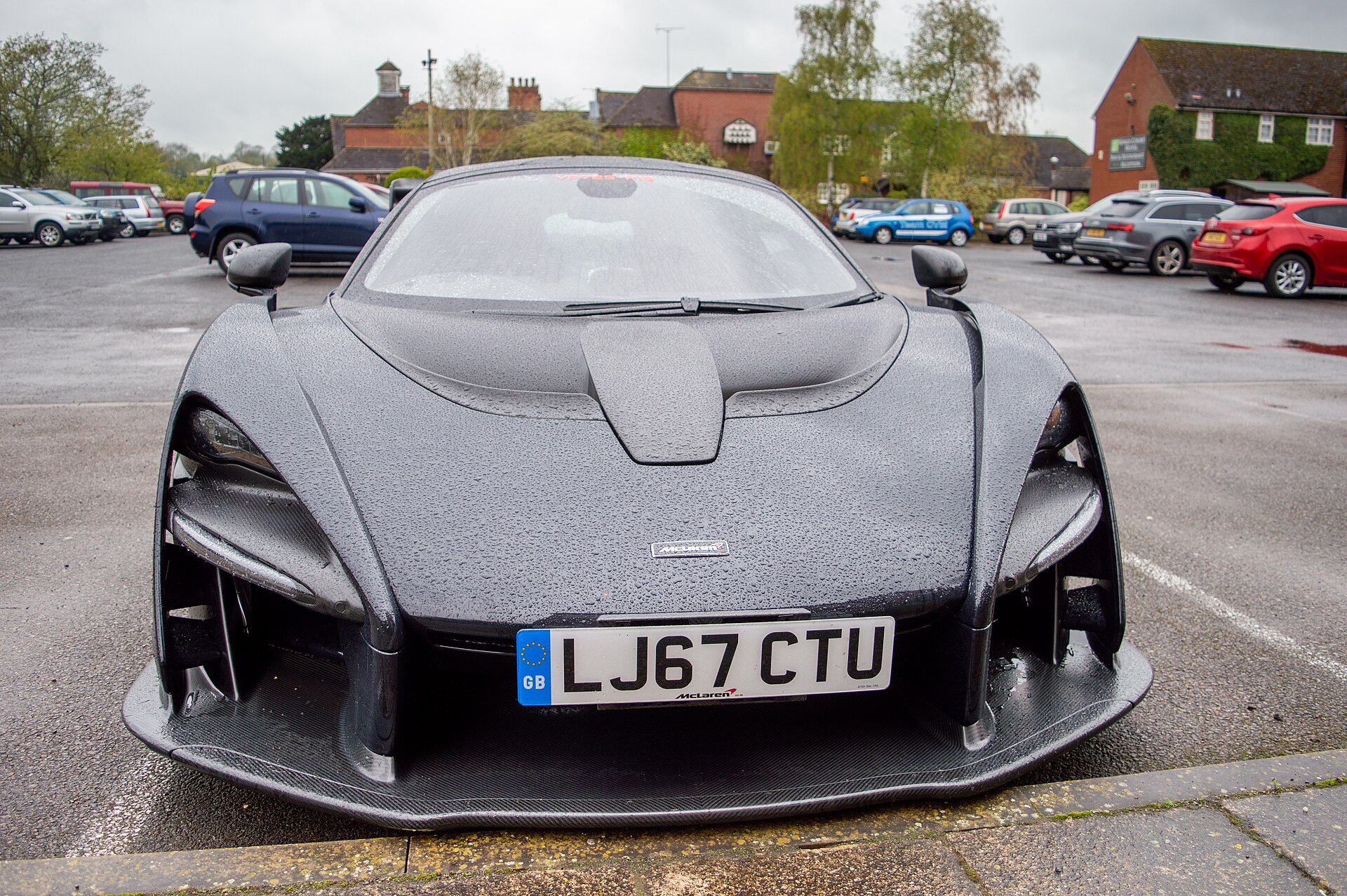
Introduction — A Car With No Apology
The McLaren Senna is not designed to be beautiful. It is not designed to be comfortable. It is not designed to be subtle. It is designed to be right. Right in terms of physics. Right in terms of lap time. Right in terms of driver feedback. Right in terms of purpose. The Senna is not a supercar that happens to be fast on track. It is a race car that happens to be legal on the road. This is the story of the most extreme road car McLaren has ever built — and why it exists.
1. The Philosophy: Absolute Focus
Every McLaren is built around performance, but the Senna goes further. The Senna is built around one single metric:
Maximum track performance, with no compromise.
Everything that does not serve this goal is removed:
- Sound insulation
- Thick carpets
- Heavy trim
- Infotainment complexity
- Comfort-oriented suspension tuning
The Senna is not optimized for ownership. It is optimized for driving.
2. Aerodynamics: More Downforce Than a GT3 Race Car
At 250 km/h, the McLaren Senna produces more downforce than a GT3 race car. This is achieved through:
- A massive active rear wing
- Active front aero elements
- A highly sculpted underbody
- Large front and rear diffusers
- Controlled air extraction from the wheel arches
The car continuously changes its aerodynamic profile depending on:
- Speed
- Braking
- Cornering
- Throttle position
The Senna is not a fixed object. It is an adaptive aerodynamic system.
3. Chassis: Carbon Fiber as a Structural Weapon
The Senna uses McLaren’s lightest and stiffest carbon fiber monocoque ever built for a road car: Monocage III. This structure provides:
- Extreme torsional rigidity
- Very low mass
- Exceptional crash protection
- Direct connection between suspension and driver
Because the structure is so stiff, the suspension can be tuned precisely. This creates:
- Predictable handling
- Precise feedback
- High driver confidence at the limit
The chassis is not just strong. It is communicative.
4. Weight Reduction: Engineering Through Subtraction
The Senna is not light by accident. It is light by aggression. McLaren removed:
- Comfort features
- Thick glass (replaced with thinner polycarbonate)
- Heavy seats (replaced with ultra-light carbon shells)
- Unnecessary trim
- Conventional door mechanisms
Even the windows and door mechanisms are weight-optimized. Every gram saved is performance gained.
5. Powertrain: Enough Power, Perfect Control
The Senna uses a 4.0-liter twin-turbo V8 producing around 800 horsepower. This is not extraordinary by hypercar standards. But it does not need more. Because:
- The car is light
- The aerodynamics generate huge grip
- The power delivery is tuned for control, not shock
The goal is not to overwhelm the tires. The goal is to exploit them fully.
6. The Driver as the Final Component
The Senna does not isolate the driver from physics. It exposes the driver to physics. You feel:
- Load transfer
- Tire grip changes
- Aero loading
- Brake temperature
- Suspension movement
The car does not hide information. It amplifies it. This makes the Senna demanding. But also deeply rewarding.
7. Why the Senna Exists
The Senna exists because McLaren believes that:
- Some cars should be emotional
- Some cars should be beautiful
- Some cars should be luxurious
But at least one car should be honest. The Senna is that car. It exists to show what happens when engineers are allowed to build without compromise. It is not democratic. It is not accessible. It is not polite. It is pure.
Conclusion — Performance Without Excuses
The McLaren Senna is not about speed. It is about clarity. Clarity of purpose. Clarity of design. Clarity of intent. It is a car that does not ask what you want. It asks what physics demands. And then it obeys. That is why the Senna is not just a car. It is a philosophy made of carbon fiber, air, and obsession.
🔧 McLaren Senna — Technical Specifications
Technical Specifications — McLaren Senna
- Manufacturer: McLaren Automotive
- Model: Senna
- Production Years: 2018–2020
- Production Units: 500 coupés + 75 GTR (track only)
- Layout: Mid-engine, rear-wheel drive
Engine
- Type: 4.0 L twin-turbocharged V8 (M840TR)
- Power Output: 800 hp (588 kW) @ 7,250 rpm
- Torque: 800 Nm (590 lb-ft) @ 5,500–6,700 rpm
Performance
- 0–100 km/h: 2.8 s
- 0–200 km/h: 6.8 s
- Top Speed: 335 km/h (208 mph)
Chassis & Body
- Structure: Carbon fiber Monocage III monocoque
- Body: Carbon fiber panels
- Kerb Weight: ~1,198 kg (dry approx. 1,198 kg; kerb varies by spec)
Transmission
- Gearbox: 7-speed dual-clutch automatic
- Drive: Rear-wheel drive
Suspension & Brakes
- Front Suspension: Double wishbone with adaptive dampers
- Rear Suspension: Double wishbone with adaptive dampers
- Brakes: Carbon-ceramic discs, 6-piston front / 4-piston rear
Aerodynamics
- Downforce: Up to ~800 kg at 250 km/h
- Active Aero: Yes (front flaps + active rear wing)
Related reads: McLaren P1 · McLaren 600LT · How LaFerrari, P1 & 918 Spyder Revolutionized…