McLaren P1: The Ultimate Hybrid Hypercar Explained
The McLaren P1 wasn’t built to be “the next fast thing.” It was built to inherit a very specific kind of legacy: the idea that a road car can be engineered like a racing prototype—where every surface, every control system, every g…
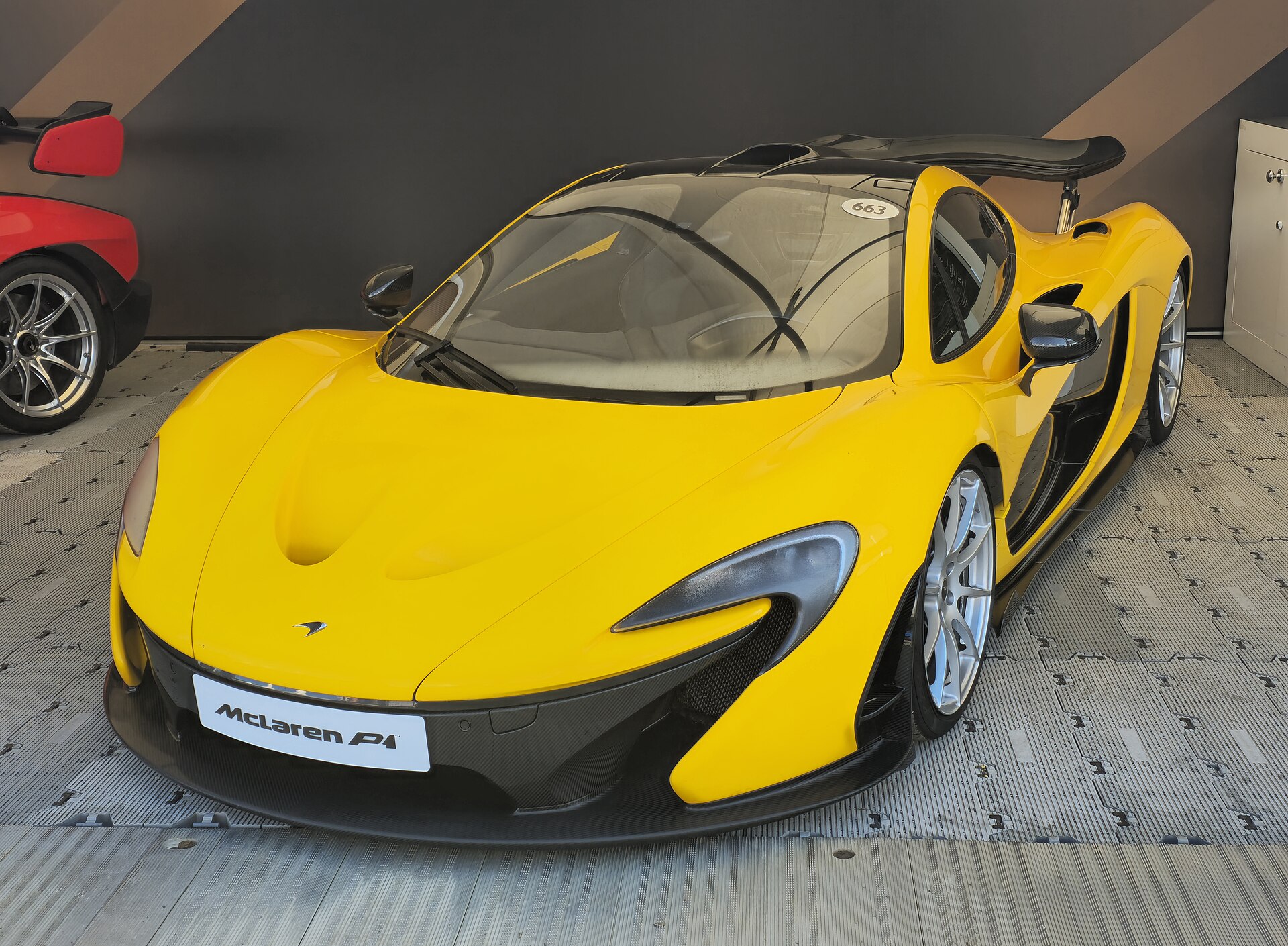
The McLaren P1 wasn’t built to be “the next fast thing.” It was built to inherit a very specific kind of legacy: the idea that a road car can be engineered like a racing prototype—where every surface, every control system, every gram, and every airflow decision has a job to do.
On paper, the P1 is a hybrid hypercar with shocking numbers. In reality, it’s something more interesting: a car that feels like a complete performance system—powertrain, aerodynamics, braking, and structure working together with almost aircraft-like logic.
The mission: create the best driver’s car, not just the fastest headline
McLaren was very clear about the P1’s intent: it wasn’t designed as a comfortable grand tourer or a “limited-run sculpture.” The goal was to build an all-out driver’s car, and McLaren explicitly framed its development challenge around delivering extreme performance credibility—including the North Loop benchmark that dominated hypercar conversations.
That matters, because the P1’s personality comes from how it was optimized:
- Aerodynamics first (downforce and drag management, not just styling)
- Hybrid assist for performance (instant response and torque fill)
- Carbon structure for stiffness and weight control
- Braking and grip designed for repeatability, not one-off hero runs
In other words: the P1 isn’t “a big engine car.” It’s “a systems car.”
Form equals function: the body is “shrink-wrapped” around the engineering
One of the coolest things McLaren says about the P1 is how tightly the bodywork is packaged around the mechanical hard points—essentially minimizing frontal area and shaping airflow to feed the roof intake and active aero.
That design philosophy is why the P1 looks so purposeful from every angle: the cockpit sits centrally, the surfaces are smooth where they need to reduce drag, and the aero devices are integrated as functional tools rather than decorative aggression.
Active aerodynamics: downforce you can actually feel
McLaren states that the P1’s movable front and rear wings can generate a peak of 600 kg (1,323 lbs) of downforce, boosting grip and driver confidence at speed.
This is a key point: the P1’s speed isn’t only about acceleration—it’s about stability and composure as velocity rises. Many cars can make big power; fewer can keep you comfortable using it.
The hybrid powertrain: brutal urgency, but with intelligence
McLaren’s official spec summary lists the essentials:
- Engine: 3.8L V8, twin turbo, plus a single electric motor hybrid system
- Engine capacity: 3,799 cc
- Max power: 916 PS (903 bhp)
- Max torque: 900 Nm (664 lb-ft)
The hybrid system isn’t there to make the P1 feel “smooth.” It’s there to make it feel immediate.
What the electric motor really does in a hypercar like this
Even without diving into deep electrical engineering, you can understand the benefit in three practical effects:
- Instant torque at the moment you ask for it
Turbos are amazing, but they still operate within airflow and rpm realities. Electric torque arrives immediately, making the car feel alive even before the combustion engine is fully in its strongest window. - Torque fill to bridge transitions
The handoff between different load states (corner exit, mid-corner adjustments, quick throttle changes) can be smoothed and strengthened by electric assistance—so the car feels more consistent. - Repeatable performance under heavy use
McLaren describes the P1’s hybrid assistance system as designed to withstand demanding, sustained track-style use.
Wikipedia also describes the P1 as a flagship hybrid hypercar from McLaren Automotive, using a twin-turbo V8 with an electric motor and a 7-speed dual-clutch transmission.
Performance figures: the numbers that made the world pay attention
McLaren’s published performance highlights are still properly outrageous:
- Top speed: 350 km/h (217 mph)
- 0–100 km/h (0–62 mph): 2.8 s
- 0–200 km/h (0–124 mph): 6.8 s
But what separates the P1 from “fast in a straight line” cars is that McLaren also publishes braking performance in the same official spec block:
- 100–0 km/h: 30 m
- 200–0 km/h: 116 m
That’s a subtle flex. McLaren is telling you the P1 isn’t just acceleration—it’s a full-spectrum performance package.
Weight and structure: a hybrid that still fights for lightness
Hybrid hypercars often carry a reputation for complexity and mass, but the P1’s official weight figures show how aggressively it pursued lightweight engineering:
- Dry weight (lightest): 1,395 kg (3,075 lb)
- DIN kerb weight: 1,490 kg (3,285 lb)
Wikipedia also lists a weight around 1,490 kg and describes the carbon-fibre monocoque platform and rear mid-engine, rear-wheel-drive layout.
For enthusiasts, this is part of why the P1 feels so sharp: stiffness and mass control are foundational to steering clarity, stability under braking, and that “keyed in” sensation at speed.
The Nürburgring obsession and what it says about the P1
The hypercar era that birthed the P1 was obsessed with lap times, especially at Nürburgring Nordschleife. McLaren even frames the P1’s mission around building a machine worthy of that kind of benchmark thinking.
Even if you never care about lap times personally, the Nürburgring focus signals something important: the P1 was engineered to be stable and effective through:
- high-speed aero loading
- repeated heavy braking
- traction-demanding exits
- long-duration heat and stress
That’s exactly the difference between “a fast road car” and “a road-legal performance system.”
Rarity: why the P1 became instantly collectible
Rarity isn’t everything, but it amplifies mythology. The P1 was limited to 375 units, and production ran from October 2013 to December 2015.
That scale hits a sweet spot: rare enough to be legend, common enough that the car’s story is widely known and culturally anchored.
What it feels like (why it’s often called the most “alive” of its era)
Drivers often describe the P1’s character as intense but unusually “connected” for a hybrid hypercar. Here’s why that perception makes sense based on the engineering:
- The hybrid assist sharpens response, making throttle inputs feel immediate.
- The aero is designed to build confidence at speed with meaningful downforce capability.
- The weight strategy keeps the car from feeling blunt or oversized for its performance class.
So the P1 doesn’t just feel like a rocket—it can feel like a precise tool.
Quick spec sheet (official highlights)
Powertrain
- 3,799 cc twin-turbo V8 + single electric motor hybrid
- 916 PS (903 bhp), 900 Nm
Performance
- 0–100 km/h: 2.8 s
- 0–200 km/h: 6.8 s
- Top speed: 350 km/h
Braking
- 100–0 km/h: 30 m
- 200–0 km/h: 116 m
Weight
- Dry (lightest): 1,395 kg
- DIN kerb: 1,490 kg
Production
- 375 units; Oct 2013 – Dec 2015
Final take: why the P1 is more than a “Trinity” checkbox
The McLaren P1 remains an icon because it represents a turning point: when hybridization stopped being a future promise and became a present-tense performance weapon. It didn’t just add power—it added control, response, and high-speed confidence through aero and system integration.
It’s one of the clearest examples of what happens when a brand decides to engineer a car as a single coherent idea—rather than a pile of impressive parts.
If you could drive one hypercar for a full weekend—fast highways, mountain roads, and a few track laps—would you choose the P1, the 918, or LaFerrari?
Comment your pick and your reason. And if you want more deep-dive articles like this (engineering breakdowns + clean spec sheets + legacy stories), subscribe to SupercarsPassion and share this post with one friend who’s still debating the best modern icon.
Related reads: McLaren Senna · How LaFerrari, P1 & 918 Spyder Revolutionized… · McLaren MCL-HY