Rimac Nevera: Redefining Electric Hypercars
The Rimac Nevera isn’t “fast for an EV.” It’s fast, full stop—and it achieves that with a mix of absurd power, relentless traction, and software control that feels closer to aerospace than automotive.
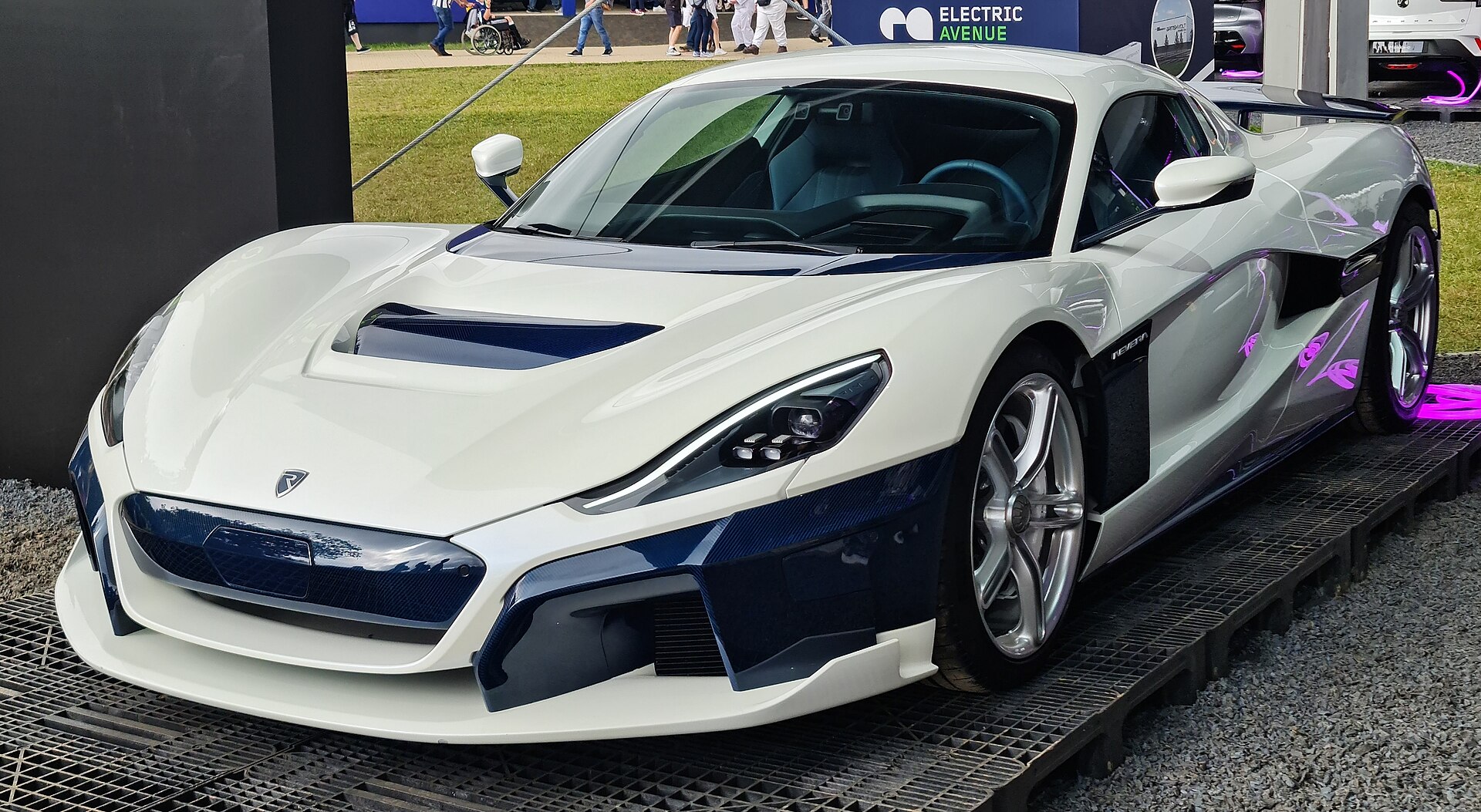
The Rimac Nevera isn’t “fast for an EV.” It’s fast, full stop—and it achieves that with a mix of absurd power, relentless traction, and software control that feels closer to aerospace than automotive. Built by Rimac Automobili, the Nevera set out to prove something simple: electric performance doesn’t have to be a compromise—it can be the new benchmark.
And when you look at the numbers, it’s hard to argue.
The headline specs (the ones that punch you in the chest)
From Rimac’s own published technical figures, the Nevera delivers:
- Power: 1,408 kW / 1,914 hp
- Motor torque: 2,340 Nm
- Wheel torque: 13,430 Nm
- Top speed: 412 km/h (258 mph)
- 0–100 km/h: 1.81 s
- 0–300 km/h: 9.22 s
- ¼ mile (402 m): 8.25 s
- WLTP range: 490 km (Rimac notes this is based on final testing)
Those figures aren’t just “marketing fast.” They’re a statement that the hypercar world has been forced to respond to.
Quad-motor AWD: the real magic isn’t the horsepower—it’s the control
A big number is easy to print. The hard part is deploying it.
The Nevera’s four-motor setup (one per wheel) makes it a different kind of performance machine: instead of relying on mechanical differentials and traction systems that react after slip, it can control torque distribution with extreme precision—effectively shaping how the car rotates, grips, and launches.
That’s why the Nevera is not only brutally quick in a straight line, but also shockingly stable at speed—because the drivetrain is actively managing the car’s attitude, not merely powering it.
Battery and structure: performance starts with the pack
This is not a generic “big battery in the floor.” Rimac Technology describes the Nevera’s battery as a structural pack integrated into the monocoque, designed to store 120 kWh while also contributing to stiffness.
Why that matters:
- High power delivery without constant thermal collapse
- Repeatable performance, not just one hero run
- Stiff platform, which helps both handling and aero consistency
Charging: built to actually be usable
Rimac’s published technical specs list:
- On-board charging: 3-phase 22 kW
- Fast charging: up to 500 kW
For a hypercar, that’s a big deal: it means the Nevera is engineered not just to perform, but to operate in the real world of charging infrastructure.
The record run that made the world pay attention
In May 2023, Rimac announced the Nevera set 23 performance records in a single day, including a 0–400–0 km/h time of 29.93 seconds (Rimac’s wording: “undisputed hypercar champion” for that test).
Even if you don’t obsess over records, 0–400–0 is the kind of test that exposes everything:
- acceleration
- aero
- stability
- braking
- thermal management
Doing it once is impressive. Doing it as part of a record suite is a flex.
Ownership confidence: the warranty move that surprised people
In 2024, Rimac announced a new 8-year battery warranty with unlimited mileage for Nevera buyers (also applied retroactively to cars already delivered).
That matters because it signals something rare in the hypercar segment: confidence in the long-term durability of the technology, not just its peak output.
Production and price: ultra-rare, ultra-expensive, ultra-serious
When Rimac began series production, TechCrunch reported a $2.5 million price point for the Nevera.
It’s the kind of figure that doesn’t need justification—but the engineering behind the car makes it clear what you’re paying for: not “luxury,” but a rolling proof-of-concept that happens to be street legal.
Why the Nevera matters (even if you’re a hardcore ICE purist)
The Nevera forced a new reality:
- EVs can dominate at hypercar level without excuses
- software + torque control is now a core performance advantage
- the old “traction limit” conversation has changed (because torque delivery can be shaped per wheel)
It doesn’t replace the drama of a screaming V12. It replaces the idea that drama is required for greatness.
If you had to spec a Nevera, would you build it as:
- a stealth GT (quiet, elegant, terrifyingly fast), or
- a track-focused monster (aero, aggressive setup, maximum attack)?
Drop your answer in the comments—and tell me which modern hypercar you want next on SupercarsPassion (ICE, hybrid, or electric). If you enjoyed this deep dive, share the post with one friend who still says “EVs can’t be real hypercars.”
Related reads: EV Hypercars · Rimac Hypercars · The Evolution of Supercars