Rimac Hypercars: Revolutionizing Performance with Electricity
Introduction — When Electricity Becomes Dominant For more than a century, internal combustion defined performance. More cylinders meant more prestige. More displacement meant more authority.
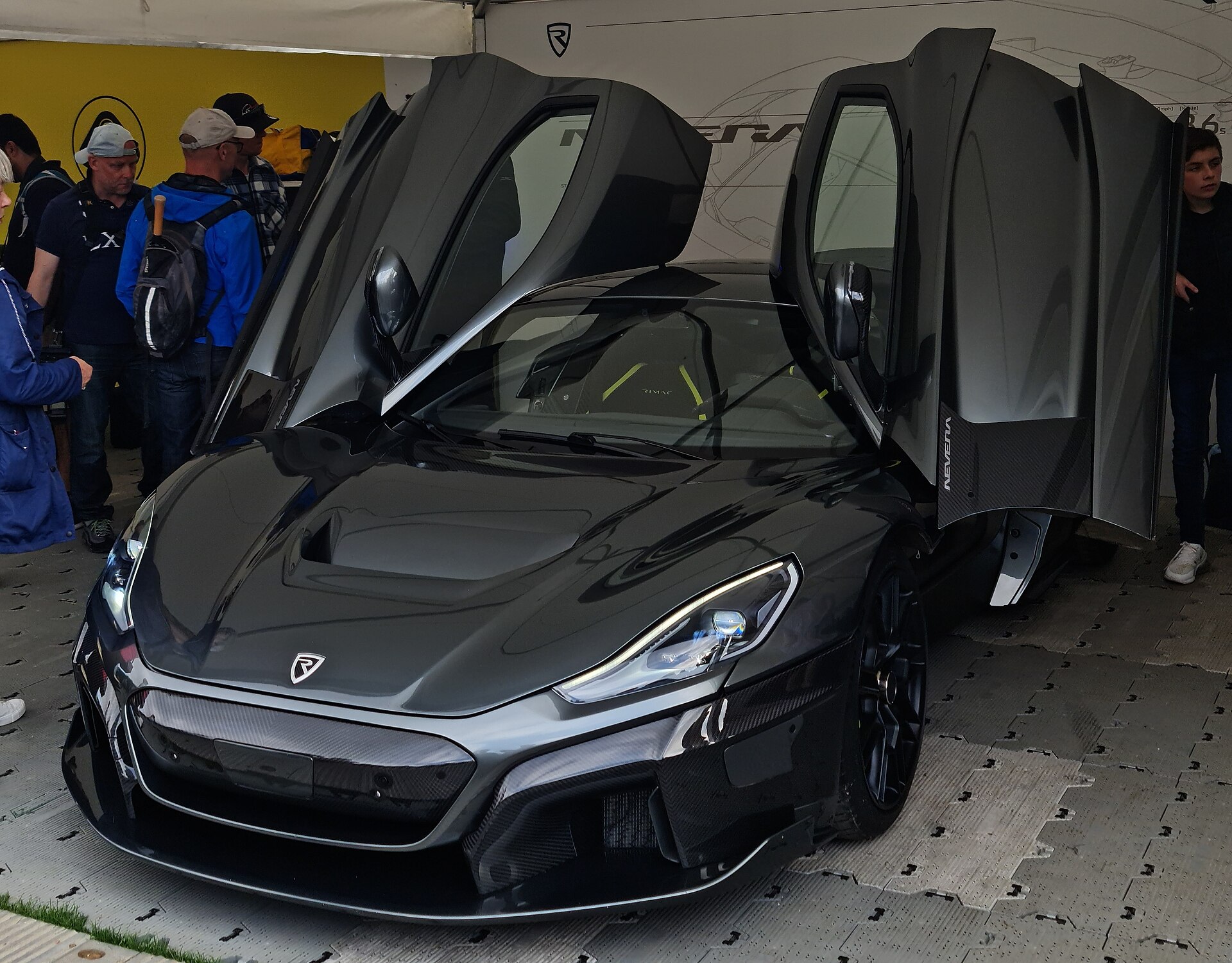
Introduction — When Electricity Becomes Dominant
For more than a century, internal combustion defined performance. More cylinders meant more prestige. More displacement meant more authority. The sound of an engine was the sound of power. Then something changed. Electric hypercars — led by Rimac — did not just match combustion performance. They surpassed it. This is not a transition. It is a replacement. This article explores how Rimac redefined performance and why the era of combustion supremacy is coming to an end.
1. Instant Torque Changes Everything
Electric motors deliver maximum torque instantly. This creates:
- Unmatched acceleration
- Perfect throttle control
- No gear shifts
- No power lag
Where combustion engines build power over time, electric motors deliver it immediately. Physics favors immediacy.
2. Rimac: From Garage Project to Industry Leader
Mate Rimac started as a young engineer modifying an old BMW. Today, Rimac is:
- A hypercar manufacturer
- A battery and drivetrain supplier
- A technology partner for Porsche, Bugatti, and others
Rimac does not just build cars. It builds the future infrastructure of performance.
3. Battery Technology as the New Engine
In electric hypercars, the battery is:
- The fuel tank
- The engine
- The structural element
- The thermal challenge
Rimac’s battery systems:
- Are custom designed
- Use advanced thermal management
- Are integrated into the vehicle structure
Energy storage replaces combustion as the core engineering problem.
4. Software Becomes Performance
Electric hypercars are not mechanical systems. They are cyber-physical systems. Performance is defined by:
- Power distribution algorithms
- Traction control software
- Torque vectoring
- Thermal management code
In electric hypercars, performance is written — not assembled.
5. Why Combustion Is Losing Its Advantage
Combustion engines are:
- Thermodynamically inefficient
- Mechanically complex
- Difficult to scale beyond current limits
- Environmentally constrained
Electric systems:
- Scale easily
- Improve rapidly with software
- Benefit from global battery research
- Integrate with autonomous and AI systems
The future belongs to systems that evolve.
Conclusion — The New Language of Speed
Speed used to be defined by:
- Cylinders
- Sound
- Displacement
It is now defined by:
- Electrons
- Code
- Control
Rimac represents more than a brand. It represents a shift in what performance means. Combustion will survive as nostalgia. Electric will define supremacy.
Rimac Hypercars — Technical Specifications (Concept One, Nevera, Nevera R)
Rimac hypercars: manufacturer Rimac Automobili; layout for all models mid-engine with four electric motors and all-wheel drive; Concept One: production 2013–2016, units approx. 8, four electric motors producing a combined output of approx. 1,224 hp and 1,600 Nm of torque, 0–100 km/h in approx. 2.6 s, top speed 355 km/h, kerb weight approx. 1,850 kg; Nevera: production from 2021, units 150, four electric motors producing 1,914 hp and 2,360 Nm of torque, 0–100 km/h in 1.85 s, 0–200 km/h in 4.3 s, top speed 412 km/h, kerb weight approx. 2,150 kg, battery capacity 120 kWh; Nevera R: production announced 2024, units approx. 40, uprated version with approx. 2,107 hp, improved aerodynamics and weight reduction, 0–100 km/h in approx. 1.7 s, top speed approx. 420 km/h, kerb weight approx. 2,100 kg; chassis for all models carbon fiber monocoque, battery pack integrated structurally, suspension double wishbone with adaptive dampers, brakes carbon-ceramic discs, advanced torque vectoring and software-controlled dynamics.
Related reads: EV Hypercars · Rimac Nevera · The Evolution of Supercars