How Pagani and Koenigsegg Redefined Supercar Excellence
How Horacio Pagani and Christian von Koenigsegg built global benchmarks—and outpaced brands like Lamborghini and McLaren In the supercar world, size is supposed to win.
How Horacio Pagani and Christian von Koenigsegg built global benchmarks—and outpaced brands like Lamborghini and McLaren
In the supercar world, size is supposed to win. Big manufacturers have deeper budgets, massive R&D departments, wind tunnels, global dealer networks, racing programs, and decades of institutional know-how.
And yet, two relatively “small” companies—Pagani and Koenigsegg—did something the giants rarely manage: they turned niche obsession into global authority. Not by copying the big players, but by building a reputation for engineering purity (Koenigsegg) and craft-led perfection (Pagani) so extreme that even the largest brands are forced to respond.
This is the story of how Horacio Pagani and Christian von Koenigsegg became reference points in a market dominated by titans.
1) The common thread: founders who didn’t ask permission
Both companies share a pattern that’s surprisingly rare:
- Founder-led vision at the core of the product
- A willingness to risk everything on a single uncompromising “first car”
- A refusal to dilute the brand just to scale faster
- An obsession with solving problems the mainstream doesn’t bother to solve
And here’s the key: they didn’t beat the giants by trying to be “bigger.” They won by being more intentional.
2) Horacio Pagani: when craftsmanship becomes an engineering advantage
(A) Pagani’s origin story: materials, design, and the “detail religion”
Horacio Pagani’s path is the opposite of the usual corporate ladder. Before Pagani existed as a brand, Horacio was already building a rare skillset: equal parts materials science, aerodynamics, and industrial design—with a very specific belief:
The emotional impact of a car isn’t separate from engineering; it’s a result of engineering.
That’s why Pagani became famous for:
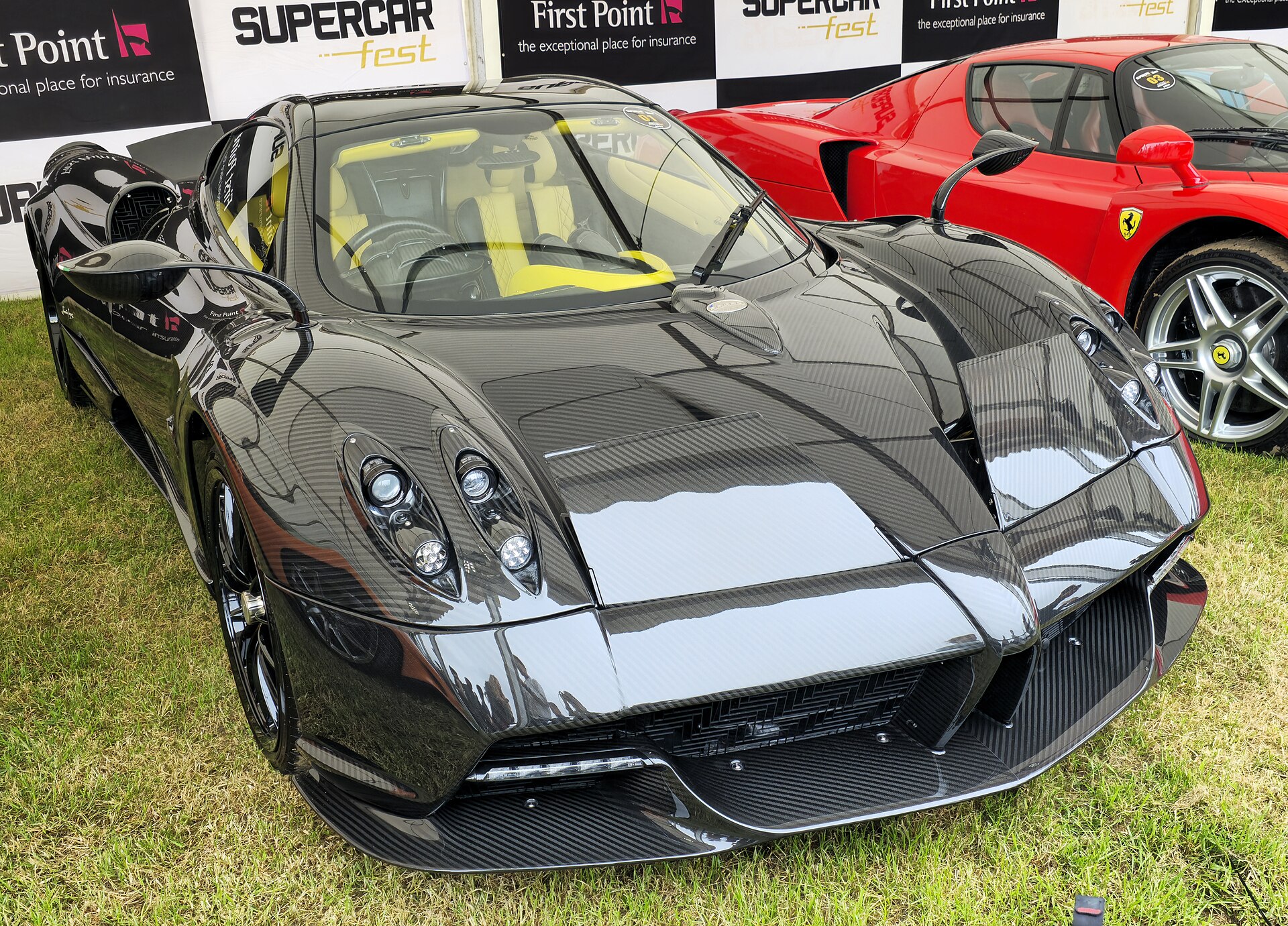
- visible carbon weave quality
- perfectly machined hardware
- interior elements that look like high-end watchmaking
- “museum-grade” finishes even on hidden parts
A mainstream manufacturer can’t easily do that—not because they lack talent, but because they’re built around repeatability at scale, supplier cost constraints, and platform sharing.
Pagani is built around the opposite: the car as a crafted object.
(B) The Zonda effect: a small company that changed the rules
The Zonda didn’t need a racing pedigree to win respect; it needed identity. It was instantly recognizable, it sounded like nothing else, and it felt like something made by people who cared about the last 1%.
That created a new category: the hypercar as bespoke art, not just speed.
(C) Why Pagani “beats” big brands (without outpowering them)
Pagani doesn’t win on raw numbers alone. It wins because:
- Brand scarcity is authentic, not manufactured
They build fewer cars because the process itself demands it. - Emotional clarity
You can look at a Pagani for five seconds and know it’s a Pagani. Many big brands don’t achieve that consistency. - Collector trust
Buyers see it as “future classic” from day one—because craftsmanship ages well. - Customization as a core product
For many big brands, personalization is an add-on. For Pagani, it’s part of the identity.
In short: Pagani wins with a kind of “human intensity” corporate structures rarely allow.
3) Christian von Koenigsegg: the engineer-founder who turned ideas into patents
If Pagani is a sculptor-engineer, Koenigsegg is an inventor-engineer.
Christian von Koenigsegg built his company around a different promise:
We will solve problems the hard way—because the hard way becomes a competitive advantage.
(A) Koenigsegg’s defining strategy: do what others outsource
Most supercar manufacturers rely on a large supplier ecosystem, especially for complex subsystems. Koenigsegg has historically leaned into building and controlling critical tech in-house—not necessarily everything, but enough of the “soul” components to create advantages competitors can’t copy quickly.
This includes innovations around:
- weight reduction
- aero efficiency
- novel transmissions
- advanced combustion concepts
- high-output, durable turbo systems
- extreme cooling and packaging solutions
Even when a big brand could replicate parts of this, it’s often not worth it at their scale. For Koenigsegg, it is worth it—because innovation is the product.
(B) Why Koenigsegg wins against giants
Koenigsegg’s edge isn’t just horsepower. It’s rate of innovation.
- Freedom from platform politics
Lamborghini and McLaren still must consider brand architecture, production volumes, regulations across many markets, and broader corporate strategy. Koenigsegg can build a car around a concept first. - Patents as brand identity
Koenigsegg doesn’t just announce innovation. It often formalizes it. - Software + systems mastery
Modern hypercars aren’t only mechanical. Koenigsegg’s approach treats the car as a multi-domain system: thermals, aero, software, drivetrain, and energy management as one integrated machine. - Proof through performance
When Koenigsegg claims something, it tends to show up in measurable outcomes (records, track performance, engineering validation).
Koenigsegg became the “engineering yardstick”—the company people reference when they ask, “Is this innovation real, or just marketing?”
4) Why the giants couldn’t stop them
(A) Large companies optimize for stability, not obsession
Big manufacturers are brilliant at:
- reliability at scale
- safety compliance worldwide
- production efficiency
- global distribution and service
- consistent profit
But they are structurally less able to pursue:
- ultra-low-volume “irrational” engineering
- exotic manufacturing processes
- constant design evolution per customer
- niche features with limited ROI
Pagani and Koenigsegg thrive exactly in that space.
(B) They sell a story you can touch
Many brands have heritage. Few brands make that heritage feel tactile in every bolt, latch, and surface.
Pagani: you feel the story in the interior metalwork, the carbon weave, the bespoke details.
Koenigsegg: you feel the story in the engineering solutions—the way the car behaves and the tech behind it.
(C) Community and credibility
Both brands build tight communities:
- owners become ambassadors
- the car is rare enough that every delivery feels like an event
- the founders remain visible, making the brand feel human and accountable
That credibility is powerful in a high-net-worth market where trust matters more than advertising.
5) Two brands, two definitions of “best”
Here’s the most interesting part: they didn’t become benchmarks in the same way.
Pagani = “the highest expression of craftsmanship”
If the question is: What is the most beautifully executed car object you can own?
Pagani is often the answer.
Koenigsegg = “the highest expression of innovation”
If the question is: What is the most technically daring road car you can buy?
Koenigsegg is often the answer.
And that’s how they surpassed giants: not by competing on the giants’ terms, but by redefining the terms entirely.
6) What Lamborghini and McLaren learned from them
The influence is subtle but real:
- More emphasis on bespoke materials and interior quality
- More “hypercar as art” thinking
- More public appetite for advanced engineering storytelling
- More willingness to do extreme limited-run specials
The giants still dominate volume and broad brand awareness, but when it comes to ultimate halo credibility, Pagani and Koenigsegg are now part of the conversation at the very top.
If you had to choose one philosophy for your dream garage:
- Pagani: perfection of craft + timeless object value
- Koenigsegg: invention + performance as a laboratory
Which one wins—and why?
Drop your answer in the comments .
Related reads: Pagani Hypercars · Pagani Utopia · Koenigsegg Jesko Absolut