Pagani Hypercars: Where Aerodynamics Meets Art
Introduction — When Art Obeys the Laws of Nature Pagani hypercars are often described as works of art.
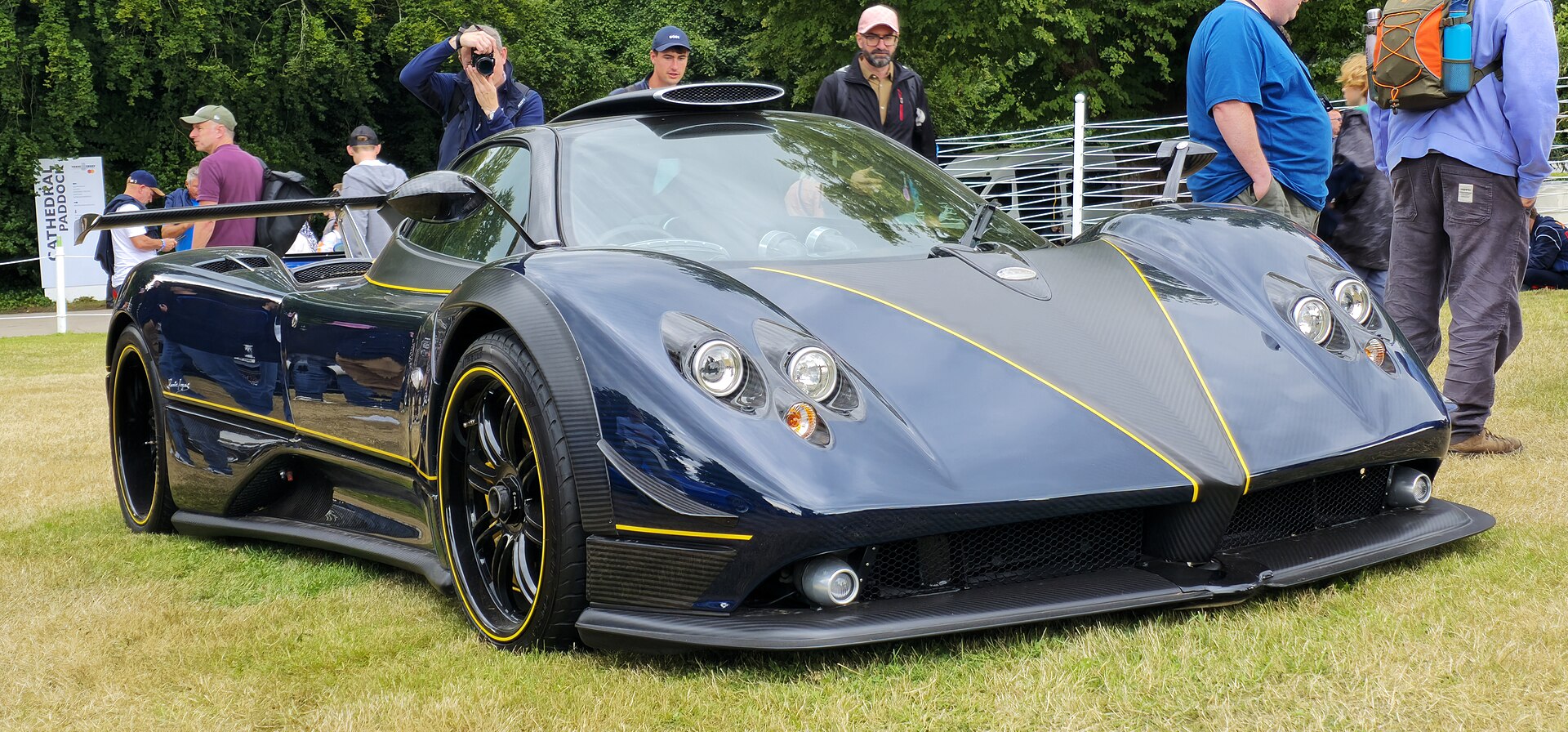
Introduction — When Art Obeys the Laws of Nature
Pagani hypercars are often described as works of art. Their exposed carbon fiber, sculpted surfaces, visible fasteners, and mechanical details give them a handcrafted, almost baroque aesthetic that feels emotional and human. Yet beneath this beauty lies something far more rigid and unforgiving: physics. Every curve on a Pagani is shaped not just by design taste, but by airflow, pressure, turbulence, heat, and stability. Pagani does not decorate aerodynamics — it reveals it. This is the story of how physics becomes beauty.
1. Aerodynamics Is Not About Speed — It’s About Control
At extreme speeds, the primary challenge is not moving forward. It is staying stable. A hypercar must:
- Remain planted at 350+ km/h
- Avoid lift that could make it airborne
- Maintain predictable balance through corners
- Manage airflow for cooling and braking
Aerodynamics is the invisible architecture that makes this possible. Pagani treats airflow as a structural element, not as an afterthought.
2. Surface Sculpting: Letting the Air Draw the Lines
Pagani does not start with a shape and test it in a wind tunnel. They often start with airflow requirements and allow the shape to emerge. This results in:
- Organic curves instead of sharp geometric edges
- Flowing transitions between body panels
- Venturi tunnels that guide air beneath the car
- Channels that direct hot air away from sensitive components
The car looks alive because it is shaped by a dynamic force: moving air.
3. Active Aerodynamics: A Car That Adapts
Modern Paganis use active aerodynamic elements that change depending on speed, braking, and cornering. These include:
- Adaptive rear flaps
- Variable ride height
- Movable aerodynamic surfaces
This allows the car to:
- Reduce drag at high speed
- Increase downforce during braking and cornering
- Balance front and rear grip dynamically
The car behaves less like a fixed object and more like a living system.
4. Cooling as an Aerodynamic Function
Cooling is one of the main drivers of aerodynamic design. Air must:
- Enter efficiently
- Pass through radiators and brakes
- Exit without disturbing stability
Pagani integrates cooling into the form:
- Side intakes are sculpted rather than cut
- Exhaust heat is carefully managed
- Brake cooling ducts are hidden inside the design language
What looks like ornamentation is often thermal engineering in disguise.
5. Carbon Fiber as an Aerodynamic Enabler
Pagani’s advanced carbon fiber composites allow:
- Thin, complex shapes
- Integrated aerodynamic channels
- High stiffness with low weight
Without carbon fiber, these forms would be impossible. Material science enables aerodynamic beauty.
6. Why Pagani Feels Different from Other Hypercars
Many hypercars look aggressive. Pagani hypercars look intentional. They don’t shout speed — they express flow. This is because:
- Their design is not optimized for lap times alone
- It is optimized for harmony between forces
- Engineering and aesthetics are not separate disciplines
Pagani does not hide engineering behind design. It makes engineering visible.
Conclusion — Physics Is the Artist
Pagani cars are not beautiful despite physics. They are beautiful because of it. Every line, vent, curve, and surface exists because air, heat, pressure, and force demanded it. Pagani does not impose art on physics. It allows physics to become art. That is why a Pagani is not just a car. It is a visible equation.
Pagani Hypercars — Technical Specifications (Zonda F, Huayra, Huayra Roadster, Utopia)
Pagani hypercars: manufacturer Pagani Automobili; layout for all models mid-engine, rear-wheel drive; Zonda F: production 2005–2007, units approx. 25, engine 7.3-liter naturally aspirated V12 supplied by AMG producing 602 hp and 760 Nm of torque, 0–100 km/h in approx. 3.6 s, top speed 345 km/h, kerb weight approx. 1,230 kg; Huayra: production 2011–2017, units approx. 100 coupés, engine 6.0-liter twin-turbo V12 supplied by AMG producing 730 hp and 1,000 Nm of torque, 0–100 km/h in approx. 3.0 s, top speed 370 km/h, kerb weight approx. 1,350 kg, active aerodynamics; Huayra Roadster: production 2017–2022, units approx. 100, engine 6.0-liter twin-turbo V12 producing 764 hp and 1,000 Nm of torque, 0–100 km/h in approx. 2.8 s, top speed 370 km/h, kerb weight approx. 1,280 kg, enhanced active aerodynamics; Utopia: production from 2022, units 99 coupés and 130 roadsters, engine 6.0-liter twin-turbo V12 producing 864 hp and 1,100 Nm of torque, available with 7-speed manual or automated manual transmission, 0–100 km/h in approx. 2.7 s, top speed over 350 km/h, kerb weight approx. 1,280 kg; chassis for all models carbon fiber monocoque, body carbon composite, suspension double wishbone with adaptive dampers, brakes carbon-ceramic discs, aerodynamics active systems on Huayra and Utopia.
Related reads: Pagani Utopia · How Pagani and Koenigsegg Redefined Supercar… · Active Aerodynamics