Lotus Evija: The Most Powerful Electric Hypercar
The Lotus Evija is what happens when Lotus Cars takes its classic lightweight DNA and translates it into a new language: electric torque, extreme aero efficiency, and software-controlled traction—all wrapped in a body that looks l…
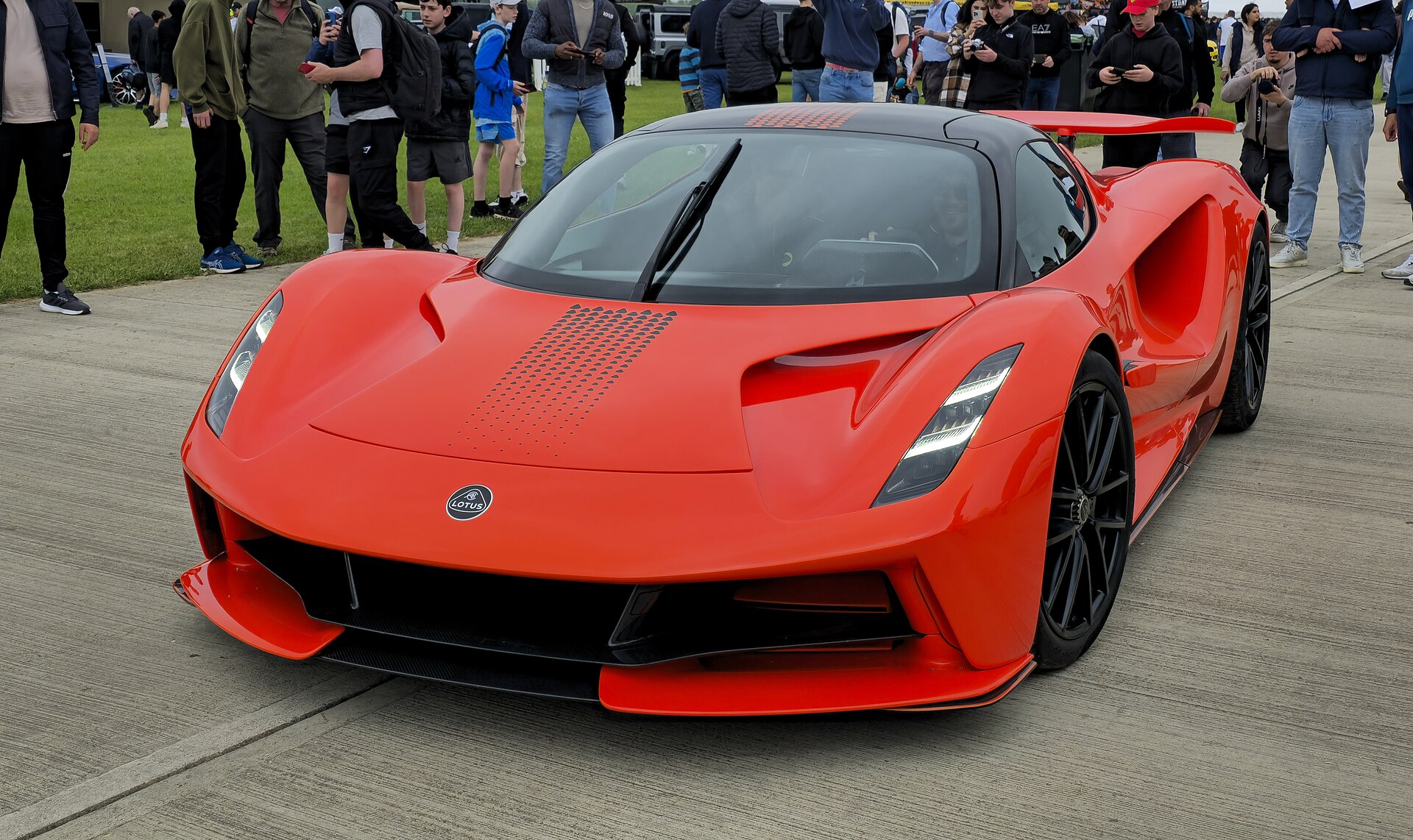
The Lotus Evija is what happens when Lotus Cars takes its classic lightweight DNA and translates it into a new language: electric torque, extreme aero efficiency, and software-controlled traction—all wrapped in a body that looks like it was shaped by wind tunnels rather than stylists.
It’s also intentionally rare: production is limited to 130 cars, a tribute to the project code “Type 130.”
And Lotus doesn’t hide the headline: the Evija is presented as the most powerful production car ever built in its category, with 2011 bhp quoted as a key figure (noting on the same page that several specs are “target figures”).
The concept in one sentence: four motors, one mission
The Evija’s defining idea is simple and brutal: one electric motor per wheel, giving the car the ability to distribute torque with insane precision—so it can launch hard, rotate cleanly, and stay stable as speeds rise.
From Lotus press material snippets, the core numbers are:
- 2,039 PS / 1,500 kW total output (4 × 375 kW)
- 1,704 Nm torque with torque vectoring
- 0–100 km/h (0–62 mph): under 3 seconds
That’s not just about power. It’s about control: independent-wheel torque lets software shape the car’s behavior corner by corner, moment by moment.
Battery, range, and the “90+ kWh” reality
Battery capacity figures for the Evija vary slightly depending on source/version, but the current production-facing spec is typically referenced as 93 kWh, with an official-style combined range figure around 249 miles in UK listings/spec tables.
Lotus also confirms the battery pack is mid-mounted directly behind the two seats, feeding the four e-motors.
That placement matters because it keeps the mass centralized—classic mid-engine thinking, just electrified.
“Carved by Air”: why the Evija’s body is more engineering than styling
Lotus repeatedly frames the Evija as an aero-driven car: airflow is not something to “manage,” it’s something to use.
On its Evija page, Lotus describes:
- a full carbon-fibre body that looks “shrink-wrapped” around the mechanicals,
- dramatic rear Venturi tunnels through each quarter that visually explain the “porosity”/airflow theme.
The point: the Evija is designed to create stability and grip without needing cartoon wings. It’s the modern Lotus ethos—efficiency of shape instead of brute force.
Performance targets that define the car’s reputation
Beyond the under-3-second 0–100 km/h claim, the Evija has long been associated with these target benchmarks:
- 0–300 km/h (0–186 mph): ~9.1 seconds
- Top speed: ~217 mph (limited)
And in spec tables, Top Gear lists the Evija with 93 kWh, ~249 miles combined range, and price points depending on edition/derivative.
Driver environment: track logic, road usability
Lotus positions the cabin as a blend: the “precise functionality of a track car” with road-car comfort.
It also highlights F1/LMP-style steering wheel inspiration and controls that govern functions like DRS deployment (as described on the page).
This matters because many hyper-EVs feel like tech demos. The Evija is clearly trying to feel like a Lotus—driver-first, minimal, focused.
Evija family: special editions and track derivatives
Lotus publicly frames the Evija as a “family,” not a single static model:
- Evija X: a one-off track derivative; Lotus claims a 6:24.047 time around the Nürburgring Nordschleife (and describes it as the fastest ever achieved by a car with a production car platform).
- Evija Fittipaldi: an eight-car run paying homage to Emerson Fittipaldi, presented as a bridge between Lotus past and future.
Even if you never see these cars in the wild, they reinforce the idea that the Evija platform is built to take serious performance development.
Quick technical snapshot
The numbers, in one place:
- Production cap: 130 units
- Power: 1,500 kW / 2,039 PS (4 × 375 kW)
- Torque: 1,704 Nm (with torque vectoring)
- 0–100 km/h: under 3 seconds
- Battery (commonly listed): 93 kWh
- Range (commonly listed): ~249 miles combined
- Layout detail: battery mid-mounted behind seats
Why the Evija matters in 2026
The Evija isn’t trying to “replace” V12 drama. It’s trying to prove a different kind of purity:
- Instant torque + per-wheel control can create a new kind of driver confidence
- Aero-through-design can be just as emotional as engine noise
- Lotus’s identity can survive electrification if the car still prioritizes feedback and lightness ideology (even in an EV world)
It’s less “EV hypercar” and more “Lotus philosophy, rewritten in electrons.”
If you could choose one electric hypercar as your “future classic,” would it be the Evija (aero art + per-wheel torque) or the Nevera-style approach (brute output + absolute traction)?
Comment your pick and your reason. And if you want, tell me the vibe you want for the hero image—London night, desert highway, mountain pass, or studio—and I’ll generate a photorealistic, model-accurate horizontal header image (no text/logos).
Related reads: EV Hypercars · The Evolution of Supercars · Active Aerodynamics