The Evolution of Skyline: From Sedan to Supercar
The Skyline story is one of the most unusual success arcs in automotive history: a car that began as a stylish Japanese premium sedan in the late 1950s, then—through racing pressure, engineering obsession, and a stubborn commitmen…
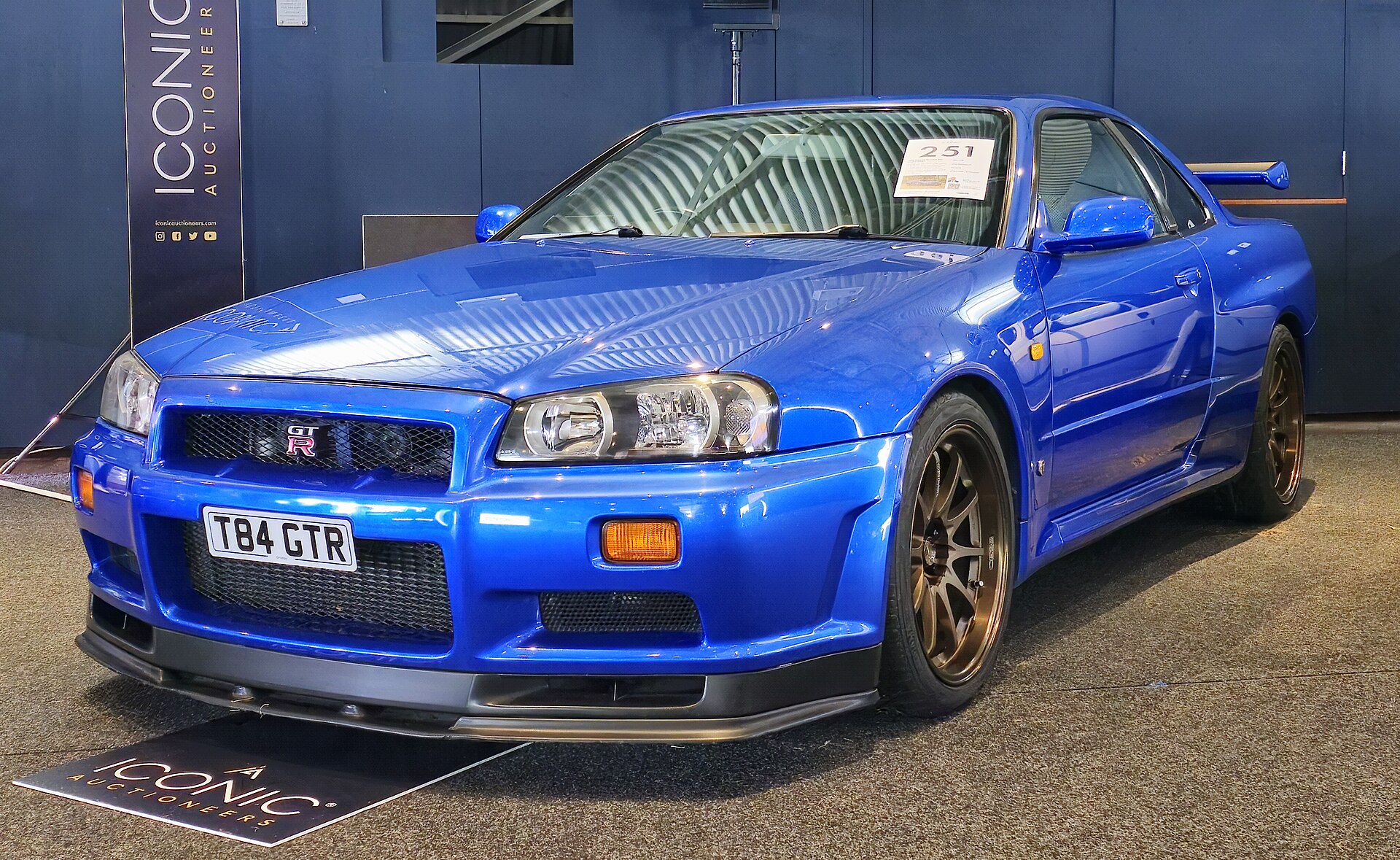
The Skyline story is one of the most unusual success arcs in automotive history: a car that began as a stylish Japanese premium sedan in the late 1950s, then—through racing pressure, engineering obsession, and a stubborn commitment to rear-drive balance—became the platform that birthed one of the most feared performance names ever. The modern Nissan GT-R Nismo is the current “purest expression” of that bloodline, even though the GT-R badge split away from the Skyline name after the R34 era.
This is the long, detailed timeline—from the first Skyline in 1957, through the motorsport-defining GT-R generations, to the final R34, and into the GT-R Nismo today.
1) 1957–1966: the Skyline begins under Prince Motor Company
The first Skyline wasn’t born as a street racer—it was introduced as a premium-feeling Japanese passenger car. Nissan’s own heritage archive notes the Skyline’s first model rolled out in April 1957, developed by Prince as a successor to the Prince Sedan.
A quick (but important) detour: why Prince mattered
Prince wasn’t just “another brand.” Nissan’s heritage history describes Prince’s roots and engineering pedigree (with links to Japan’s aircraft industry heritage), and Prince’s culture of serious engineering is a big part of why the Skyline later became such a technical platform.
1960: the Skyline gets a sports-car “aura”
A fascinating early milestone is the Prince Skyline Sport—a limited luxury sports coupe designed by Italian designer Giovanni Michelotti and shown at the Torino Auto Show in 1960. It’s not a GT-R, but it foreshadows the Skyline’s eventual performance identity: aspirational styling, “specialness,” and a willingness to go beyond conservative sedan thinking.
The merger that changes everything
Nissan’s own Skyline evolution article notes that Prince Skyline production lasted from 1957 until 1966, when Prince and Nissan merged—placing the Skyline under Nissan from that point forward.
2) 1964: the race that “ignited” the legend — Skyline vs Porsche
If you want the single moment where the Skyline story turns from “nice car” into “we should build something to fight European performance,” it’s the 1964 Japanese Grand Prix era.
Nissan’s global news feature “The beginning of the Skyline legend” describes how the Skyline 2000GT (S54) was launched right before the 1964 Japan Grand Prix, with intense round-the-clock development pressure—because Prince wanted to compete at the highest level.
This is also where enthusiasts retell the iconic narrative: a Skyline chasing the much lighter Porsche 904 at Suzuka Circuit—a “we can’t accept losing” moment that helped create the mindset behind later GT-R engineering. (Even when the Skyline didn’t outright beat the 904, the ambition was the spark.)
3) 1969–1973: the first GT-R era — “Hakosuka” and the 50-win myth made real
1969–1972: the first GT-R becomes a touring-car weapon
Nissan’s own heritage pages commemorate the original GT-R’s motorsport dominance, calling out an unprecedented 50 victories in domestic touring car racing (and also noting a record that reached beyond 50 depending on how you count final works-team results).
This is where the nickname “Hakosuka” enters enthusiast culture (boxy “hako” + “suka” from “Skyline”), and where the GT-R becomes less a trim level and more a competitive identity.
1973: “Kenmeri” GT-R — the rare one
The next GT-R generation (often called “Kenmeri”) is legendary for different reasons: it’s extremely rare—only 197 cars built—and its era collides with emissions tightening and the oil crisis. Modern histories commonly cite those pressures as part of why it didn’t get to fully prove itself in major racing the way the Hakosuka did.
Then… the GT-R name disappears for years.
4) The long build-up: Skyline evolves, the GT-R sleeps, Japan’s performance tech accelerates
Between the early GT-R era and 1989, the Skyline continues through multiple generations as a mainstream (often rear-drive) platform, while Japan’s industry rapidly advances in turbocharging, electronics, and chassis control.
This matters because the GT-R didn’t return as a “simple” performance coupe. It returned as a systems car—a car where driveline, sensors, steering logic, and turbo control all work together.
5) 1989–1994: R32 GT-R — the era that created “Godzilla”
If the Hakosuka created the legend, the R32 created the fear.
Group A domination: 29 races, 29 wins
Nissan’s own heritage story states that in the All Japan Touring Car Championship (Group A era), the R32 GT-R won all 29 races held from 1990 to 1993—a record so absolute it reads like fiction.
Nissan USA’s Skyline-to-GT-R evolution page also repeats the “29 in a row” point, reinforcing how central this streak is to the GT-R identity.
Bathurst: the international “monster” moment
The R32’s fame exploded internationally through Australia’s touring-car wars. A Nissan news release looking back on the milestone describes the R32 GT-R as “untouchable” in 1991 and frames that Bathurst victory as a defining moment.
Why it was called “Godzilla”
Modern explainers consistently trace the “Godzilla” nickname back to the Australian press era, noting that Wheels famously used it for the R32 GT-R in 1989—because it looked like a Japanese monster crushing the local field.
Key takeaway: the R32 wasn’t just fast—it was fast in a way that broke the competitive format.
6) 1995–1998: R33 GT-R — bigger, stronger, and aimed at global GT racing
The R33 era is sometimes unfairly reduced to “the heavy one,” but it’s the bridge between touring-car dominance and GT racing ambition.
The Le Mans GT1 experiment: the R33 LM story
By the mid-1990s, the GT-R had already become so dominant in touring cars that the competitive landscape shifted. Nissan explored GT racing, and the R33 was used as the basis for a GT1 Le Mans effort—requiring a homologation road car.
This chapter matters because it shows Nissan trying to push the GT-R concept beyond domestic touring cars into international endurance culture—even if it was a complex, regulation-driven experiment.
7) 1999–2002: R34 GT-R — the final Skyline GT-R and the blueprint for modern obsession
The R34 is the “last of the Skyline GT-Rs,” and it’s the generation where the car becomes a cultural phenomenon: video games, tuning culture, aftermarket wars, and the peak of analog+digital performance balance.
What changed technically
Even broad references highlight R34’s core upgrades: revised chassis, refined turbos, and a cockpit that obsessed over driver information. (The famous center multi-function display becomes part of the identity.)
Motorsport: R34 in the Japan GT Championship
Here’s a concrete competition anchor, straight from Nissan’s heritage collection: the “Pennzoil NISMO GT-R”—a works machine entered in the 1999 Japan GT Championship, driven by Érik Comas and Satoshi Motoyama, scoring points in every round and tied directly to that era’s GT500-level development.
This matters because it shows the R34 wasn’t just a street icon—it was a racing tool in the era that evolved into today’s Super GT ecosystem.
The ultra-rare “endgame” builds: Z-tune as mythology with a VIN
The R34 era also produced legendary Nismo-tuned endpoints. Overviews of the Z-tune concept describe it as a time-attack-driven idea that evolved into a road-oriented super-R34, using experience derived from Nissan’s GT racing programs.
Key takeaway: the R34 is the final Skyline GT-R and the moment where the GT-R becomes global pop culture.
8) After the R34: the Skyline continues — but the GT-R badge becomes its own car
After the R34, Nissan keeps the Skyline name alive (as a sedan line), but the GT-R becomes a separate, standalone supercar project (R35 era). The bloodline remains conceptual—performance engineering DNA, not shared Skyline badging.
9) Nissan GT-R Nismo: the modern “purest expression” of the GT-R idea
Even though it’s no longer a Skyline, the GT-R Nismo is the modern peak of what the Skyline GT-R lineage stood for: track-relevant aero, sharpened response, and obsessive systems tuning.
Nissan’s U.S. product page describes the GT-R Nismo as featuring a 600-horsepower engine, and also notes (importantly) that it is “No Longer In Production” in that market context.
What “Nismo” means historically
NISMO isn’t just a badge—Nissan’s motorsport arm is woven through this whole story: from heritage race programs to GT500 development, to the modern Nismo road cars that borrow calibration, aero philosophy, and durability thinking from competition experience. You can see that continuity in how Nissan itself frames historic race cars in its heritage collection and “short story” archives.
The Skyline/GT-R competitive legacy in one compressed “why it matters” list
- 1964: Skyline ambition ignites via Japan Grand Prix pressure and the desire to fight European sports cars.
- 1969–1972: original GT-R racks up 50+ touring-car wins, creating the legend.
- 1990–1993: R32 dominates Group A with 29 wins from 29 races, becoming the format’s monster.
- 1991 onward: international fame explodes (Bathurst era + “Godzilla”).
- 1999: R34 era proves itself in top-level Japanese GT competition with works Nismo entries.
- Modern era: GT-R Nismo becomes the distilled road/track flagship—even as the model line sunsets in some markets.
Which chapter is the real peak of the bloodline for you?
- The original Hakosuka “50 wins” era
- R32 “Godzilla” Group A domination
- R34 as the final Skyline GT-R + GT500-era icon
- Or the modern Nissan GT-R Nismo as the ultimate evolution of the idea
Related reads: Buying Guide · The Battle of Giants · How Fast & Furious Elevated the Nissan Skyline…