LaFerrari Aperta — The Most Exclusive Ferrari Ever Built
Only 210 Were Made. Here's Why Every Single One Was Spoken For Before the Car Was Even Announced.
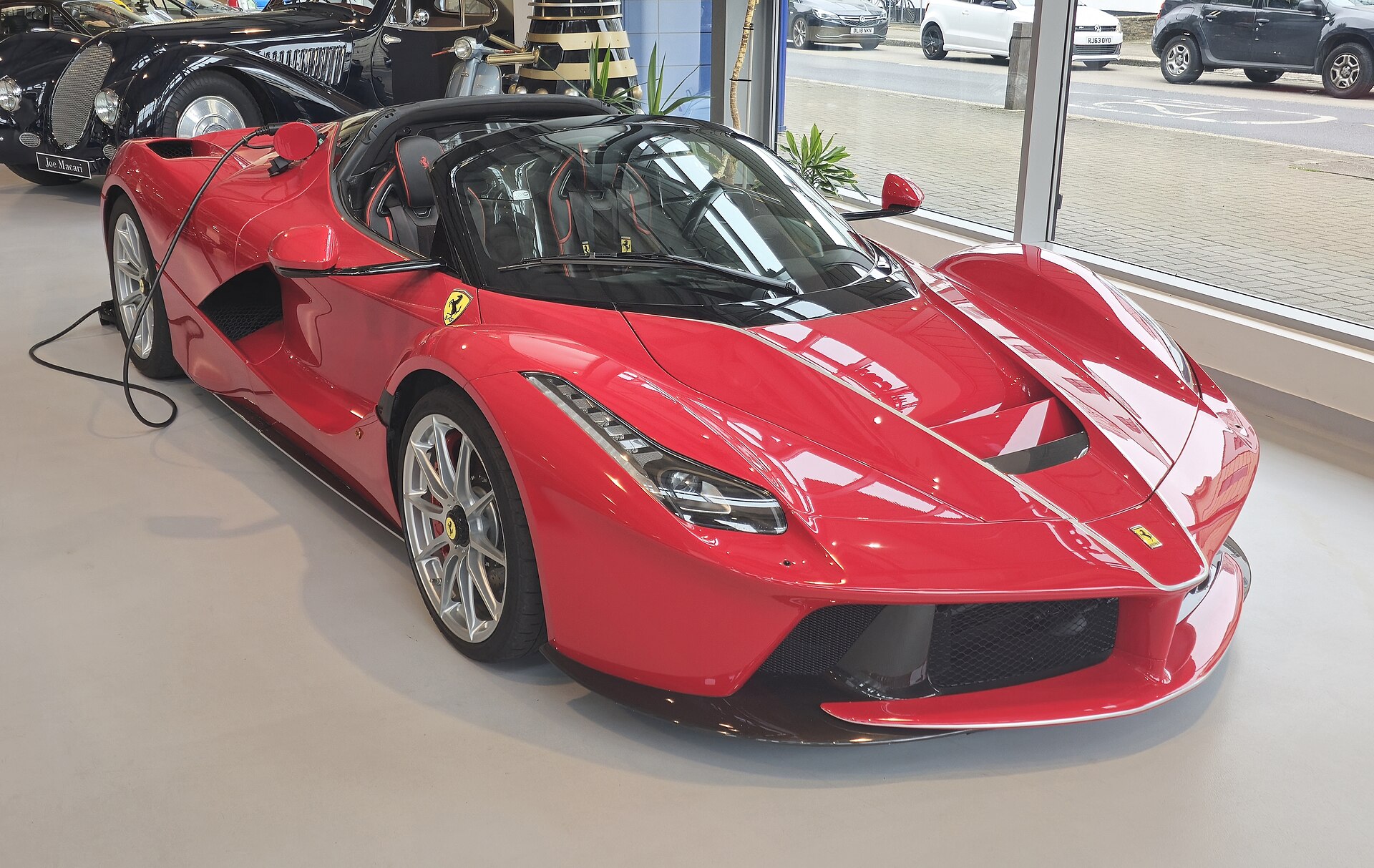
Only 210 Were Made. Here’s Why Every Single One Was Spoken For Before the Car Was Even Announced.
In 2016, Ferrari did something it had never done before: it built an open-top version of its ultimate hypercar and allocated every single example before the car was publicly revealed. No press launch. No waiting list you could join. No chance for anyone outside Ferrari’s inner circle to even raise their hand. The LaFerrari Aperta was not sold. It was bestowed.
What Is the LaFerrari Aperta?
The LaFerrari Aperta is the roadster version of the LaFerrari — Ferrari’s first hybrid hypercar, introduced in 2013 as the spiritual successor to the Enzo. While the standard LaFerrari was already one of the most technically extraordinary road cars ever built, the Aperta took the formula further: same powertrain, same carbon fibre monocoque, same hybrid system — but with the roof removed and the sky as your ceiling. “Aperta” means “open” in Italian. In Ferrari’s language, it also means approximately $2.2 million. At launch.
The Numbers
| Specification | Detail |
|---|---|
| Engine | 6.3L naturally aspirated V12 |
| V12 Power | 789hp at 9,250 RPM |
| Electric Motor Power | 161hp |
| Combined System Power | 950hp |
| Kerb Weight | 1,255 kg |
| Power-to-Weight | 757hp per tonne |
| 0–100 km/h | Under 3.0 seconds |
| 0–200 km/h | Under 7.0 seconds |
| Top Speed | Over 350 km/h |
| Production | 210 units total |
| Launch Price | ~$2.2 million |
| Current Market Value | $4.5 million – $7 million+ |
The Powertrain — A Masterpiece in Two Acts
The LaFerrari Aperta’s powertrain is one of the most sophisticated ever fitted to a road car — and one of the last great arguments for the naturally aspirated V12 in an era of turbocharging and electrification.
The V12
Ferrari’s 6.3L F140 V12 produces 789 horsepower at a screaming 9,250 RPM. It is derived directly from the Formula 1 programme — Ferrari’s F1 engineers contributed directly to its development, bringing knowledge from the most competitive motorsport environment on earth to a car that would never see a race circuit competitively. The engine’s character is unlike anything in modern production. Below 4,000 RPM it is refined, almost civilised. Above 7,000 RPM it transforms entirely — a howling, shrieking mechanical event that builds to a crescendo at the redline that no turbocharged engine can replicate. In a convertible, with the wind and the sky around you, that sound is an experience without parallel in automotive life.
The HY-KERS Hybrid System
Ferrari’s Kinetic Energy Recovery System adds 161 horsepower from an electric motor integrated into the drivetrain. Unlike most hybrid systems, the HY-KERS is not designed for fuel economy — it exists solely to fill the gaps in the V12’s power delivery, providing instant torque precisely where the naturally aspirated engine needs a fraction of a second to respond. The result is a powertrain that feels like a naturally aspirated engine with the response of something supernatural. There is no lag, no wait, no moment where the car hesitates. Power arrives completely and immediately from any speed in any gear. The battery pack is charged through regenerative braking and directly by the V12 when driving conditions allow — the driver never plugs it in.
The Chassis — Carbon Fibre as a Philosophy
The LaFerrari Aperta’s body and chassis are constructed almost entirely from carbon fibre — not as a weight-saving measure applied to an existing platform, but as the fundamental design language of the entire car. The monocoque tub, the body panels, the aerodynamic elements — all carbon. The result is a car that weighs 1,255 kg despite its complexity, its hybrid system, and its convertible roof arrangements. Removing the fixed roof of the standard LaFerrari required Ferrari’s engineers to completely rethink the car’s structural rigidity. Additional carbon fibre reinforcement was integrated into the sills, the A-pillars, and the floor to compensate for the missing roof structure — the Aperta is as stiff as the coupe, despite the open top.
The Roof Options
The Aperta comes with two roof options: A removable carbon fibre hardtop — stored in the front luggage compartment when not in use, providing full weather protection when fitted. A soft top — for when conditions allow but complete open-air driving isn’t practical. Ferrari describes it as an emergency roof rather than a primary hood — designed to get you home in light rain, not for sustained use. The philosophy is clear: the Aperta is meant to be driven without any roof at all. The alternatives exist for practicality, not preference.
The Aerodynamics — Active, Intelligent, Invisible
At speed, the LaFerrari Aperta manages aerodynamic forces through a system of active components that adjust continuously based on speed, cornering forces, and braking loads. The front underbody generates significant downforce through a carefully shaped diffuser. At the rear, an active spoiler deploys automatically — extending under hard acceleration and high-speed cornering, retracting to reduce drag on straights. The driver never manages any of this. The car handles it entirely autonomously, hundreds of times per second. The combined aerodynamic package generates substantial downforce at high speeds without requiring the massive, visually dominant wings found on many hypercars. The Aperta looks clean, almost restrained for a 950hp hypercar. The aerodynamics are working — you simply cannot see them working.
The Interior — Bespoke by Definition
Every LaFerrari Aperta was personalised individually for its owner through Ferrari’s Tailor Made programme. No two cars are identical. Leather grades, stitching colours, carbon fibre finishes, instrument faces, seatbelt colours — every detail was specified by the owner in consultation with Ferrari’s design team. The cockpit is driver-focused to an almost aggressive degree. The steering wheel carries the gear shift paddles, the manettino (driving mode selector), and the engine start button — everything the driver needs without removing their hands from the wheel. Ferrari’s Formula 1 heritage is visible in every ergonomic decision. The seats are fixed to the chassis — the pedals adjust to the driver, not the seat to the driver. This keeps the centre of gravity as low as physically possible and eliminates the weight of seat adjustment mechanisms. Pure motorsport logic applied to a road car.
The 210 — Who Got One?
Ferrari allocated the 210 LaFerrari Apertas exclusively to existing Ferrari clients — specifically, clients with a history of purchasing Ferrari’s most exclusive and limited models. Owning a standard LaFerrari was reportedly a prerequisite for many allocations. Owning an Enzo before that improved your position further. Ferrari’s client relationship team managed the allocation process entirely internally. There was no public announcement of availability, no invitation to apply, and no mechanism for new customers to join the process. If you needed to ask whether you were eligible, you were not eligible. Of the 210 units:
- 209 were allocated to private clients worldwide
- 1 was auctioned at Ferrari’s 70th anniversary celebrations in 2017, with proceeds donated to charity — selling for $10 million
That auction car established the market benchmark. Private sales since have ranged from $4.5 million to over $7 million depending on specification and provenance — more than three times the original purchase price for the fortunate 209 who bought one new.
LaFerrari vs LaFerrari Aperta — What Actually Changes?
| LaFerrari | LaFerrari Aperta | |
|---|---|---|
| Roof | Fixed carbon fibre | Removable hard/soft top |
| Production | 499 units | 210 units |
| Weight | 1,255 kg | 1,255 kg |
| Power | 950hp | 950hp |
| Performance | Identical | Identical |
| Launch price | ~$1.4 million | ~$2.2 million |
| Current value | $2.5–4 million | $4.5–7 million+ |
| Rarity premium | High | Extraordinary |
Performance figures are identical between the two cars — Ferrari’s engineers ensured the structural reinforcement added for the open top did not compromise the driving experience in any measurable way. The difference is purely sensory: the Aperta delivers the same performance with the wind, the sound, and the sky as additional elements.
Why It Matters
The LaFerrari Aperta represents something increasingly rare in the automotive world: a car built without compromise, without apology, and without any consideration for the market beyond the 210 people who were going to receive it. It carries a naturally aspirated V12 at a time when Ferrari has moved almost entirely to turbocharged engines. It uses hybrid technology not to reduce emissions but to make the car faster. It was allocated exclusively to people who had proven their commitment to Ferrari over years and decades of purchase history. It is, in many ways, the last car of its kind — the final expression of a Ferrari philosophy that existed before emissions regulations, electrification mandates, and corporate responsibility reports began to shape what the company could build. Whether you ever see one on the road — and statistically, you almost certainly won’t — the LaFerrari Aperta is proof of what is possible when an engineering team is given permission to build the best possible version of something, regardless of cost or consequence. There will not be another one like it.
Related reads: How LaFerrari, P1 & 918 Spyder Revolutionized… · Ferrari vs Lamborghini · The Enduring Legacy of Ferrari