The Enduring Legacy of Ferrari: A Cultural Icon
Ferrari is not merely a car manufacturer. It is a cultural phenomenon, a national symbol, and the material expression of one man’s obsession with speed, competition, beauty, and discipline.
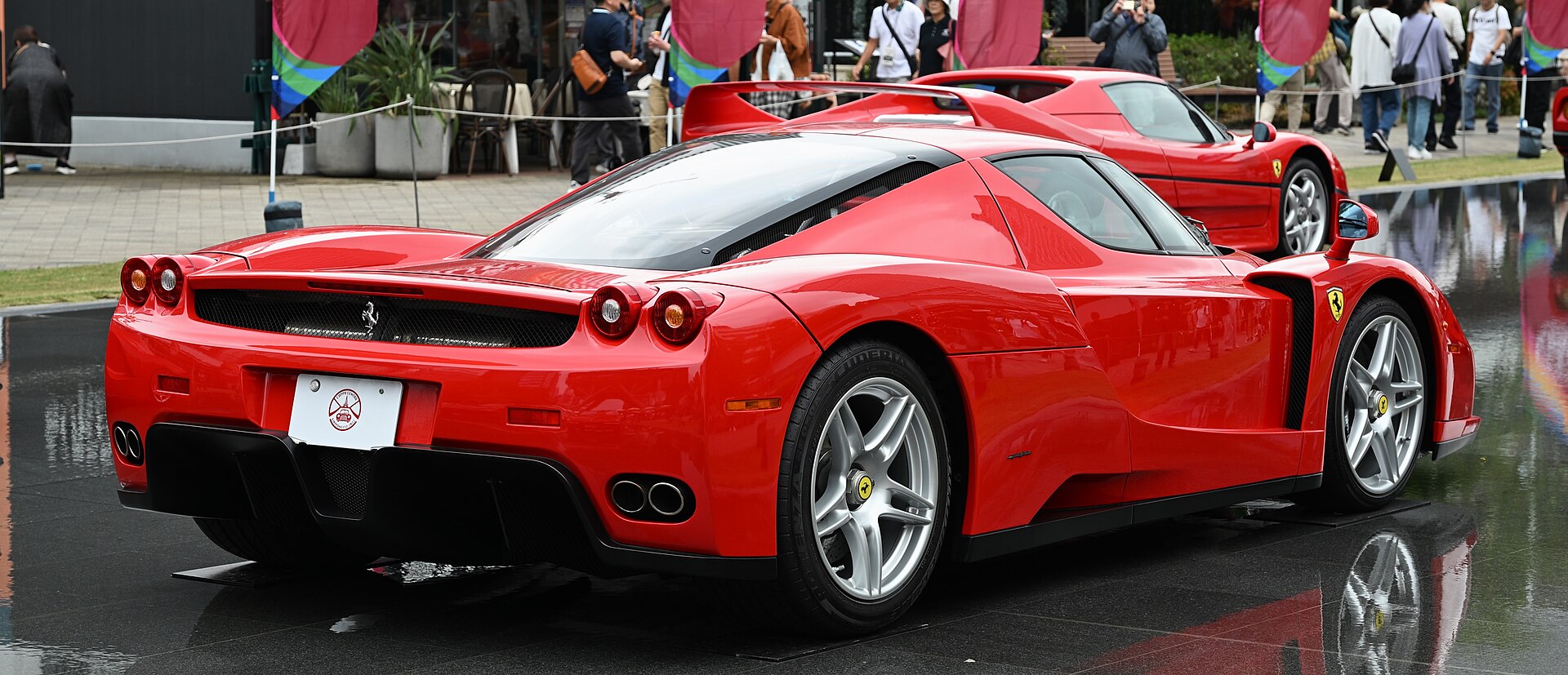
Ferrari is not merely a car manufacturer. It is a cultural phenomenon, a national symbol, and the material expression of one man’s obsession with speed, competition, beauty, and discipline. To understand Ferrari is to understand Enzo Ferrari, because Ferrari is not a company that happens to have been founded by Enzo Ferrari; it is a company that exists as a projection of his personality, his values, his contradictions, and his life story. The history of Ferrari therefore begins long before the first car ever bore the prancing horse on its nose, and it begins not with engineering but with a boy in Modena who became fascinated with racing at a time when automobiles were still rare, dangerous, and almost magical. Enzo Anselmo Ferrari was born in Modena in 1898 into a modest family. His father owned a small mechanical workshop, and Enzo grew up surrounded by metal, tools, and the practical reality of mechanical work. Yet the moment that truly defined him did not occur in a workshop, but at a motor race he attended as a child. Watching racing cars compete at high speed was not just entertaining to him; it created a powerful emotional shock. The drivers were not merely athletes, they were heroes who challenged death itself. From that moment on, Enzo Ferrari did not simply admire racing, he internalized it as a calling. He wanted not only to be close to racing, but to dedicate his entire life to it. The First World War interrupted his youth and shaped him profoundly. His father and brother both died during the war, leaving Enzo emotionally wounded and economically vulnerable. He himself nearly died from illness while serving. These experiences gave him a severe, almost tragic view of life: that existence is harsh, that success is fragile, and that only achievement can give meaning to suffering. This existential seriousness would later become a defining feature of his character and of the company he created. Ferrari would never be playful, ironic, or light-hearted as a brand; it would always be intense, dramatic, proud, and uncompromising. After the war, Enzo struggled to find his place. He was rejected by Fiat, which he never forgave, and instead became a test driver and later a racing driver for smaller companies before joining Alfa Romeo. Although he was not an exceptional driver in terms of victories, he quickly demonstrated a rare talent for organization, leadership, and psychological control. He understood people, especially drivers. He knew how to motivate them, how to pressure them, how to extract performance from them. He also understood that racing was not only a technical activity but a narrative one: it was about creating heroes, legends, symbols, and identities. This understanding would later become essential to Ferrari’s brand. In 1929, he founded Scuderia Ferrari, not as a manufacturer but as a racing team that prepared and ran cars, mainly Alfa Romeos. Scuderia Ferrari became the most important private racing team in Italy and one of the most successful in Europe. Enzo Ferrari became not just a manager but a central figure in the Italian racing world, a man who combined engineering, politics, strategy, and psychology. However, his relationship with Alfa Romeo deteriorated, and by the end of the 1930s he left the company. Contractually forbidden from using his own name in racing for several years, he founded Auto Avio Costruzioni and built a single race car that already contained the genetic code of Ferrari: lightness, elegance, and mechanical purity. The Second World War almost destroyed everything. The factory was bombed, Italy was devastated, and the future seemed uncertain. Yet Enzo Ferrari did not abandon his vision. In 1947, he presented the first car officially bearing his name, the Ferrari 125 S, powered by a small but sophisticated V12 engine. This engine was not chosen for marketing or luxury reasons but because Enzo believed that the V12 configuration was the purest and most noble mechanical expression of performance. This philosophical choice established Ferrari’s identity from the beginning: Ferrari would not simply build fast cars, it would build technically and aesthetically ideal machines, even if they were expensive, difficult, or commercially irrational. In the 1950s, Ferrari became dominant in racing, especially in Formula One, winning championships and international prestige. At the same time, this decade was marked by tragedy. Many Ferrari drivers died in accidents, and Enzo Ferrari accepted these deaths with a stoic fatalism that shocked the public. To him, racing was a battle with death, and death was the price of greatness. This attitude made him both respected and feared. Ferrari’s reputation became ambiguous: on one hand, it symbolized beauty, speed, and Italian genius; on the other, it became associated with danger, sacrifice, and ruthless ambition. Enzo Ferrari himself became a mythic figure. He rarely appeared in public, often wore dark glasses, spoke little, and cultivated an aura of mystery and authority. He was deeply superstitious, emotionally distant, and entirely devoted to his work. Ferrari was not just his company; it was his emotional structure, his refuge, his justification for existence. Even personal tragedies, including the death of his son Alfredo, were absorbed into his work rather than expressed openly. Ferrari became a machine that transformed pain into speed, loss into victory, grief into metal. Over the decades, Ferrari evolved from a racing-focused manufacturer into a global luxury brand. Road cars were initially built only to finance racing, but they gradually became an essential part of Ferrari’s identity. These cars were not designed for mass production. They were rare, expensive, and intentionally exclusive. Ferrari understood that desire increases when access is restricted, and this principle became central to Ferrari’s economic model. Ferrari would never chase volume; it would chase prestige. After Enzo Ferrari’s death in 1988, many feared that Ferrari would lose its soul. Instead, the company managed to institutionalize his values. Under Fiat ownership and later as an independent publicly traded company, Ferrari modernized its processes, expanded its market, and professionalized its management, yet it preserved its core principles: racing as the heart of the brand, engineering excellence as its foundation, and emotional desire as its primary product. Ferrari in the 21st century faces new challenges: environmental regulations, electrification, digitalization, and changing cultural attitudes toward cars. Yet Ferrari continues to position itself not as a transportation provider but as a creator of emotional objects. Even as it introduces hybrid technology and explores electrification, Ferrari insists that its cars must remain visceral, beautiful, and intense. Ferrari does not sell mobility; it sells a dream of power, control, beauty, and transcendence. Today, Ferrari stands as one of the most recognizable brands in the world, but its essence remains rooted in the life of one man who believed that speed was a form of truth, that machines could be expressions of human emotion, and that greatness required sacrifice. Ferrari is not just a company with a history; it is a history that became a company.
As the 1960s began, Ferrari found itself at the center of a rapidly changing world. Europe was rebuilding, the middle class was expanding, and the automobile was becoming not only a tool but a symbol of personal freedom and status. Ferrari, however, refused to become a mass producer. Enzo Ferrari remained convinced that rarity was essential to value, and that racing was the moral and technical justification for everything the company did. The 1960s therefore became a decade of both expansion and conflict, a period in which Ferrari transformed from a small, almost artisanal operation into a global symbol while fighting to preserve its identity against the pressures of modern capitalism. Racing in the 1960s became more professional, more international, and more commercial. Ferrari faced new competitors such as Lotus, BRM, and later McLaren, teams that approached Formula One with scientific rigor and corporate efficiency rather than romantic heroism. Enzo Ferrari, who had built his empire on intuition, authority, and personal control, now had to confront an environment that demanded data, process, and bureaucracy. This tension defined much of Ferrari’s internal life during this period. Engineers such as Mauro Forghieri brought new levels of technical sophistication, while Enzo struggled to maintain control over an organization that was growing beyond the scale of one man’s direct supervision. At the same time, Ferrari’s road cars became increasingly important. Models such as the 250 GTO, the 275 GTB, and later the Daytona were not only engineering achievements but works of art. They represented a uniquely Italian fusion of mechanical excellence and aesthetic sensitivity. These cars were not designed for comfort or practicality; they were designed to embody speed even when standing still. Buyers did not merely purchase transportation, they purchased entry into a myth, a lineage that connected them symbolically to racing heroes and Italian craftsmanship. The late 1960s also brought crisis. Financial pressures increased, and Enzo Ferrari realized that to survive, Ferrari needed external capital. In 1969, Fiat acquired a 50% stake in Ferrari, later increasing it. This was a painful compromise for Enzo, who had always valued independence, but it allowed Ferrari to survive and expand. Importantly, Enzo retained control over the racing team, preserving what he considered the soul of the company. The 1970s were a decade of contradiction. On one hand, Ferrari experienced renewed success in Formula One with drivers such as Niki Lauda and later Jody Scheckter, winning world championships and reasserting dominance. On the other hand, the oil crisis and changing social attitudes toward speed and consumption created a hostile environment for sports car manufacturers. Ferrari responded by refining its image: not as a symbol of excess, but as a symbol of excellence. Ferrari cars became quieter, more refined, and more luxurious, without losing their essential identity. Niki Lauda’s near-fatal accident in 1976 once again exposed the dangerous nature of racing and revived old moral questions about risk and responsibility. Yet Lauda’s return to racing after his injuries reinforced the mythic narrative of courage and sacrifice that Ferrari had embodied since its origins. Ferrari was no longer merely a team; it was a stage on which human drama was enacted at extreme speed. As Enzo Ferrari aged, the company increasingly had to function without his daily presence. He became more withdrawn, more symbolic than operational, yet his authority remained absolute. Even when absent, he shaped decisions through letters, intermediaries, and the psychological weight of his persona. Ferrari was becoming institutional, but Enzo Ferrari remained its spiritual center. When Enzo Ferrari died in 1988, Italy mourned him not merely as an industrialist but as a national figure. His death marked the end of an era not only for Ferrari but for Italian industrial culture itself. The question immediately arose: could Ferrari survive without the man who had given it meaning? The answer unfolded over the following decades. Under Luca di Montezemolo, Ferrari redefined itself as a luxury brand while preserving its racing heritage. Ferrari became a master of controlled desire. Production was carefully limited, waiting lists were cultivated, and every new model was presented not merely as a product but as an event. Ferrari’s profitability increased dramatically, proving that exclusivity could be more valuable than scale. At the same time, Ferrari entered a new golden age in Formula One under Jean Todt, Ross Brawn, and Michael Schumacher. The early 2000s saw unprecedented dominance, with Ferrari winning multiple consecutive championships. Schumacher became not just a driver but an icon, embodying discipline, precision, and relentless ambition. This era transformed Ferrari’s global image from romantic and chaotic to professional and invincible. Yet success created its own problems. As Ferrari became more corporate, more global, and more profitable, critics feared that it was losing the raw emotional intensity that had once defined it. The brand risked becoming polished, predictable, and safe. Ferrari therefore invested heavily in preserving its emotional narrative, emphasizing heritage, craftsmanship, and racing history even as its internal structure became more corporate. In the 2010s and 2020s, Ferrari faced perhaps its greatest existential challenge: the transformation of the automobile itself. Environmental regulations, climate concerns, and technological shifts toward electrification threatened the internal combustion engine, which was not just a technical component of Ferrari but its emotional core. Ferrari responded cautiously, introducing hybrid technology while insisting that performance, sound, and emotional intensity must not be sacrificed. The company framed electrification not as a loss, but as a new frontier of performance. By 2026, Ferrari stands as a paradox. It is simultaneously one of the most traditional and one of the most modern car manufacturers in the world. It produces fewer cars than many niche brands, yet it has one of the strongest brand identities on the planet. It competes in Formula One not primarily for profit but for legitimacy. It sells luxury not as comfort but as emotional intensity. Ferrari’s endurance is not explained by technology alone, nor by marketing alone, nor by racing alone. It is explained by the coherence of its myth. Ferrari has remained faithful to a narrative that began with one man’s obsession: that speed is meaningful, that machines can be beautiful, that discipline can be poetic, and that excellence requires sacrifice. Ferrari therefore is not merely a company that makes cars. It is a cultural institution that tells a story about human ambition, risk, beauty, and mastery. It is a reminder that in a world increasingly defined by efficiency and convenience, there remains a place for things that exist not because they are necessary, but because they are magnificent.
In the years following its dominance in the early 2000s, Ferrari entered a period of adjustment rather than decline. The competitive landscape of Formula One became more complex, with aerodynamic regulations, cost caps, hybrid power units, and political negotiations reshaping the sport. Ferrari, once able to rely on mechanical superiority and organizational discipline alone, now had to operate within a system that limited innovation and rewarded optimization rather than radical engineering. This forced Ferrari to reinvent not only its cars but its internal culture. Engineers had to become more analytical, management more collaborative, and development more data-driven. The romantic era of inspired improvisation was replaced by a regime of simulation, telemetry, and continuous iteration. This transformation was not merely technical but psychological. Ferrari had to reconcile its identity as a passionate, emotional, instinct-driven brand with the reality of modern motorsport as a highly regulated, corporate, and politically negotiated arena. The tension between these two forces became a defining theme of Ferrari’s recent history. Publicly, Ferrari continued to speak the language of passion, heritage, and emotion. Internally, it increasingly spoke the language of efficiency, processes, and optimization. The brand’s survival depended on its ability to operate in both worlds simultaneously. Ferrari’s road car strategy evolved in parallel. As global wealth expanded, particularly in Asia and the Middle East, Ferrari’s customer base became more international and less connected to European automotive culture. Many buyers were no longer former racers, engineers, or enthusiasts but entrepreneurs, investors, and collectors. Ferrari adapted by emphasizing craftsmanship, personalization, and brand experience. Programs such as Tailor Made allowed customers to create highly individualized cars, transforming Ferrari ownership into a form of artistic and social expression. At the same time, Ferrari became increasingly aware that its brand extended beyond cars. Ferrari licensed its name to fashion, watches, theme parks, museums, and digital products. This expansion risked diluting the brand, but it also reinforced Ferrari’s position as a cultural symbol rather than a mere manufacturer. Ferrari carefully curated these extensions to ensure that they reinforced rather than contradicted its core identity. Technologically, Ferrari continued to push boundaries. Hybrid models such as the LaFerrari demonstrated that electrification could enhance rather than diminish performance. Electric motors were not presented as ecological compromises but as sources of instant torque and dynamic control. Ferrari framed the hybrid transition not as an abandonment of tradition but as a continuation of its commitment to technical excellence. This narrative allowed Ferrari to integrate new technology without alienating its traditional audience. Culturally, Ferrari also adapted to a world increasingly sensitive to issues of sustainability, social responsibility, and inclusion. While Ferrari remained an exclusive brand, it softened its image, presenting itself less as an aristocratic symbol and more as an aspirational one. Ferrari began to communicate not only speed and power but also innovation, responsibility, and future orientation. This rhetorical shift allowed Ferrari to remain relevant in a world that was increasingly skeptical of excess. In Formula One, Ferrari’s results fluctuated. Victories became rarer, and championships elusive. Yet Ferrari remained the emotional center of the sport. Its presence guaranteed legitimacy, history, and continuity. Ferrari was not just another team; it was the narrative anchor of Formula One itself. Even when Ferrari lost, it mattered more than when others won. Ferrari’s relationship with its fans also evolved. Digital media transformed Ferrari from a distant, almost sacred institution into a brand that could be followed daily, analyzed in real time, and criticized openly. Ferrari had to learn to exist in a world where authority was no longer absolute and where transparency was demanded. This democratization of attention challenged Ferrari’s traditional aura of mystery, yet it also created a new form of intimacy between the brand and its global audience. As Ferrari approached its eightieth anniversary, it became increasingly aware of its own historicity. Ferrari began to consciously curate its past through museums, heritage programs, and historical restorations. This was not mere nostalgia; it was a strategic effort to anchor Ferrari’s identity in a long narrative of excellence that transcended any single product or era. Ferrari did not want to be perceived as a fashion brand subject to trends, but as a historical institution comparable to a great European house, a cathedral of engineering and desire. Ferrari’s future, however, remains uncertain in ways that are deeper than technical change. The automobile itself is losing its central cultural role, especially among younger generations who value connectivity, sustainability, and experience over ownership and speed. Ferrari therefore faces a philosophical challenge: how to remain meaningful in a world where the values that created it are no longer dominant. Ferrari’s response to this challenge has been to redefine speed not only as physical velocity but as technological and creative intensity. Ferrari increasingly presents itself as a laboratory of innovation, a space where human creativity confronts the limits of physics, materials, and perception. In this sense, Ferrari seeks to preserve the spirit of Enzo Ferrari not by repeating his forms, but by repeating his attitude: relentless pursuit of excellence, refusal of compromise, and emotional commitment to work as a form of identity. Ferrari’s enduring power lies not in any single engine, car, or championship, but in its coherence as a story. It is a story that connects a poor boy in Modena to a global elite, a mechanical workshop to a cultural empire, a race track to a financial market, a private obsession to a public myth. This coherence gives Ferrari its resilience. As long as Ferrari can continue to tell a believable story about why it exists, it will continue to exist meaningfully. Ferrari, therefore, is not finished. It is not a completed narrative but an ongoing one. Each new model, each new race season, each new technological shift becomes another sentence in a story that began more than a century ago with one man’s fascination with speed. The world around Ferrari may change, but Ferrari’s core function remains the same: to turn human ambition into mechanical form, to transform desire into metal, and to make speed visible. That is why Ferrari endures.
Ferrari’s relationship with Italy itself has always been complex and symbolic. Ferrari is Italian in origin, language, aesthetics, and temperament, yet it has never been merely a national company. From its earliest international victories, Ferrari represented Italy not as it was, but as it wished to be seen: elegant rather than poor, technologically advanced rather than backward, heroic rather than defeated. In the decades after World War II, Ferrari became part of Italy’s cultural reconstruction. It showed the world that Italy was not only a land of ruins and tradition, but a place capable of innovation, precision, and excellence. In this sense, Ferrari was not only a company but a form of cultural diplomacy. This symbolic role also created tensions. Ferrari was admired, but it was also accused of elitism, of celebrating luxury in a country that had experienced poverty and inequality. Ferrari responded to this criticism not by apologizing, but by redefining luxury as merit-based rather than inherited. Ferrari presented itself not as a brand of aristocrats, but as a brand of achievers. Owning a Ferrari was framed not as a privilege of birth, but as a reward for success. This narrative allowed Ferrari to remain morally acceptable in a society increasingly sensitive to social inequality. Ferrari’s influence extended beyond automobiles into art, design, fashion, and cinema. Ferrari cars appeared in films, advertisements, video games, and popular culture as symbols of desire, power, and individuality. The red Ferrari became a visual shorthand for success itself. Yet Ferrari carefully controlled this imagery. Ferrari rarely allowed its cars to appear in contexts that could diminish their dignity. Ferrari never wanted to be ironic, comic, or ordinary. It wanted always to be aspirational, elevated, slightly distant. Internally, Ferrari cultivated a culture that mirrored this external image. Working at Ferrari was not merely a job; it was presented as a calling. Employees were encouraged to see themselves as guardians of a legacy, participants in a historical mission. This created loyalty and pride, but it also created pressure and rigidity. Ferrari could be emotionally demanding, resistant to change, and intolerant of failure. This internal culture preserved excellence but sometimes slowed adaptation. Ferrari’s economic model also evolved into something unique. Unlike most manufacturers, Ferrari did not aim to maximize sales but to maximize desirability. Scarcity became a strategic resource. Waiting lists were not a problem to be solved but a tool to be managed. By controlling supply, Ferrari controlled perception. This made Ferrari extraordinarily profitable relative to its size and allowed it to survive economic crises that destroyed less differentiated brands. As Ferrari expanded into new markets, especially China and the Middle East, it encountered cultures with different relationships to luxury, status, and speed. Ferrari had to adapt its communication without diluting its identity. It emphasized universal values such as excellence, craftsmanship, and performance, while allowing local interpretations of status and success. Ferrari became not just Italian but cosmopolitan, a global language of aspiration. Ferrari also began to engage more consciously with science and education. Partnerships with universities, research centers, and technological institutions reinforced Ferrari’s identity as an innovator rather than a nostalgic brand. Ferrari wanted to be perceived not as a relic of mechanical culture, but as a living laboratory of materials, aerodynamics, software, and human-machine interaction. The question of electrification remains Ferrari’s most delicate challenge. Electric vehicles threaten to remove sound, vibration, and mechanical drama from the driving experience — precisely the elements that have defined Ferrari emotionally. Ferrari’s approach has been to treat electrification not as an ecological concession but as an opportunity to reinvent performance. Instant torque, precise control, and new forms of vehicle dynamics can create a different but equally intense form of excitement. Ferrari’s challenge is not technical but narrative: it must convince its audience that the future can be as meaningful as the past. Ferrari’s identity is therefore increasingly psychological rather than mechanical. It is about how Ferrari makes people feel, not only about what Ferrari makes. Ferrari does not sell cars; it sells a self-image. It sells the feeling of mastery, individuality, achievement, and transcendence over limits. This psychological function is what makes Ferrari resilient to technological change. As long as Ferrari can continue to produce desire, it can survive any change in powertrain, materials, or regulation. Ferrari’s greatest strength is also its greatest risk: its coherence. Ferrari’s story is powerful, but it is also rigid. If the world changes too fast, Ferrari risks becoming a beautiful anachronism. Ferrari therefore must change slowly but constantly, preserving its identity while adapting its form. This delicate balance is the art of Ferrari’s survival. Ferrari today stands at the intersection of tradition and transformation. It looks backward to Enzo Ferrari, to racing legends, to mechanical purity. It looks forward to software, electrification, sustainability, and digital experience. It is a bridge between eras, between romantic industrial culture and post-industrial technological culture. Ferrari is not just a company that survived the twentieth century. It is a company attempting to translate the values of the twentieth century into the language of the twenty-first. Whether it will succeed remains to be seen. But the fact that Ferrari continues to be meaningful at all is itself extraordinary. Ferrari’s story, therefore, is not over. It is still being written, not only by engineers and drivers, but by customers, fans, critics, and society itself. Ferrari exists not only in factories and racetracks, but in imagination. It is a shared fiction that people choose to believe in because it gives shape to desire. And as long as humans desire speed, beauty, and excellence, Ferrari will remain a name that means something.
Ferrari’s ability to survive cultural transformation is rooted in its understanding of identity as something deeper than product. Many companies define themselves by what they sell; Ferrari defines itself by why it exists. This difference allows Ferrari to change form without changing essence. Engines can evolve, materials can shift, markets can move, but Ferrari’s internal narrative remains coherent: the pursuit of excellence through speed, beauty, and disciplined ambition. This narrative functions as an internal compass that guides decision-making even when external conditions are unstable. Ferrari’s leadership in recent decades has increasingly focused on managing this narrative consciously. Communication, design, and strategy are aligned not only to satisfy customers but to preserve meaning. Every new model is framed as a continuation of a lineage, not as a break from it. Even radical innovations are presented as faithful to Enzo Ferrari’s original spirit of experimentation and performance. This continuity protects Ferrari from the perception of betrayal, which is often more damaging than failure. Ferrari’s employees are not treated merely as workers but as custodians of a tradition. This creates a quasi-ritualistic corporate culture in which craftsmanship, precision, and attention to detail are moral values rather than economic ones. Errors are not only technical problems but moral failures. This culture can be demanding and exhausting, but it also produces extraordinary commitment and pride. Ferrari does not merely employ people; it initiates them. Ferrari’s customers, similarly, are not simply buyers but participants in a story. Buying a Ferrari is not framed as consumption but as accession. Customers are invited into a community defined by shared values of excellence and achievement. Events, museums, factory visits, and racing experiences reinforce this sense of belonging. Ferrari thus transforms economic transactions into symbolic ones, turning money into meaning. Ferrari’s resilience during economic crises further illustrates the power of this symbolic economy. When financial markets collapse or consumer spending declines, Ferrari suffers less than most because its customers are not buying utility but identity. Even in times of uncertainty, the desire for symbolic stability can increase. Ferrari becomes a refuge of continuity in a changing world. Ferrari’s relationship with time is also unique. While most companies focus on the future, Ferrari invests heavily in its past. Historical models are restored, celebrated, auctioned, and mythologized. This does not make Ferrari nostalgic; it makes Ferrari timeless. By constantly reintegrating its past into its present, Ferrari extends its temporal depth, making itself feel older and more significant than it actually is as a modern corporation. Ferrari’s aesthetic language also plays a central role in this timelessness. Ferrari design does not follow fashion; it follows proportion, tension, and clarity. Ferrari cars rarely appear trendy. They aim instead to appear inevitable, as if they could not have been otherwise. This aesthetic inevitability reinforces Ferrari’s aura of destiny and necessity. Ferrari’s challenge in the coming decades will be to maintain this aura in a world increasingly dominated by software, automation, and abstraction. When driving becomes optional and cars become appliances, Ferrari must ensure that its products remain experiences rather than devices. Ferrari’s future may lie not in transportation but in sensation. The car becomes not a tool but a medium, a space where human perception and technology interact. Ferrari’s research increasingly explores this direction. Vehicle dynamics, sound engineering, haptic feedback, and interface design are becoming as important as horsepower. Ferrari is not just engineering faster cars; it is engineering richer experiences. This shift mirrors a broader cultural movement from ownership to experience, from materiality to perception. Ferrari’s capacity to adapt therefore depends on its ability to remain emotionally relevant. If Ferrari can continue to make people feel something that no other brand can make them feel, then Ferrari will remain irreplaceable. If it becomes merely another premium manufacturer, it will lose its soul. The ultimate lesson of Ferrari’s history is that technology alone does not create greatness. Meaning does. Enzo Ferrari understood this intuitively. He did not build Ferrari to solve a problem or fill a market gap. He built Ferrari to express something — an attitude toward life, risk, beauty, and discipline. That expressive origin continues to define Ferrari’s power. Ferrari’s story is therefore not about cars. It is about human ambition crystallized into machines. It is about the refusal to accept limits as final. It is about the transformation of desire into form. As long as humans continue to dream of going faster, higher, further, and more intensely, Ferrari will remain relevant. And as long as Ferrari remains relevant, Enzo Ferrari is not truly gone.
Ferrari’s endurance can also be understood as a form of cultural resistance. In a world increasingly oriented toward efficiency, optimization, and standardization, Ferrari insists on excess, intensity, and individuality. Where modern industry aims to minimize friction, Ferrari cultivates it. The vibration of an engine, the resistance of a steering wheel, the complexity of a machine are not flaws to be eliminated but qualities to be preserved. Ferrari thus positions itself against the logic of convenience and in favor of the logic of experience. This resistance gives Ferrari a philosophical dimension that few companies possess. Ferrari becomes a statement about what kind of world we want to live in. Do we want a world of smoothness, predictability, and automation, or a world of challenge, risk, and mastery? Ferrari implicitly answers this question by existing. It proposes that difficulty has value, that effort creates meaning, and that not everything should be made easy. This philosophical stance attracts a specific type of individual. Ferrari’s customers are often people who define themselves through challenge: entrepreneurs, competitors, creators, and individuals who value mastery over comfort. Ferrari becomes a mirror of their self-image. Owning a Ferrari is not merely a reward but a declaration: I belong to those who strive. Ferrari’s symbolism also intersects with masculinity, though this is evolving. Historically, Ferrari embodied a traditional ideal of masculine power: speed, dominance, control, and risk-taking. In the modern era, Ferrari is gradually redefining this symbolism to include elegance, intelligence, and emotional awareness. Ferrari’s contemporary image is less about brute force and more about refined strength, less about conquest and more about mastery. This subtle shift allows Ferrari to remain culturally relevant without abandoning its core intensity. Ferrari’s role in education and inspiration should not be underestimated. For generations of engineers, designers, and mechanics, Ferrari has been a beacon that motivated them to study, to learn, and to strive for excellence. Ferrari has indirectly shaped technological progress by attracting talent and setting standards. Its influence extends far beyond its own products. Ferrari also functions as a narrative device in human imagination. Stories involving Ferrari are rarely neutral. They are stories of success, obsession, triumph, loss, desire, and identity. Ferrari appears in personal histories as a symbol of achievement or aspiration. This narrative richness gives Ferrari a presence in culture that transcends its economic role. Ferrari’s internal contradictions are part of its strength. It is elitist yet meritocratic, traditional yet innovative, emotional yet rational, exclusive yet global. These contradictions prevent Ferrari from becoming simple or predictable. Ferrari remains interesting because it cannot be fully resolved. In the end, Ferrari is not best understood as a company but as a mythological structure. It has heroes (drivers, engineers), sacred objects (cars, engines), rituals (races, launches, ceremonies), and a founding figure whose presence still shapes behavior long after his death. Like all successful myths, Ferrari offers meaning, identity, and continuity. The danger of myth, however, is stagnation. If the story becomes too fixed, it loses vitality. Ferrari must therefore continue to rewrite its own myth without breaking it. This is a delicate art: to change the narrative while preserving its emotional core. Ferrari’s future may involve forms we cannot yet imagine: autonomous technologies, virtual experiences, new forms of competition, or even the disappearance of traditional driving. Yet Ferrari’s task will remain the same: to make human ambition visible. Ferrari exists because people want to see themselves reflected in something greater than themselves. Ferrari offers that reflection in metal, motion, and myth. That is why Ferrari is not merely remembered. It is lived.
Ferrari’s relationship with risk is central to its identity. Unlike most modern institutions, which aim to minimize uncertainty, Ferrari was built on the acceptance of danger as meaningful. Racing, by definition, involves exposure to harm, and for decades Ferrari openly embraced this reality. This created a culture in which courage was valorized, failure was visible, and loss was acknowledged as part of greatness. In a society that increasingly seeks safety above all else, Ferrari stands as a reminder that some values emerge only in the presence of risk. This relationship with risk is not reckless but ritualized. Ferrari does not glorify chaos; it glorifies disciplined confrontation with limits. The driver does not surrender to danger but faces it with preparation, skill, and focus. In this sense, Ferrari embodies a philosophical attitude toward life itself: not to eliminate difficulty, but to master it. Ferrari’s emotional power therefore lies not only in speed but in vulnerability. The possibility of failure, mechanical or human, gives meaning to success. A Ferrari victory is meaningful because defeat was possible. A Ferrari car is meaningful because it demands attention, respect, and skill. Ferrari does not offer comfort; it offers engagement. This engagement extends to the sensory realm. Ferrari engineers invest enormous effort in sound design, tactile feedback, visual proportion, and dynamic response. The sound of a Ferrari engine is not a byproduct but a designed emotional signal. The steering wheel is not merely a control interface but a channel of communication between human and machine. Ferrari cars are not neutral objects; they are expressive instruments. Ferrari’s design philosophy also reflects this expressiveness. Ferrari design is not minimalist in the sense of reduction, but in the sense of intensity. Every line has tension, every surface has direction, every proportion communicates potential energy. Ferrari cars rarely look relaxed. They look alert, ready, alive. This visual language reinforces Ferrari’s identity as a living entity rather than a static product. Ferrari’s commitment to expression extends into its color, especially red. Rosso Corsa is not merely a branding choice but a historical inheritance from early racing regulations and Italian identity. Over time, red became inseparable from Ferrari, symbolizing passion, blood, danger, and vitality. Even as Ferrari now offers a wide range of colors, red remains its emotional core. Ferrari’s rituals also reinforce its mythic structure. The unveiling of a new model, the first engine start, the first lap, the podium ceremony — these moments are treated not as technical events but as symbolic ones. Ferrari does not simply release products; it stages births. This ritualization gives weight to each object and moment, preventing Ferrari from becoming mundane. Ferrari’s interaction with modern digital culture is still evolving. Social media threatens to flatten meaning by making everything equally visible and equally disposable. Ferrari responds by curating rather than flooding. It releases images, information, and stories carefully, preserving anticipation and distance. Ferrari does not seek constant presence; it seeks significance. Ferrari’s greatest asset is not its technology, its factories, or its finances, but its legitimacy. Ferrari is believed in. People accept its authority, its values, its story. This belief cannot be manufactured quickly or copied easily. It is the product of time, coherence, and lived experience. Ferrari’s story teaches that institutions can possess character. That organizations can have souls, not in a mystical sense, but in the sense of coherent values embodied over time. Ferrari’s soul is the continuity of Enzo Ferrari’s attitude: seriousness, ambition, aesthetic sensitivity, and disciplined passion. Ferrari therefore remains not just relevant but necessary in a world that increasingly risks becoming abstract, virtual, and detached. Ferrari insists on materiality, presence, and embodied experience. It reminds us that humans are not only minds but bodies, not only planners but dreamers, not only users but creators. Ferrari stands for the idea that some things should exist not because they are useful, but because they are meaningful. And that is why Ferrari matters.
In the end, Ferrari is not defined by any single car, any single race, any single engine, or any single era. It is defined by continuity. It is defined by the fact that, across more than a century of political change, economic transformation, technological revolution, and cultural upheaval, Ferrari has remained recognizably itself. It has changed its form again and again, but it has never changed its meaning. Ferrari began as one man’s obsession, but it became a collective inheritance. What Enzo Ferrari created was not simply a company, but a standard — a way of thinking about work, excellence, beauty, and ambition. That standard outlived him because it was not tied to his body, but to a discipline. It was embedded in machines, in processes, in rituals, in expectations, and in stories that could be transmitted from one generation to the next. Ferrari therefore does not belong to its shareholders, its managers, or even its customers alone. It belongs to everyone who has ever felt something when seeing a red car pass at speed, when hearing an engine rise toward its limit, when watching a driver push beyond fear into mastery. Ferrari belongs to imagination. The world will continue to change. The automobile will transform, perhaps even disappear as we know it. Technology will advance, values will shift, societies will redefine what they consider meaningful. Yet the need that created Ferrari — the need to express human striving, to give form to ambition, to transform desire into something visible and real — will not disappear. As long as humans continue to seek intensity in a world that often feels flat, beauty in a world that often feels functional, and meaning in a world that often feels efficient, Ferrari will remain more than a brand. It will remain a language through which people speak about excellence. Ferrari will not endure because it resists change, but because it understands what must never change. And that is why Ferrari’s story does not truly end. It simply continues — in metal, in motion, and in memory.
Related reads: Ferrari History · How LaFerrari, P1 & 918 Spyder Revolutionized… · Ferrari SF90 XX Stradale