How Koenigsegg Redefined the Hypercar Industry
Introduction — The Power of a Single Vision Most automotive revolutions are driven by large corporations, massive budgets, and decades of industrial infrastructure. Koenigsegg is different.
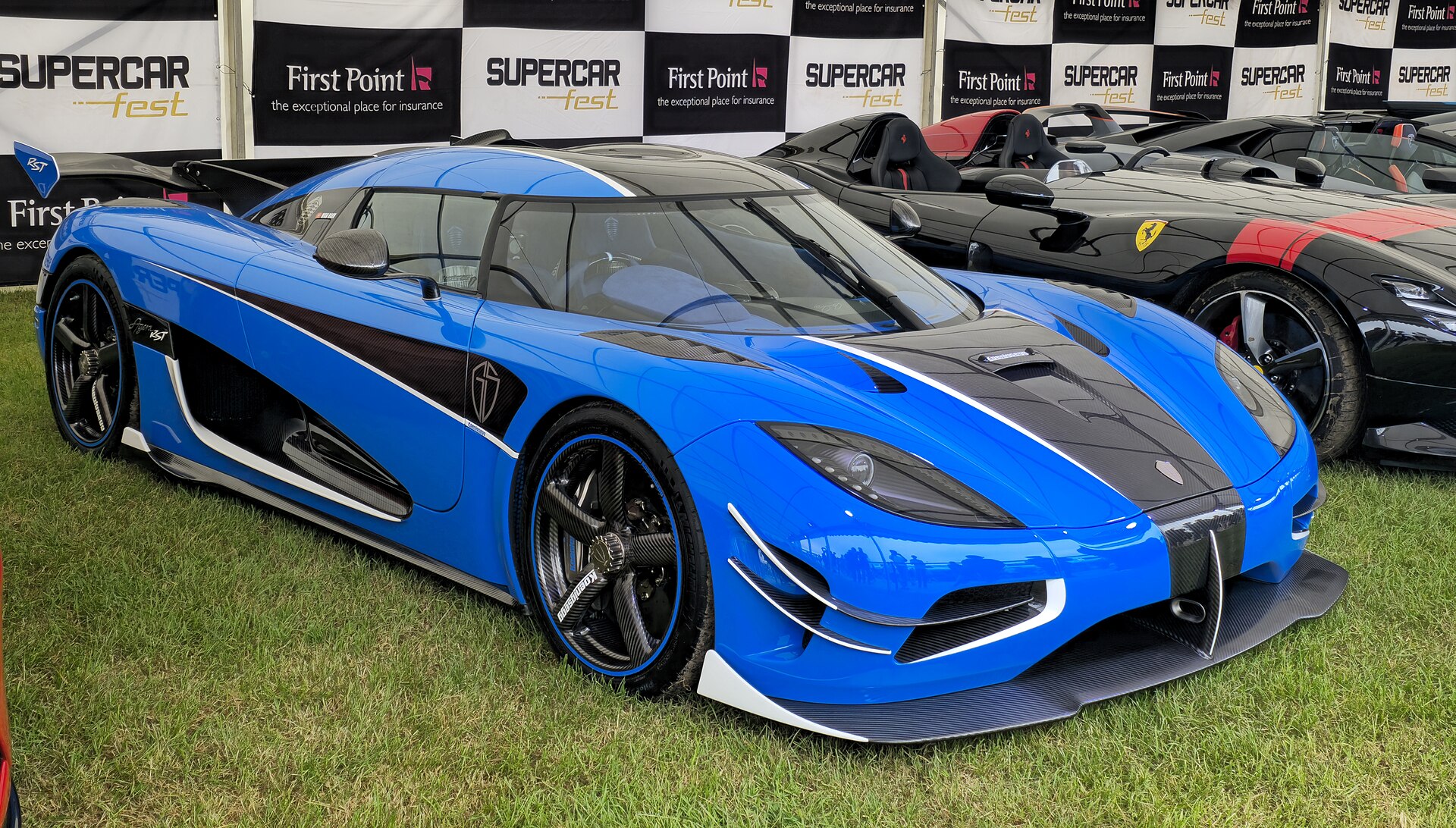
Introduction — The Power of a Single Vision
Most automotive revolutions are driven by large corporations, massive budgets, and decades of industrial infrastructure. Koenigsegg is different. It is the story of a single man — Christian von Koenigsegg — who, without an automotive empire behind him, set out to build the perfect performance machine. In doing so, he did not merely create another supercar brand. He reinvented what a hypercar could be. Koenigsegg became a laboratory of ideas, a company where physics, obsession, and radical engineering replaced tradition and marketing. This is the story of how one man changed the hypercar industry forever.
1. Christian von Koenigsegg: An Unlikely Founder
Christian von Koenigsegg was not an established automotive executive. He was a young entrepreneur with:
- No factory
- No existing supply chain
- No racing pedigree
- No corporate backing
What he had instead was:
- A deep fascination with engineering
- A willingness to challenge every convention
- An obsessive focus on efficiency and performance
He founded Koenigsegg Automotive AB in 1994 with a singular mission:
To build the best performance car in the world — without compromise.
That mission still defines the company today.
2. Reinventing the Hypercar from First Principles
Traditional supercar manufacturers evolved gradually. Koenigsegg started from zero. Instead of inheriting legacy platforms, Koenigsegg questioned everything:
- Why use a traditional gearbox?
- Why accept heavy flywheels?
- Why use materials simply because they are common?
- Why follow motorsport trends if road performance demands something else?
This first-principles thinking led to a series of radical innovations.
3. The Direct Drive Transmission
One of Koenigsegg’s most revolutionary inventions is the Light Speed Transmission (LST) — a multi-clutch, ultra-fast shifting system capable of:
- Near-instantaneous gear changes
- Multiple gear shifts simultaneously
- Minimal weight compared to traditional dual-clutch systems
Later, Koenigsegg introduced the Direct Drive system in the Regera — eliminating the conventional gearbox entirely.
Impact:
- Fewer moving parts
- Lower losses
- Higher efficiency
- A smoother, faster driving experience
This was not an evolution. It was a redefinition.
4. Materials as Performance Tools
Koenigsegg does not use advanced materials for marketing — it uses them because physics demands them. Examples:
- Carbon fiber wheels to reduce unsprung mass
- Titanium exhaust systems for heat and weight management
- Advanced composites to increase stiffness while reducing mass
Every gram saved improves acceleration, braking, handling, and efficiency. This obsession with weight is one of Koenigsegg’s defining traits.
5. Efficiency Over Excess
While many hypercars focus on raw power, Koenigsegg focuses on efficiency. Its engines are designed to maximize:
- Power-to-weight ratio
- Thermal efficiency
- Mechanical simplicity
The result is that Koenigsegg cars often achieve record-breaking performance not because they have more power, but because they use power better. This philosophy mirrors aerospace engineering more than automotive tradition.
6. A New Relationship with Customers
Koenigsegg treats its customers not as buyers, but as participants. Many clients:
- Visit the factory
- Contribute ideas
- Customize engineering aspects of their cars
This creates a community rather than a market. It also creates loyalty that money alone cannot buy.
7. The Cultural Impact
Koenigsegg changed how the world perceives hypercars: Before Koenigsegg:
- Hypercars were about luxury, status, and tradition.
After Koenigsegg:
- Hypercars became about engineering, innovation, and efficiency.
Koenigsegg shifted the narrative from “Who built it?” to “How does it work?” That shift reshaped the entire industry.
Conclusion — The Power of Obsession
Koenigsegg is not a brand. It is an engineering philosophy. It proves that:
- A small team can outperform giants
- Obsession can replace bureaucracy
- Innovation can replace heritage
Christian von Koenigsegg did not just build fast cars. He built a new definition of what performance means. And in doing so, he reinvented the hypercar industry.
Koenigsegg Hypercars — Technical Specifications (Agera RS, Regera, Jesko, CC850)
Koenigsegg hypercars: manufacturer Koenigsegg Automotive AB; layout for all models mid-engine, rear-wheel drive; Agera RS: production 2015–2018, units approx. 25, engine 5.0-liter twin-turbo V8 producing 1,160 hp on standard fuel (up to 1,360 hp on E85) with 1,280 Nm of torque, 0–100 km/h in approx. 2.8 s, top speed officially recorded at 447 km/h, kerb weight approx. 1,395 kg; Regera: production 2016–2022, units approx. 80, engine 5.0-liter twin-turbo V8 combined with three electric motors for a total system output of approx. 1,500 hp and over 2,000 Nm of torque, single-speed Koenigsegg Direct Drive transmission, 0–100 km/h in approx. 2.8 s, top speed 410 km/h, kerb weight approx. 1,590 kg; Jesko: production from 2021, units approx. 125, engine 5.0-liter twin-turbo V8 producing 1,280 hp on standard fuel and up to 1,600 hp on E85 with 1,500 Nm of torque, 9-speed Light Speed Transmission, 0–100 km/h in approx. 2.5 s, top speed over 480 km/h for Jesko Absolut and approx. 410 km/h for Jesko Attack, kerb weight approx. 1,420 kg; CC850: production from 2023, units 70, engine 5.0-liter twin-turbo V8 producing 1,385 hp (up to 1,600 hp on E85), innovative Engage Shift System allowing manual or automatic operation, 0–100 km/h in approx. 2.7 s, top speed over 400 km/h, kerb weight approx. 1,385 kg; chassis for all models carbon fiber monocoque, body carbon composite, suspension double wishbone with adaptive dampers, brakes carbon-ceramic discs, aerodynamics active systems with varying downforce depending on variant.
Related reads: Koenigsegg Jesko Absolut · Koenigsegg Gemera · Koenigsegg CCGT+