Koenigsegg Gemera — The 1,700hp Family Car That Makes No Sense and Every Sense
Four Seats. Four Doors. 1,700 Horsepower. Zero Emissions Capability. Koenigsegg Built a Family Car and It's the Most Extreme Thing They've Ever Done.
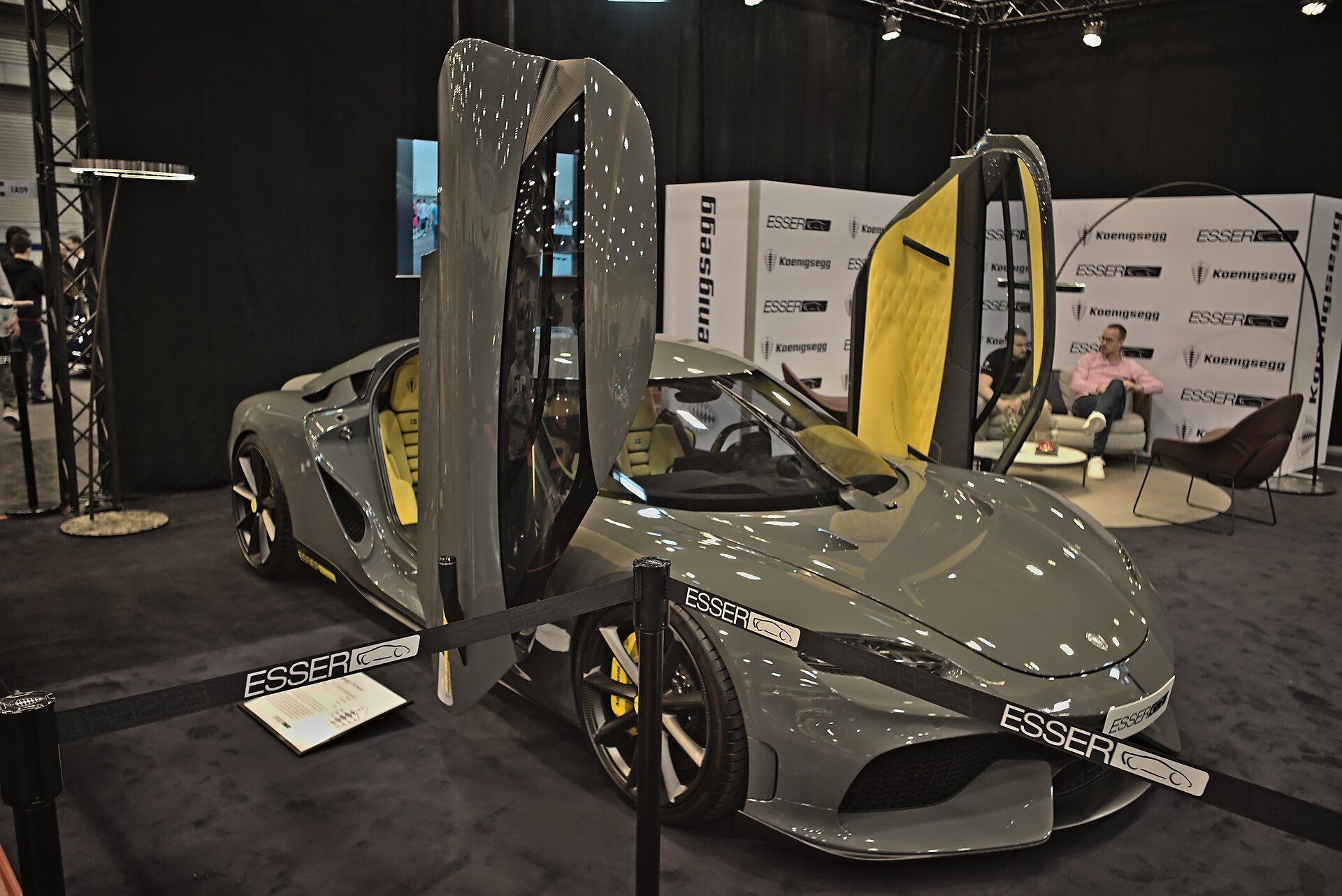
Four Seats. Four Doors. 1,700 Horsepower. Zero Emissions Capability. Koenigsegg Built a Family Car and It’s the Most Extreme Thing They’ve Ever Done.
There is a specific type of automotive insanity that only Koenigsegg is capable of. It’s not the insanity of building a fast car — plenty of manufacturers do that. It’s the insanity of identifying a constraint that everyone else accepts as permanent, deciding that constraint is unacceptable, and then engineering a solution from first principles regardless of cost, complexity, or convention. The Gemera is that insanity applied to the family car. Four seats. Four doors. Room for four adults with luggage. And 1,700 horsepower. Koenigsegg calls it a “Mega-GT.” The rest of the automotive world has no category for it, because nothing like it has ever existed before.
The Problem Koenigsegg Decided to Solve
Christian von Koenigsegg has children. He wanted a Koenigsegg that his family could travel in together. The existing lineup — the Jesko, the Agera, the Regera — are two-seat hypercars with no practical provision for passengers. Most car company founders in this situation buy a separate family car. Christian von Koenigsegg instead spent years and enormous resources building a four-seat hypercar that his company could sell to 300 other people who presumably had the same problem and $1.7 million to resolve it. This is not a unique motivation in automotive history. It is, however, a uniquely Koenigsegg response to it.
The Name
“Gemera” combines two Swedish words: “ge” meaning “give” and “mera” meaning “more.” Give more. In context — more space, more practicality, more seats — while sacrificing nothing of the performance that defines the brand. It is a name that makes a promise. The car delivers on it completely.
The Numbers
| Specification | Detail |
|---|---|
| Engine | 2.0L 3-cylinder “Tiny Friendly Giant” + 3 electric motors |
| Combustion Power | 600hp |
| Electric Motor Power | 1,100hp combined |
| Total System Power | 1,700hp |
| Total System Torque | 3,500 Nm |
| Gearbox | Koenigsegg Direct Drive (no traditional gearbox) |
| Drive | All-wheel drive |
| 0–100 km/h | 1.9 seconds |
| 0–300 km/h | Under 9 seconds |
| Top Speed | 400 km/h / 249 mph |
| Electric-only range | ~50 km |
| Fuel compatibility | E85, E100, methanol, petrol |
| Seats | 4 full adults |
| Doors | 4 (Koenigsegg Autoskin system) |
| Production | 300 units |
| Launch Price | ~$1.7 million |
The Engine — The Tiny Friendly Giant
The combustion engine in the Gemera is one of the most remarkable powerplants in automotive history — not because of its output, but because of its size relative to that output. Koenigsegg’s engineers developed a 2.0L three-cylinder engine — an architecture typically found in small city cars — that produces 600 horsepower. They named it the “Tiny Friendly Giant,” or TFG, which is simultaneously the most charming and most accurate name ever given to a car engine. 600 horsepower from 2.0 litres and three cylinders. For context, Bugatti’s W16 produces 1,600hp from 8.0 litres and 16 cylinders. The Gemera’s TFG produces 300hp per litre — a specific output figure that rivals Formula 1 engines. This is achieved through: Camless valve actuation — the TFG uses Koenigsegg’s Freevalve technology, which replaces conventional camshafts with individually actuated pneumatic-hydraulic valves on each cylinder. Each valve opens and closes independently, controlled by software rather than a fixed cam profile. This allows the engine to optimise valve timing for every operating condition — something impossible with conventional camshaft-based systems. Twin turbocharging — two turbochargers force compressed air into three cylinders, generating boost pressure levels that a naturally aspirated engine cannot approach. E85/E100 compatibility — the TFG is designed to run on high-ethanol fuels, whose cooling properties allow more aggressive combustion without detonation. On E100, power output increases beyond the 600hp baseline figure. Dry sump lubrication — allows the engine to be mounted lower in the chassis for improved centre of gravity, and ensures reliable lubrication under the extreme lateral forces generated in high-speed cornering.
The Electric System — Three Motors, Instant Everything
Three electric motors supplement the TFG — one on the front axle and two on the rear. Combined output: 1,100 horsepower and 2,600 Nm of torque. The electric motors serve multiple simultaneous functions. They provide instantaneous torque fill at low speeds where the TFG’s turbochargers are still spooling. They deliver torque vectoring — directing power independently to each rear wheel to optimise cornering behaviour. And they provide the car’s electric-only mode, which allows approximately 50 km of zero-emission driving on battery power alone. The combined system torque of 3,500 Nm requires some context. A standard family saloon typically produces 300–400 Nm. A Ferrari 812 Superfast produces 718 Nm. The Gemera produces 3,500 Nm — nearly five times a Ferrari V12 — available from zero RPM through the electric motors. This torque figure, distributed across all four wheels with millisecond precision, is why the Gemera reaches 100 km/h in 1.9 seconds despite weighing significantly more than a conventional hypercar.
The Gearbox That Isn’t There
The Gemera uses Koenigsegg’s Direct Drive system — a single-speed transmission with no conventional gearbox at all. Traditional hypercars use multi-speed gearboxes because combustion engines produce usable power only within a specific RPM range. A seven-speed gearbox keeps the engine in that range regardless of road speed. The Gemera’s hybrid architecture eliminates this requirement: the electric motors cover the speed ranges where the TFG would otherwise be outside its powerband, allowing a single fixed ratio to serve the entire speed range from 0 to 400 km/h. The result is mechanical simplicity — fewer components, less weight, less complexity — combined with seamless power delivery that no multi-speed gearbox can replicate. There are no gear changes. There is no shift pause. There is simply a continuous, uninterrupted surge of acceleration from standstill to top speed.
Four Adults, Actually
The Gemera’s interior is the most direct challenge to conventional hypercar thinking in the car’s entire concept. Two full-size rear seats — not occasional seats, not children’s seats, not the token rear benches found in some grand tourers — but genuine, adult-sized rear seats with real legroom, a full infotainment screen, individual climate control, and cup holders. Cup holders. In a 1,700hp Koenigsegg. Each of the four seats reclines. The rear passengers have their own door — Koenigsegg’s Autoskin system opens all four doors simultaneously with a single button, pivoting outward and upward in a way that conventional hinged doors cannot in tight parking spaces. The theatre of four doors opening simultaneously on a 1,700hp hypercar is considerable. Luggage space exists in both the front and rear of the car — a practical provision that no previous Koenigsegg has offered. The front trunk accommodates carry-on luggage. A rear storage area behind the back seats handles additional bags. Christian von Koenigsegg has stated publicly that he designed the Gemera to be capable of completing a real family journey — four adults, luggage, long-distance motorway driving — in genuine comfort, then arriving at a circuit and performing as a hypercar. Both claims are credible. Neither has a precedent.
The Sustainability Angle
The Gemera is Koenigsegg’s most explicit statement on the future of the combustion engine — and it is a more optimistic statement than most manufacturers are currently making. The TFG engine is designed to run on E85, E100, and methanol — fuels that can be produced from biological sources with near-zero net carbon emissions. Koenigsegg’s argument is that the combustion engine does not need to be replaced — it needs to be fuelled differently. A car running on biofuel-derived E100 produces the same atmospheric carbon when driven as the crops that produced the fuel absorbed during growth. This is a position that challenges the dominant electrification narrative — not by rejecting electric power (the Gemera uses three electric motors) but by arguing that combustion itself is not the problem, only the fossil fuels currently used to power it. Whether this argument ultimately prevails in the regulatory environment is uncertain. As an engineering philosophy, it is coherent, technically defensible, and characteristically Koenigsegg in its refusal to accept the conventional framing of the problem.
The 300 Owners
All 300 Gemera production slots were allocated within days of the car’s public reveal in 2020. The waiting list that formed after allocation closed runs to hundreds of names. Deliveries began in 2024. The production rate is limited by Koenigsegg’s handbuilt manufacturing process — approximately 40–50 cars per year across the entire lineup. For Gemera customers, patience has been a requirement as significant as the $1.7 million purchase price.
What the Gemera Proves
The Gemera exists as proof of a specific idea: that the constraints most manufacturers treat as permanent are in fact choices. The choice to make hypercars impractical. The choice to limit performance cars to two seats. The choice to accept that sustainability and performance are incompatible. Koenigsegg rejected all three constraints simultaneously and built a car that carries four adults across a continent in comfort, runs on biofuel, produces zero local emissions when required, and reaches 300 km/h in under nine seconds. It is the most complete reimagining of what a performance car can be since the original McLaren F1. It exists because one person refused to accept that the family car and the hypercar had to be separate objects. In a world of incremental improvements and cautious engineering, the Gemera is a reminder of what happens when someone simply decides to solve the problem properly.
Related reads: Koenigsegg Jesko Absolut · How Koenigsegg Redefined the Hypercar Industry · Koenigsegg CCGT+