Gordon Murray T.50: The Ultimate Driver's Car Reimagined
In an era where “hypercar” often means heavy, turbocharged, paddle-shifted and screen-filled, the Gordon Murray T.
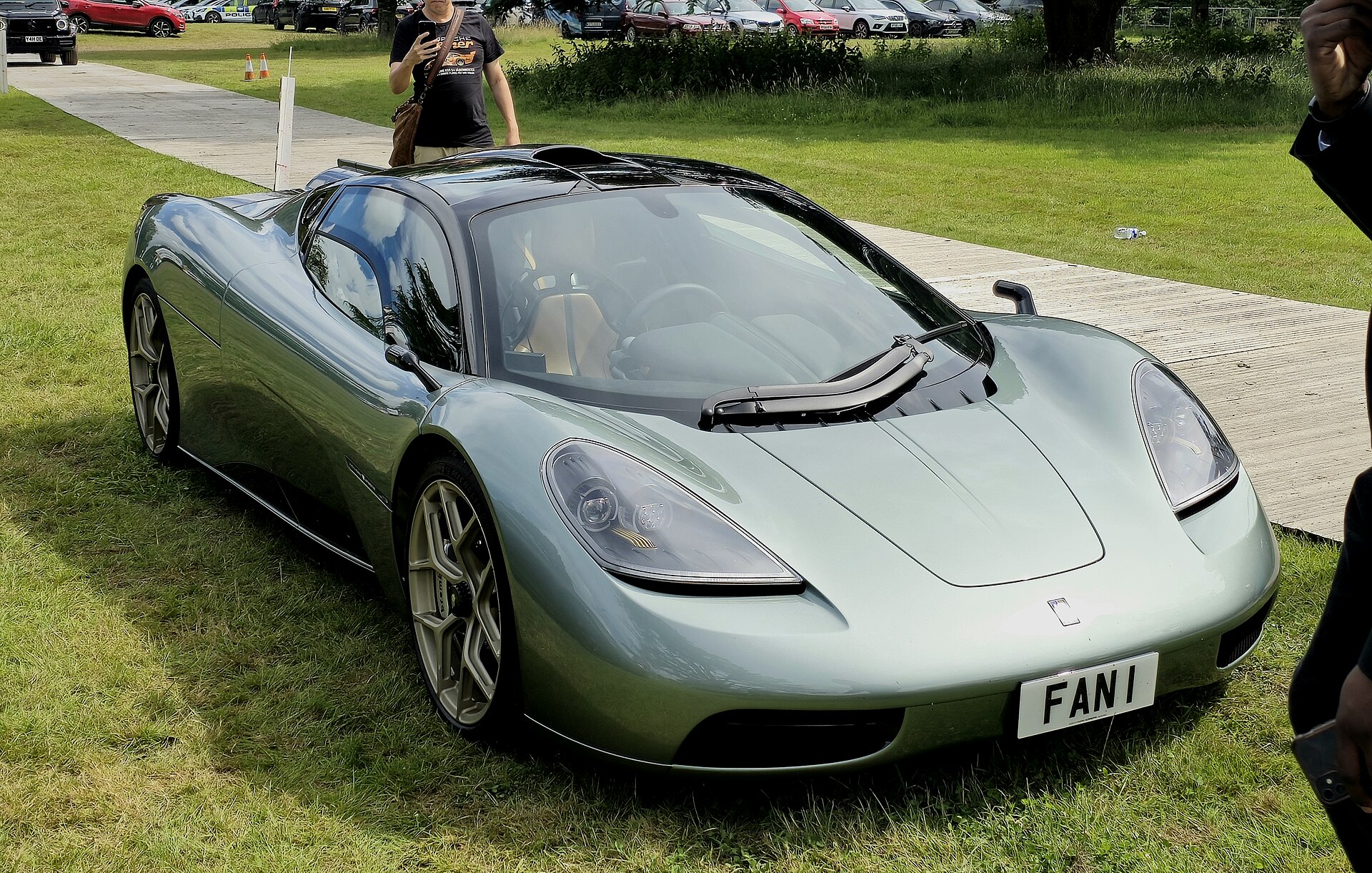
In an era where “hypercar” often means heavy, turbocharged, paddle-shifted and screen-filled, the Gordon Murray T.50 feels like a deliberate rebellion—built around three old-school ideas that modern performance cars have quietly abandoned:
- Low mass beats big power
- A manual gearbox is part of the performance
- Aero should make you faster without turning the car into a wedge
And then there’s the detail that turned the whole internet into engineers overnight: a 400 mm fan at the rear, used to actively manage underbody airflow—so the car can create meaningful downforce (or reduce drag) without relying on huge wings.
This isn’t nostalgia. It’s a modern, obsessive re-think of what the “ultimate driver’s car” should be.
The philosophy: “everything you feel matters”
The T.50 was conceived by Gordon Murray with a simple goal: build the most driver-focused road car possible—light, compact, naturally aspirated, and engineered around feedback. Its layout even makes that point visually: central driving position with two outboard passengers (a clear nod to the purity of the McLaren F1 era of thinking, even if the car is totally its own thing).
The engine: a naturally aspirated V12 built for 12,100 rpm
At the heart of the T.50 is the Cosworth GMA V12, and its numbers read like a love letter to revs:
- Capacity: 3,994 cc
- Max power: 650 PS @ 11,500 rpm
- Max torque: 467 Nm @ 9,000 rpm
- Redline / max rpm: 12,100 rpm
- Engine weight: 178 kg
That’s not just “high revving for a road car.” That’s “race-car behavior in a street-legal package.” The result is the kind of throttle response and linearity you simply don’t get with turbocharging.
The manual gearbox: not a gimmick, the whole point
This is where the T.50 becomes almost spiritual for enthusiasts: it’s unapologetically manual.
From the official technical spec:
- 6 forward gears + reverse
- Manual H-pattern with reverse lock-out
- Limited-slip differential (Salisbury)
- Triple-plate clutch (184 mm) using carbon/silicone/titanium elements
In other words: it’s designed to feel mechanical, precise, and “alive” at the exact points where modern hypercars often feel filtered.
The fan: the genius move that changes everything
The T.50’s Fan Interactive Aero System (FIAS) is the headline feature—and it’s not marketing theater. The fan actively pulls air through the underbody/diffuser area to control airflow and pressure, enabling the car to create downforce when you need it—or reduce drag when you don’t.
From the official spec sheet:
- Fan motor: 8.5 kW, 48V
- Max fan speed: 7,000 rpm
- Multiple aero modes including Brake boost, Streamline, VMAX boost, and High downforce
What’s cool is how “functional” these modes are. This isn’t just an on/off party trick—this is aero being treated like drivetrain: something the driver can actively use.
What does it do in real terms?
One widely cited real-world description comes from Top Gear, which notes the fan can generate up to 220 kg of downforce at 155 mph, and up to 460 kg at Vmax (their wording and context emphasize how strongly the aero “loads up” with speed).
That’s the difference between “fast” and “fast with confidence.”
Lightweight obsession: numbers that still look impossible
The T.50’s entire concept collapses if the car isn’t light—so it’s engineered to be genuinely light:
- Kerb weight (listed): 986 kg
- Dry weight: 957 kg
- Power-to-weight ratio: 672 PS/tonne
These are the kinds of figures that make everything better at once: braking, steering clarity, tire load, corner speed, ride quality, and (ironically) the feeling of speed.
Chassis and hardware: modern materials, old-school feedback
This isn’t a “soft” lightweight car. It’s engineered with real supercar-grade hardware:
- Carbon-fibre monocoque with aluminum honeycomb core panels
- Double wishbone suspension (front and rear) with pushrod actuation
- Carbon-ceramic brakes (CCM-R): 370 mm front, 340 mm rear
- Michelin Pilot Sport 4 S tires (235/35 R19 front, 295/30 R20 rear)
It’s modern where it should be (structure, brakes, suspension geometry) and analog where it matters most (engine response, manual shift feel, driver positioning).
The driving experience: why people say it feels “from another timeline”
The T.50’s brilliance is that all its “geeky” choices translate into sensations you can actually feel:
- Revs feel instantaneous because the V12 is NA and built to spin high
- Throttle response stays clean because there’s no turbo inertia
- Steering and braking feel more detailed because mass is so low
- Aero works without ruining the shape because the fan lets the car stay sleek
It’s the rare modern supercar that feels engineered around your senses, not just the stopwatch.
If you had to choose one “driver’s holy grail” setup, what would it be?
- T.50 (manual + V12 + fan aero)
- or a “modern hypercar” (hybrid + paddles + active everything)
Drop your choice in the comments and tell me why. And if you want more deep dives like this—engineering breakdowns, clean spec sheets, and the stories behind the cars—subscribe to SupercarsPassion and share this post with one car friend who still believes lightweight is the ultimate horsepower.
Related reads: F1 Tech’s Impact on Hypercar Performance · Active Aerodynamics · Misunderstood Supercars History