Ferrari Enzo: The Legend Behind the Hypercar
Introduction — A Car That Could Only Be Named Enzo Some cars are named to sell. Others are named to honor. The Ferrari Enzo belongs to a very rare category: cars named out of necessity, not marketing.
Introduction — A Car That Could Only Be Named Enzo
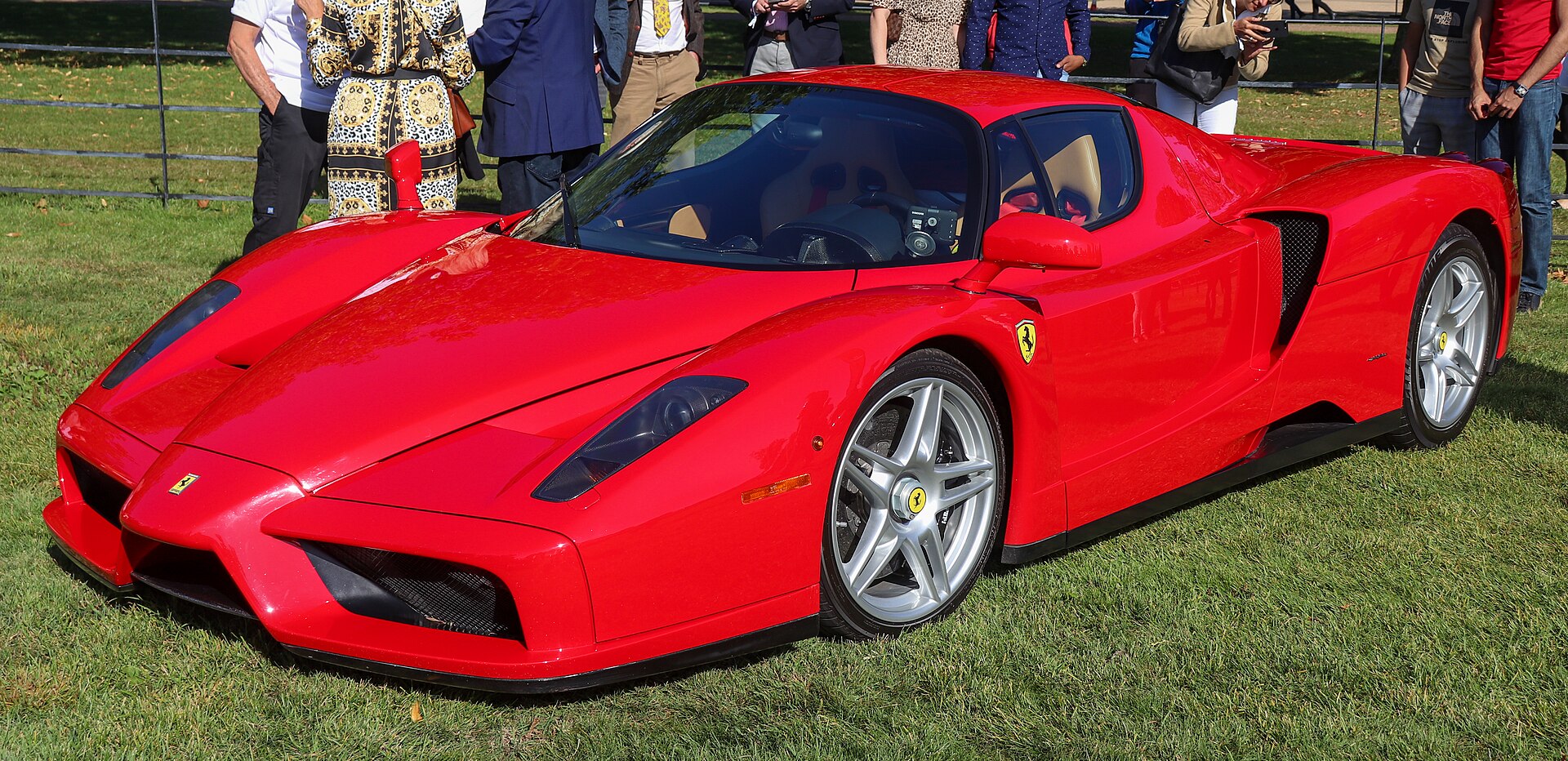
Some cars are named to sell. Others are named to honor. The Ferrari Enzo belongs to a very rare category: cars named out of necessity, not marketing. There was no alternative name that could carry the weight of what this car represented. To call it anything else would have been dishonest. The Enzo was not conceived as a celebration of luxury or excess. It was conceived as a declaration of identity — a moment when Ferrari decided to distill everything it knew about racing, engineering, and performance into a single road-legal machine. The Enzo is not just a hypercar. It is Ferrari explaining itself.
The Historical Context — Ferrari at a Crossroads
At the turn of the 21st century, Ferrari stood in a unique position. In Formula 1, Ferrari was dominating. The early 2000s represented one of the most successful eras in Ferrari’s racing history, marked by relentless technical progress, organizational discipline, and competitive supremacy. At the same time, the supercar landscape was changing. Electronics were becoming unavoidable. Aerodynamics were becoming computational. Materials science was advancing rapidly. Performance was no longer just about displacement and sound — it was about systems. Ferrari needed a car that could translate this new reality to the road without losing its soul. The Enzo was the answer.
Why the Enzo Exists
Ferrari did not build the Enzo to chase competitors. It built it to answer a question:
What happens when Formula 1 philosophy is applied to a road car without compromise?
The Enzo was not designed around comfort, elegance, or even traditional beauty. It was designed around:
- airflow
- structural rigidity
- mechanical efficiency
- driver-machine integration
This is why the Enzo looks the way it does. It is not styled. It is engineered.
Design as Aerodynamic Function
The Enzo’s design shocked many when it was unveiled. Sharp nose. Exposed carbon fiber. High nose profile inspired by Formula 1. Minimal concessions to elegance. But this was intentional. Every surface of the Enzo exists to manage airflow:
- The front nose channels air under the chassis
- Side intakes feed radiators and brakes
- The flat underbody generates ground effect
- The rear diffuser extracts airflow aggressively
This is not beauty for the eye. It is beauty for physics.
The V12 — Ferrari’s Emotional Core
At the heart of the Enzo lies a naturally aspirated 6.0-liter V12. Ferrari could have used turbocharging. It refused. The reason is philosophical. Turbocharging adds power, but it alters response, sound, and character. Ferrari wanted the Enzo to remain a mechanical experience, not a filtered one. The V12 in the Enzo is:
- immediate
- violent
- linear
- uncompromising
It does not mask its intentions. It announces them.
Transmission: Formula 1 Logic on the Road
The Enzo introduced a single-clutch automated manual transmission derived directly from Ferrari’s Formula 1 technology of the time. This gearbox was not smooth. It was fast. Gear changes were brutal, mechanical, and deliberate — exactly as they were in F1 cars of that era. Ferrari did not attempt to soften the experience. The Enzo was meant to feel alive, not polite.
Carbon Fiber and Structural Purity
The Enzo’s chassis is built around a carbon fiber monocoque, a technology Ferrari had mastered through Formula 1. This provided:
- exceptional torsional rigidity
- low weight
- precise suspension response
The suspension itself used pushrod geometry, another direct transfer from F1, allowing the car to maintain aerodynamic stability under braking and acceleration. The Enzo does not isolate the driver. It exposes the driver.
Aerodynamics: Active Intelligence
Unlike older supercars that relied on fixed wings, the Enzo used active aerodynamics. At high speeds, aerodynamic elements adjust automatically to:
- increase downforce
- stabilize the car
- improve braking performance
This allowed Ferrari to avoid excessive drag while maintaining control. The Enzo does not simply cut through the air. It negotiates with it.
Driving the Enzo — Not for Everyone
The Enzo is not an easy car. It demands attention, respect, and competence. There is:
- no traction control safety net like modern systems
- no soft suspension mode
- no artificial refinement
The steering is heavy. The throttle is sensitive. The brakes are aggressive. The Enzo rewards precision and punishes laziness. This is not arrogance. It is honesty.
Cultural Impact
The Enzo arrived before social media, before influencer culture, before hypercars became content. It was not designed to go viral. It was designed to exist. This gives it a unique cultural position today: the Enzo feels timeless, not because it is old, but because it is sincere. It represents a moment when Ferrari prioritized identity over optics.
The Enzo Today — From Hypercar to Artifact
Today, the Enzo is no longer just a car. It is a historical object. A reference point. A marker between eras:
- before hybridization
- before excessive electronics
- before hypercars became digital experiences
The Enzo stands as the last Ferrari hypercar built around pure mechanical philosophy.
Conclusion — Ferrari at Its Most Honest
The Ferrari Enzo is not the fastest Ferrari ever built. It is not the most comfortable. It is not the most beautiful. It is something far more important. It is Ferrari explaining who it is — without compromise, without apology, and without dilution. That is why the Enzo matters.
Technical Specifications — Ferrari Enzo
Ferrari Enzo: manufacturer Ferrari; production years 2002–2004; production units 399 originally planned, later increased to 400; layout mid-engine, rear-wheel drive; engine 6.0-liter naturally aspirated V12 producing 660 hp at 7,800 rpm and 657 Nm of torque; 0–100 km/h in approx. 3.6 s; 0–200 km/h in approx. 9.5 s; top speed 355 km/h; transmission 6-speed single-clutch automated manual; chassis carbon fiber monocoque; kerb weight approx. 1,365 kg; suspension pushrod front and rear with adaptive dampers; brakes carbon-ceramic discs; aerodynamics active front and rear aerodynamic elements with flat underbody and rear diffuser.
Related reads: Ferrari F50 · LaFerrari · Ferrari 488 Pista