The Battle of Giants: Nissan GT-R vs Porsche 911 Turbo
Teutonic efficiency vs Japanese brutal tech — who wins on lap time, and who wins on driving emotion? Few rivalries feel as “unfair” and yet as perfectly matched as this one.
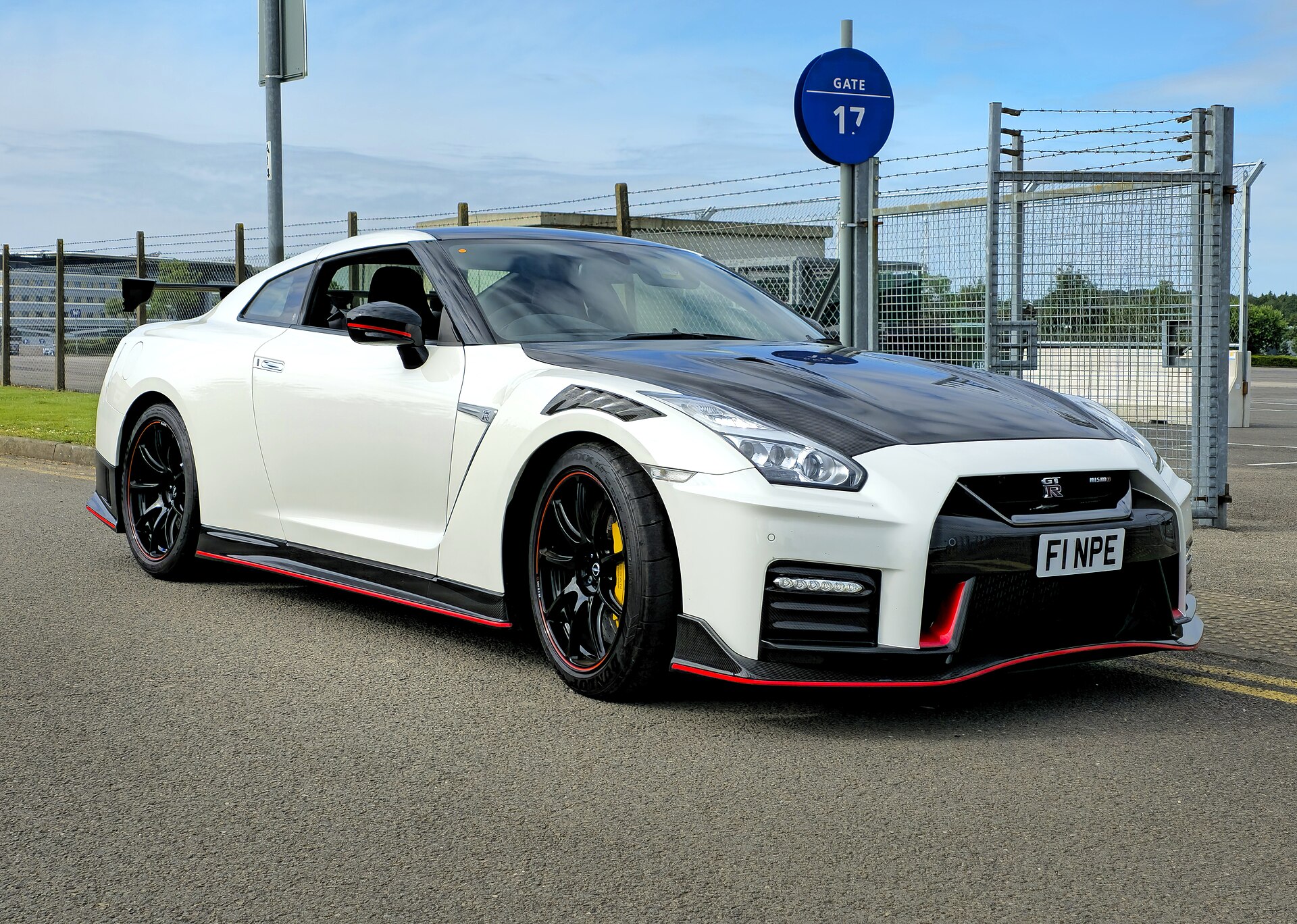
Teutonic efficiency vs Japanese brutal tech — who wins on lap time, and who wins on driving emotion?
Few rivalries feel as “unfair” and yet as perfectly matched as this one.
On one side, the Porsche 911 Turbo: a decades-long evolution of the same core idea—rear-engine DNA refined into an all-weather, high-speed weapon with uncanny polish. On the other, the Nissan GT-R (R35): a tech-heavy, torque-packed supercar killer built to punch above its price and humiliate established elites.
They don’t chase the same kind of perfection.
That’s exactly why comparing them is so addictive.
1) Two philosophies, two kinds of “fast”
Porsche 911 Turbo: speed through refinement
The Turbo’s personality is built around efficiency and consistency:
- power you can deploy almost anywhere
- traction that feels “clean” rather than violent
- a chassis that communicates stability even when the numbers get surreal
The current 911 Turbo S spec highlights just how extreme “civilized” has become: 0–100 km/h in 2.5s, 322 km/h top speed, and up to 711 PS (as listed by Porsche on its Turbo S model page).
Nissan GT-R: speed through systems and brutality
The GT-R’s identity is technology as muscle:
- twin-turbo punch
- aggressive traction + AWD systems that make launches feel like cheat codes
- a “computer-assisted” character that can be devastatingly effective
And now it carries a special weight: Nissan officially ended R35 production in August 2025, closing an 18-year run of roughly 48,000 units.
That makes every GT-R comparison today feel like a “last of an era” moment.
2) Lap time reality: who wins “on the clock”?
Let’s be honest: lap times are complicated.
They depend on:
- track conditions and temperature
- tires and setup
- which exact generation/variant you’re using
- whether it’s an “official” attempt and what timing method is used
The Nürburgring factor
The GT-R’s reputation was partially built on Nürburgring lap-time headlines—and the controversy that followed. Nissan’s early GT-R Nordschleife times sparked debate, including claims about tires and test conditions when other manufacturers tried to replicate the result.
Meanwhile, the “Turbo” badge has kept moving the goalposts. The Nürburgring itself reported an official 7:03.92 lap for the new 911 Turbo S (published September 8, 2025).
So who “wins” lap time?
- If we’re talking recent official Nürburgring record attempts, the newest 911 Turbo S time is a very strong benchmark.
- If we’re talking the GT-R’s legacy, its impact wasn’t only the number—it was what the number represented: a Japanese car challenging Europe’s best using smart systems and relentless performance-per-euro.
Verdict on lap time: today, the 911 Turbo S has the cleaner “official” Nürburgring headline.
But the GT-R’s myth was never just the stopwatch—it was the shockwave.
3) The driving emotion test: who feels more special?
Lap time is objective. Emotion is personal—but patterns are real.
Why the 911 Turbo often feels “inevitable”
The Turbo is the kind of car that makes you feel like:
- everything is engineered to work in harmony
- speed is “available” rather than “fought for”
- you can repeat fast driving without fear
It’s less dramatic in the moment-to-moment sense—because it’s so competent that it can feel almost too composed.
Why the GT-R feels like controlled violence
The GT-R’s emotion comes from:
- boost-driven surge
- a heavier, more “industrial” sense of force
- the feeling that the car is doing serious computing to keep physics in check
The cabin vibe and the car’s attitude feel more like a weapon system than a luxury product—and that’s exactly what many fans love about it.
Verdict on emotion:
- If you want precision confidence, the Turbo wins.
- If you want raw, tech-assisted brutality, the GT-R hits harder.
4) The “real-world supercar” question: which one would you actually live with?
This is where the philosophies diverge sharply.
911 Turbo = daily supercar perfection
It’s built to be used:
- harsh weather? fine
- long trips? easy
- traffic? tolerable
- performance? always there
GT-R = daily-able, but with a different kind of ownership
It can be used daily, but you feel more of its personality:
- it’s a more intense, mechanical experience
- it feels like a car that expects you to respect it
- now that production has ended (August 2025), ownership becomes more “modern classic” in mindset.
Final verdict: who wins?
If your scoreboard is lap time and clinical speed:
Porsche 911 Turbo S — especially with recent official Nürburgring credibility.
If your scoreboard is cultural impact and “supercar killer” attitude:
Nissan GT-R — because it changed what the world thought was possible at its price point, and now it’s frozen in time as an icon.
If your scoreboard is “the best single-car garage”:
Most people end up at 911 Turbo.
If your scoreboard is “the most satisfying kind of violence”:
The GT-R is hard to replace.
If you had to choose one, what matters more to you?
- Stopwatch dominance + daily perfection (911 Turbo)
- Tech brutality + myth factor (GT-R)
Comment your pick
Related reads: Top 5 Rarest GT-Rs · Nissan GT-R Successor · How Fast & Furious Elevated the Nissan Skyline…