Nissan GT-R Successor: What We Know About the R36
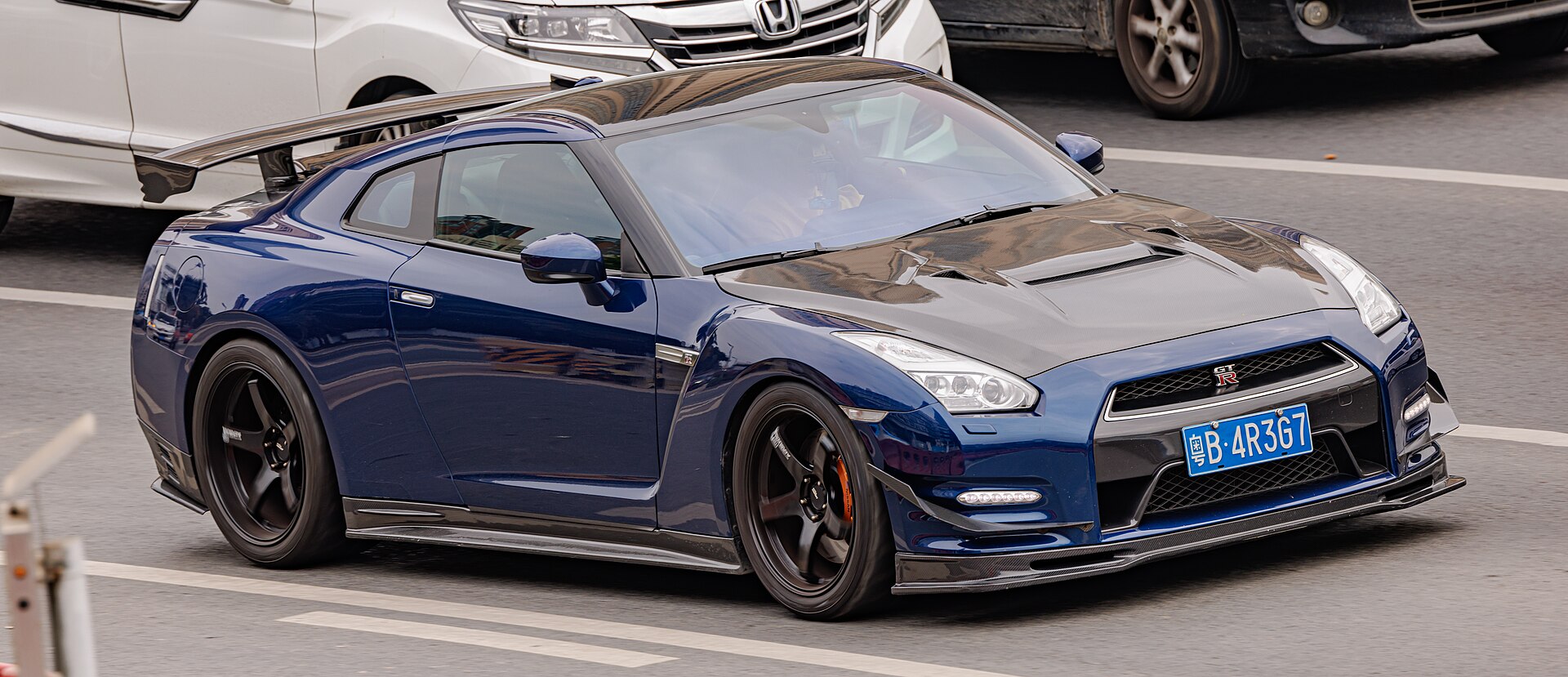
What we actually know, what’s been reported, and what’s still speculation The R35 GT-R is officially over—Nissan built roughly 48,000 units across an 18-year run, with the final car leaving the Tochigi line in late August 2025.
What we actually know, what’s been reported, and what’s still speculation
The R35 GT-R is officially over—Nissan built roughly 48,000 units across an 18-year run, with the final car leaving the Tochigi line in late August 2025.
That means the inevitable question is no longer “if” the next GT-R arrives—but what it will be.
Will the so-called R36 be fully electric? Hybrid? Something else? And can it keep the “Godzilla” soul in an era of batteries and software?
Let’s separate confirmed facts from credible reporting and internet noise, using official concept material and recent executive quotes.
1) What’s confirmed: the R35 era ended, and the GT-R name will continue
From Nissan’s own farewell statement: the R35 has ended production, and the company positions the GT-R story as continuing beyond this chapter.
This matters because it sets the baseline: there will be a successor, but details are still being finalized publicly.
2) The official “clue” car: Hyper Force concept
If you want the most direct “official design language + tech direction” hint, it’s the Nissan Hyper Force concept revealed at Japan Mobility Show.
What Nissan says the concept represents:
- An all-electric, high-performance vision aimed at combining daily usability with extreme performance.
- Dual driving modes (e.g., “R” and “GT”) and a gamer/track-oriented cockpit concept.
A lot of enthusiasts treat Hyper Force as “the R36 preview,” but the honest take is:
Hyper Force is a direction, not a production confirmation.
3) What credible reporting suggests: hybrid is now the leading plan
In April 2025, multiple reputable outlets reported a major shift away from a pure EV GT-R successor toward an electrified hybrid approach:
- The Drive reported that Nissan’s product planning leadership said the next GT-R is planned as a hybrid, with a timeframe stretching toward the end of the decade.
- Car and Driver similarly reported a next-gen GT-R in 3 to 5 years with hybrid power, emphasizing it would remain turbocharged while adding electrons.
- MotorTrend echoed the theme: electrified, but not a pure EV—partly tied to the expectation that a GT-R must be able to deliver repeatable high-performance running (the “record-chasing” logic).
- Motor1 also reported leadership interest in a GT-R that stays authentic and has a performance mission (including laps at Nürburgring Nordschleife).
Why hybrid makes sense (even if you want EV)
A pure EV supercar is brutally fast once—but sustained performance is the challenge: heat management, battery drain under repeated hot laps, and consistency. That’s exactly the kind of problem a hybrid system can “cover” better today.
So the most realistic “truth” is:
- Hybrid is the most credible direction right now (based on 2025 executive quotes via major outlets).
4) What’s not confirmed: the exact powertrain, platform, and launch date
Even with the hybrid-heavy reporting, late 2025 coverage shows uncertainty inside Nissan about the final form:
- Motor1 (Nov 2025) reported that Nissan has no clear plan yet—combustion, hybrid, or electric are still being evaluated publicly.
- CarThrottle (Nov 2025) similarly pointed to exec comments about “exploring different routes.”
- Carscoops (Aug 2025) also described the successor as not yet finalized on EV vs hybrid.
So here’s the honest framing:
The “truth” today
- GT-R will return (strongly signaled by Nissan messaging).
- Hybrid appears to be the front-runner (strong reporting in April 2025).
- But the final configuration is still fluid in late 2025 reporting.
5) Will it keep the GT-R “soul”? Here’s what that likely means
When people say “keep the soul,” they usually mean:
- All-weather traction + violence
A GT-R should feel like it can deploy huge power without being precious. - Systems that make you faster
The R35 identity was always “technology as performance.” - A performance mission, not just a halo EV
Nissan leadership has implied the successor must be authentic and worthy of the badge.
If Nissan goes hybrid, the best-case “R36 soul” recipe looks like:
- a turbocharged core (continuity) + electric torque fill (modern edge)
- AWD with smarter torque vectoring
- consistent thermal performance for repeated hard driving
6) The best way to read R36 “leaks” without getting fooled
A quick filter you can use:
- If it references official Nissan concept material (Hyper Force), it’s directionally useful.
- If it references named executives + major outlets, it’s credible reporting (still not a guarantee).
- If it’s “710 hp confirmed” from social posts with no source, treat it as entertainment.
Bottom line
Right now, the smartest conclusion is:
- The R36 is likely electrified, and hybrid is the strongest reported direction.
- The Hyper Force shows Nissan’s EV performance ambitions, but it doesn’t lock the R36 into full electric.
- The exact timeline and final recipe remain unsettled in late-2025 reporting.
If the R36 becomes a hybrid, what matters most to you?
- A new Nürburgring benchmark (pure mission car)
- Daily-driver usability with insane performance (GT-R as the ultimate supercar tool)
- A true EV GT-R (silence, instant torque, and a new kind of drama)
Comment your vote—and tell me whether you’d prefer R35-style brutality or a more 911 Turbo-like precision approach for the next generation.
Related reads: The Battle of Giants · Top 5 Rarest GT-Rs · RB26DETT