RB26DETT: Anatomy of the Engine That Built a Legend
Why Nissan’s twin-turbo inline-six became indestructible—and why tuners push it to 1,000+ horsepower Before it was a collector’s darling. Before Hollywood made it iconic. Before prices exploded. There was an engine.
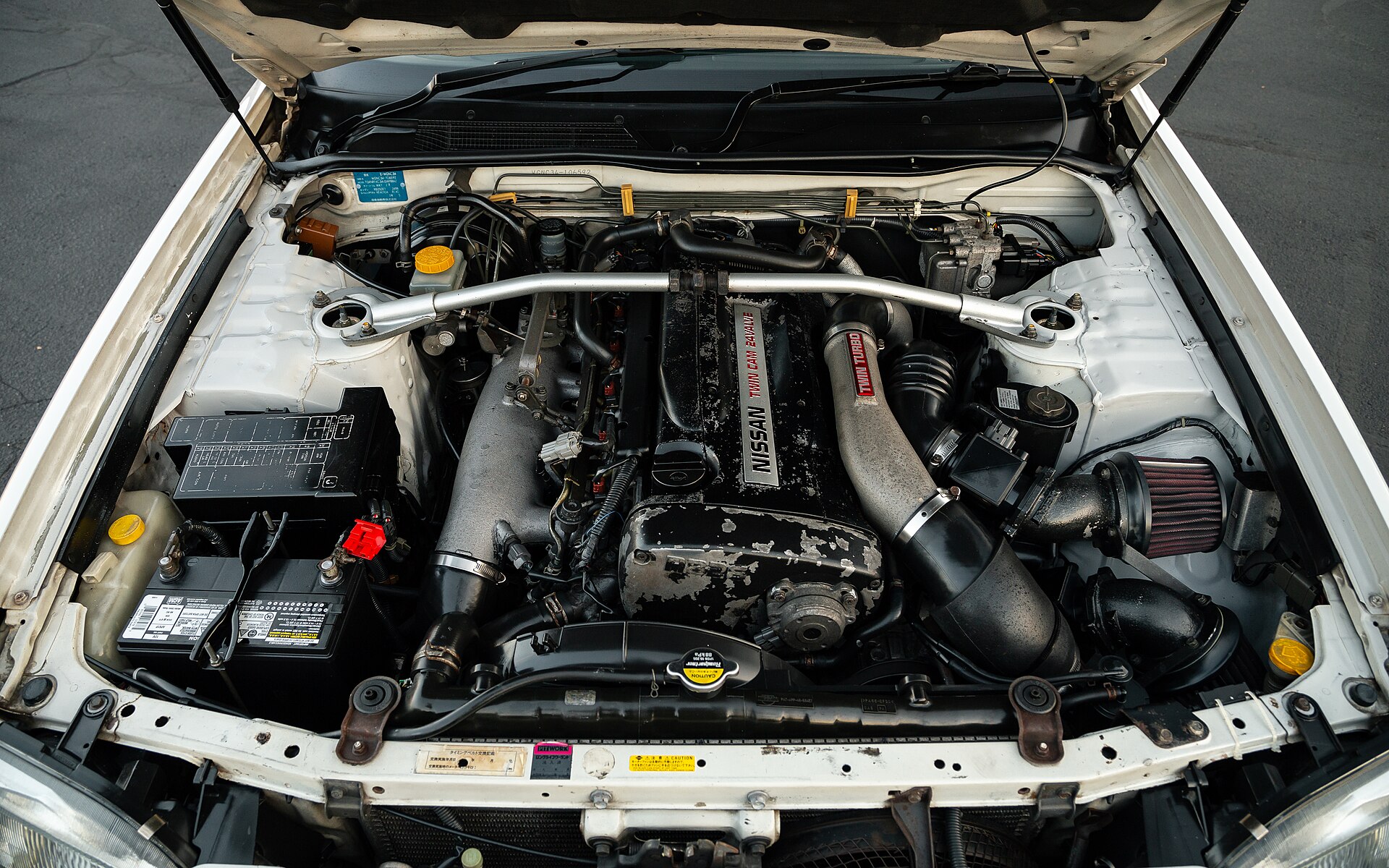
Why Nissan’s twin-turbo inline-six became indestructible—and why tuners push it to 1,000+ horsepower
Before it was a collector’s darling.
Before Hollywood made it iconic.
Before prices exploded.
There was an engine.
The RB26DETT — Nissan’s 2.6-liter twin-turbo inline-six — is the mechanical heart behind the Skyline GT-R myth. Built for Group A racing homologation, it became one of the most respected and tunable engines in performance history.
But why?
Why is it so durable?
Why does it tolerate insane boost levels?
And how did a “2.6-liter” engine become a 1,000+ horsepower icon?
Let’s break it down.
1️⃣ The Basics: What Is the RB26DETT?
RB = Nissan’s RB engine family
26 = 2.6 liters (officially 2,568 cc)
DE = Dual overhead cam
TT = Twin turbocharged
Core layout:
- Inline-six (I6)
- Iron block
- Aluminum head
- DOHC, 24 valves
- Individual throttle bodies (ITBs)
- Factory twin ceramic turbochargers
- Official output: 276 PS (Japanese “gentlemen’s agreement” era)
That 276 hp number?
Everyone knew it was underrated.
2️⃣ Why the Inline-Six Layout Matters
An inline-six is naturally balanced.
Unlike V6 engines, which often require balancing shafts, the straight-six layout has:
- Perfect primary balance
- Smooth secondary motion
- Minimal vibration
This means:
- High RPM capability
- Mechanical smoothness
- Less stress on internal components
The RB26 doesn’t just make power.
It makes it smoothly — which reduces internal shock loads.
That’s one part of the durability story.
3️⃣ The Iron Block Advantage
Modern performance engines often use aluminum blocks to save weight.
The RB26 uses cast iron.
That means:
- Thicker cylinder walls
- Higher tolerance to boost pressure
- Greater resistance to cylinder deformation
When you increase boost, cylinder pressure skyrockets.
Iron handles that pressure better than lightweight aluminum blocks.
This is why tuners can safely run:
- 600 hp on stock internals (with proper supporting mods)
- 800+ hp with strengthened internals
- 1,000+ hp with fully built setups
The block itself is rarely the limiting factor.
4️⃣ Closed Deck & Cylinder Strength
The RB26 features a strong block design with solid material around the cylinder walls.
More material = more structural rigidity.
Under high boost:
- Cylinders try to flex outward
- Head lift becomes a risk
- Gasket sealing becomes critical
The RB26’s architecture resists that flex better than many contemporary engines.
It was designed for racing from the start — and that shows.
5️⃣ Individual Throttle Bodies (ITBs)
One of the RB26’s defining features is its six individual throttle bodies.
Instead of one throttle plate controlling airflow, each cylinder has its own.
Benefits:
- Sharper throttle response
- Better airflow distribution
- Improved high-RPM breathing
Even by modern standards, ITBs are considered premium performance hardware.
They also contribute to the engine’s distinct sound — part mechanical snarl, part turbo whistle.
6️⃣ The Turbo Setup: Why It Scales So Well
Factory configuration:
- Twin small ceramic turbochargers
- Quick spool
- Conservative boost levels
Ceramic turbine wheels were lightweight, improving response.
But they were fragile at high boost — tuners quickly replaced them.
Once upgraded to steel turbine turbos, the RB26 platform became a monster.
Why it loves big turbos:
- Strong bottom end
- Excellent head flow
- Strong aftermarket support
- Massive tuning knowledge base
Swap to:
- Single large turbo
- Upgraded fuel system
- Forged pistons & rods
And suddenly 800–1,000 hp becomes realistic.
7️⃣ The Bottom End: Built for Abuse
The RB26 crankshaft is forged from the factory.
That’s huge.
Forged components:
- Have tighter grain structure
- Resist fatigue better
- Handle high cylinder pressure
Even stock internals have survived power levels far beyond factory specification — when tuned properly.
The weak points are usually:
- Oil system limitations
- Head gasket sealing at extreme boost
- Factory ceramic turbos
Not the block itself.
8️⃣ Oil System: The One Known Weakness
No engine is perfect.
At very high RPM (8,000+ sustained), RB26 engines can suffer oiling issues, especially in racing environments.
Common fixes:
- Upgraded oil pumps
- Extended oil pan baffles
- Improved crank collar designs
Once addressed, reliability improves dramatically.
This is why serious builds reinforce oiling early in the process.
9️⃣ The Cultural Multiplier Effect
The RB26 isn’t just strong mechanically — it’s strong culturally.
It became:
- The heart of “Godzilla”
- A legend in Japanese touring car racing
- The engine behind Nürburgring credibility
- The icon of early 2000s tuner culture
Because so many people modified it, the knowledge base exploded.
That matters.
An engine becomes “bulletproof” not just because of design — but because thousands of builders learn how to perfect it.
🔟 Why Tuners Love It
To summarize why 1,000 hp RB26 builds exist:
✔ Iron block strength
✔ Forged crankshaft
✔ Inline-six smoothness
✔ Excellent airflow
✔ Massive aftermarket support
✔ Decades of tuning knowledge
✔ Racing-origin architecture
Most engines can make power.
Few engines can make huge power repeatedly.
That’s the difference.
The Myth vs Reality
Is the RB26 indestructible?
No.
It requires:
- Proper fueling
- Professional tuning
- Oil system upgrades
- Quality internal components at extreme levels
But compared to many engines of its era, it was massively over-engineered for its official output.
And that’s why it aged so well.
Why It Still Matters Today
We live in the era of hybrid torque and electric instant power.
But the RB26 represents something else:
- Mechanical strength
- Boost-based tuning culture
- Analog control
- Sound + sensation
It’s not just an engine.
It’s a symbol of a time when horsepower came from mechanical bravery.
Would you rather own:
- A perfectly restored stock RB26 GT-R
- Or a fully built 1,000 hp single-turbo monster?
Comment your choice
Related reads: The Battle of Giants · Top 5 Rarest GT-Rs · How Fast & Furious Elevated the Nissan Skyline…