Understanding the Green Hell: Nürburgring's Supercar Status
What the “Green Hell” really is—and how “sub-7 minutes” became the supercar status symbol There are racetracks, and then there’s the Nürburgring’s Nordschleife—a place so demanding, so unpredictable, and so culturally loaded that …
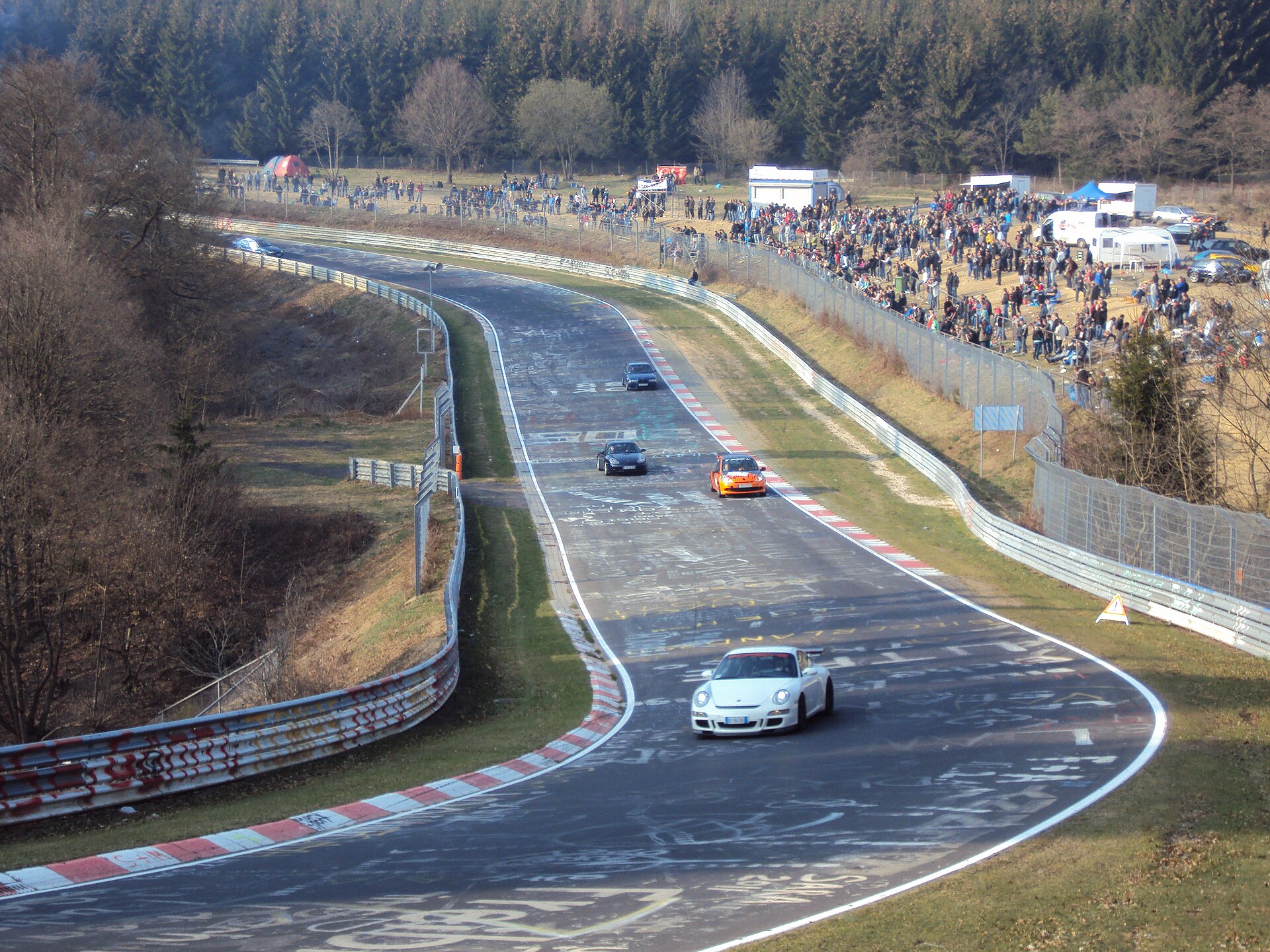
What the “Green Hell” really is—and how “sub-7 minutes” became the supercar status symbol
There are racetracks, and then there’s the Nürburgring’s Nordschleife—a place so demanding, so unpredictable, and so culturally loaded that it has become the global benchmark for performance cars.
It’s not just a track. It’s a myth-making machine. And for manufacturers, a fast lap here is more than engineering—it’s marketing, credibility, and bragging rights wrapped into one number.
1) What is the “Green Hell”?
The nickname “Green Hell” was popularized by racing legend Jackie Stewart after his rain-and-fog mastery of the 1968 German Grand Prix era.
Why “Green”? Because the track is carved through dense forest.
Why “Hell”? Because it’s long, fast, bumpy, technical, and the weather can change mid-lap.
Official quick facts (the stuff that makes engineers sweat):
- A full official lap for record attempts is 20.832 km, measured from the T13 start/finish line, with a flying start.
- The Nordschleife officially includes 73 corners.
And those numbers only hint at the real difficulty: elevation changes, blind crests, compressions, mixed surfaces, and microclimates that can turn a “perfect” lap into chaos.
2) Why the Nürburgring became the world’s ultimate proving ground
Manufacturers obsess over the Ring because it compresses a thousand engineering problems into one lap:
It’s a torture test for the entire car
- Cooling: sustained high load exposes weak thermal management
- Brakes: repeated high-speed decel + long downhill sections punish heat capacity
- Chassis balance: bumps + compressions reveal suspension flaws fast
- Aero stability: high speed over crests forces real-world downforce control
- Tires: inconsistent grip and surface changes punish bad setup choices
It’s also a development ecosystem
The Nürburgring itself describes decades of manufacturer “test and development drives” where OEMs and suppliers refine vehicles and components under extreme conditions.
This is why the Ring matters even when nobody’s chasing a headline time: the place is a high-speed lab.
3) The “sub-7 minutes” phenomenon: how one number became a supercar filter
A lap under 7 minutes isn’t a law of physics—it’s a cultural threshold.
Why 7:00 became the magic line
- It’s easy to understand
Even non-enthusiasts get it: “under 7” sounds like elite territory. - It’s hard enough to mean something
Sub-7 usually requires real aerodynamic efficiency, serious tires, big braking performance, and stability—not just horsepower. - It’s a marketing proof-point
The Ring is globally recognized, so the number travels fast. One lap time can headline a launch.
The benchmark got even stricter over time
Porsche explicitly noted the difference between the older 20.6 km reference and the full 20.8 km lap used today, publishing both times for the same car.
And the Nürburgring’s own records page standardizes official record attempts as a full 20.832 km lap from T13.
So “sub-7” today often means sub-7 on the full lap, not the shorter variant.
4) Proof that the Ring obsession is real: the modern “arms race” timeline
Manufacturers didn’t just chase sub-7—they started chasing each other.
Here are a few headline examples that show how intense it got:
- Porsche 911 GT3: 6:59.927 for a full 20.8 km lap (development driver Lars Kern).
- Porsche 918 Spyder: 6:57.00 (Porsche press release).
- Lamborghini Aventador SVJ: 6:44.97 (Lamborghini announcement).
- Mercedes-AMG GT Black Series: 6:43.616 on the full 12.8-mile/20.832 km lap; also reported as 6:48.047 for the shorter layout (Mercedes release).
- Mercedes-AMG One: 6:35.183 (official Nürburgring news + Mercedes media).
Whether you care about lap times or not, you can’t ignore what these numbers signal: the Nürburgring became the arena where brands publicly validate engineering claims.
5) Why some people criticize Nürburgring lap times (and why they still matter)
Ring times are powerful—but not perfect.
Common objections
- Conditions vary: temperature, wind, track dampness, traffic (during non-exclusive sessions)
- Spec differences: tires, optional aero, “track pack” configurations
- Rulebook confusion: full lap vs shorter lap, where timing starts/ends
Even enthusiasts who love the Ring admit testing there is “about more than lap times,” and that proper record attempts typically require controlled sessions and the right permissions.
Why manufacturers still chase it anyway
Because it’s the closest thing to a global performance exam:
- One number the whole world recognizes
- A track that stresses every subsystem
- A place where engineering pride and brand image collide
Do you think Nürburgring lap times still define a “successful” supercar today—or have we reached the point where real-world usability, hybrid/EV performance, and customer experience matter more than chasing a number?
Comment your take .
Related reads: Porsche 911 GT3 RS · Porsche 911 GT2 RS · McLaren MCL-HY