Aston Martin: The Complete History — Britain's Most Elegant Sports Car
Aston Martin is more than a car brand. It is a symbol of British elegance, racing heritage, and a certain kind of sophisticated cool that no other manufacturer has ever quite replicated.
Aston Martin is more than a car brand. It is a symbol of British elegance, racing heritage, and a certain kind of sophisticated cool that no other manufacturer has ever quite replicated. From a small workshop in West London in 1913 to James Bond’s most famous prop and one of the most desirable names in the world — this is the complete story of Aston Martin.
The Beginning: A Hill Climb and a Name
On January 15, 1913, Lionel Martin and Robert Bamford founded Bamford & Martin Ltd in West Kensington, London. The name “Aston Martin” combined Martin’s surname with the Aston Hill Climb near Aston Clinton in Buckinghamshire, where Lionel regularly competed. Their first car — the “Coal Scuttle” — was built in 1915.
The Early Racing Years: 1919–1947
Through the 1920s, Aston Martin built a reputation for light, nimble, fast machines in hillclimbs and endurance events. But finances were brutal. After Lionel Martin departed in 1926, the company changed hands multiple times and survived bankruptcy.
In 1946, industrialist David Brown paid £20,500 for the entire company. Everything changed.
The David Brown Era: The DB Legacy (1947–1972)
David Brown also bought Lagonda for its W.O. Bentley-designed engine. The “DB” initials on every Aston Martin stood for his name. The DBR1 won the 24 Hours of Le Mans in 1959 — Aston Martin’s greatest racing victory.
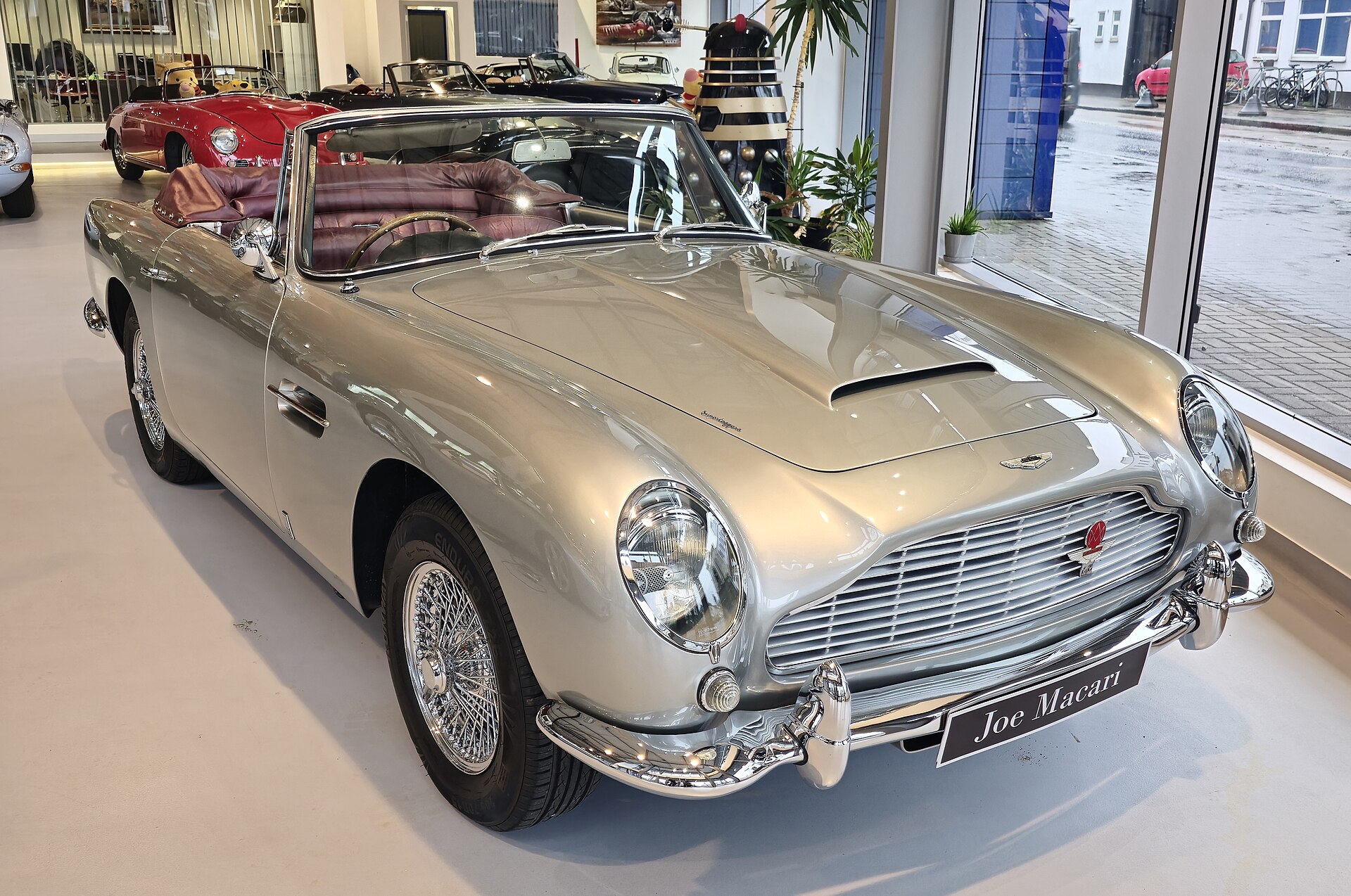
1963: The DB5 — The Most Famous Car in the World
The DB5 (1963): 4.0L straight-six, 282hp, styled by Touring Superleggera. Then Sean Connery drove the silver DB5 in Goldfinger (1964). Ejector seat, machine guns, revolving number plates. It became the most recognizable car on the planet.
Fewer than 900 DB5s were built. Today, pristine examples sell for over $1.5 million. A Goldfinger DB5 sold in 2019 for $6.4 million.
1969–1987: Financial Struggles
David Brown sold the company in 1972. Aston Martin survived another bankruptcy, changing hands multiple times. The V8 kept the brand alive and appeared in The Living Daylights (1987).
1987–2007: The Ford Era
Ford took full ownership in 1994. The DB7 (1994) became the best-selling Aston Martin with over 7,000 examples. The DB9 (2003) and Vanquish followed. Ford sold Aston Martin in 2007 for £479 million.
2009–Present: One-77, Valkyrie, and the Modern Era
The One-77 (2009): 7.3L NA V12, 750hp, 77 units, £1.15 million each. The Valkyrie (2021): Cosworth V12 revving to 11,100rpm, 1,160hp, 1,000kg. The Valhalla (2024): 1,000+hp hybrid.
Aston Martin returned to Formula 1 in 2021 with Lawrence Stroll’s backing, Sebastian Vettel and Fernando Alonso behind the wheel.
Aston Martin in Numbers
| Year | Milestone |
|---|---|
| 1913 | Bamford & Martin founded in London |
| 1947 | David Brown buys Aston Martin |
| 1959 | Le Mans victory with DBR1 |
| 1963 | DB5 launched |
| 1964 | DB5 appears in Goldfinger |
| 1994 | DB7 — best-selling Aston Martin |
| 2009 | One-77 hypercar |
| 2021 | Valkyrie + F1 return |
| 2024 | Valhalla hybrid supercar |
Why Aston Martin Is Different
Aston Martin is elegance. A quiet, understated, deeply British kind of excellence. It is the car James Bond chose not because it was the fastest, but because it was the most perfectly suited to a man of taste and danger.
Over 110 years, Aston Martin has survived seven bankruptcies, more ownership changes than almost any other manufacturer, two World Wars, and the relentless pressure of competing against companies with 10 times the resources. It has survived because the cars it builds are simply irreplaceable.
Which is your favourite Aston Martin — the DB5, the One-77, or the Valkyrie? Let us know in the comments!
Related reads: Why the Aston Martin Valkyrie Redefines Road-Legal… · Aston Martin Valhalla · The Most Exciting Hypercars Coming in 2026