Porsche 918 Spyder: The Hybrid Hypercar Revolution
There are hypercars that feel like a “bigger engine” solution—and then there’s the 918 Spyder, a car that feels like a systems solution. Porsche didn’t build it to prove hybrids could be efficient.
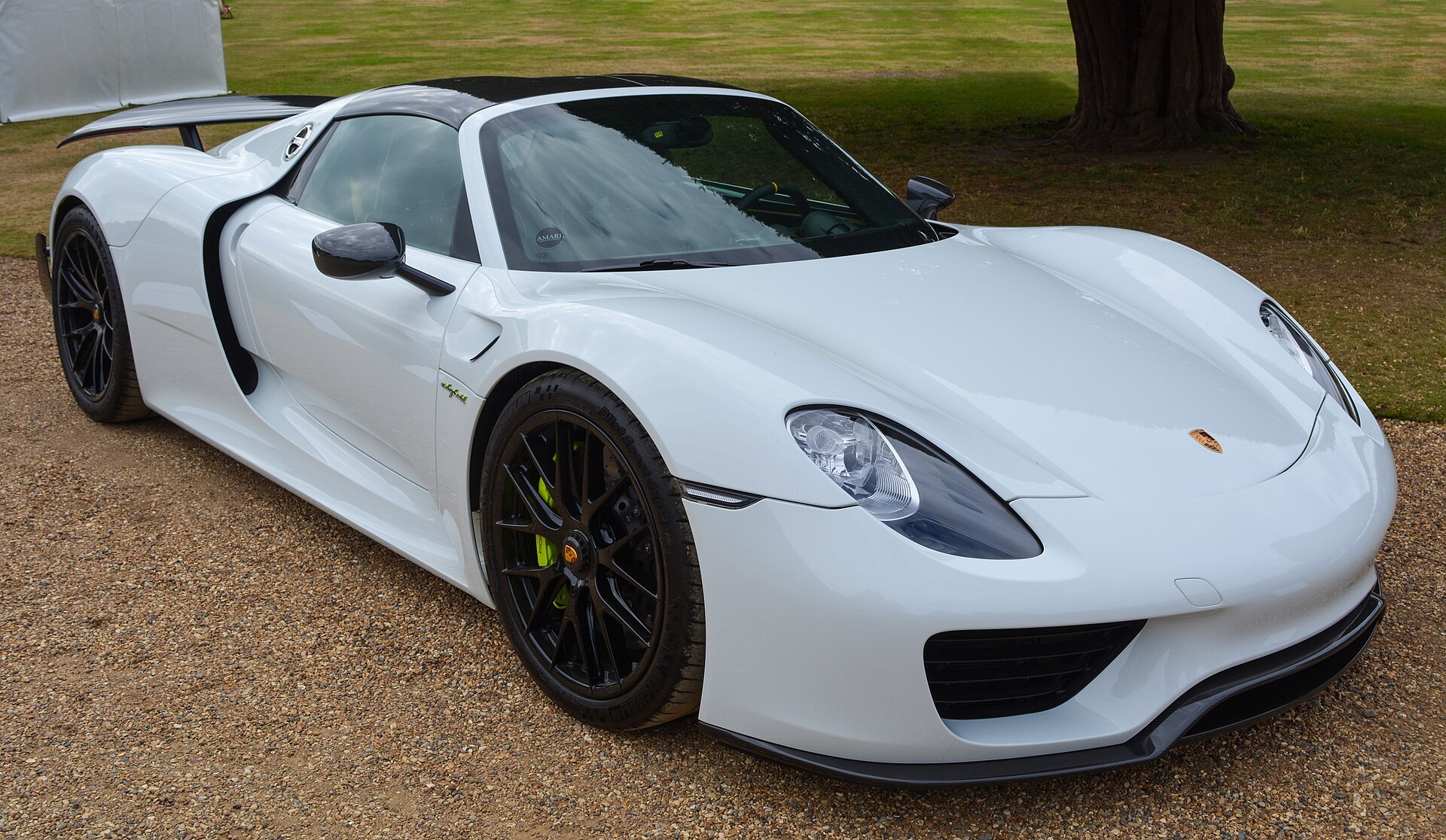
There are hypercars that feel like a “bigger engine” solution—and then there’s the 918 Spyder, a car that feels like a systems solution. Porsche didn’t build it to prove hybrids could be efficient. Porsche built it to prove hybrids could be faster, smarter, and more controllable than a pure combustion halo car—especially when the road gets bumpy, the surface gets cold, or the corner exit gets messy.
Even more than a decade after its debut, the 918 Spyder still has a reputation for being a kind of “physics cheat code”: not because it breaks the rules, but because it uses electrification to bend the rules in your favor—instant torque, front-axle pull, seamless boost, and traction you can actually deploy.
This article is a deep dive into why the 918 Spyder matters, how it works, and why its legacy keeps growing.
1) What the 918 Spyder was really designed to do
The 918 Spyder sits in the “Holy Trinity” era of hypercars (alongside the P1 and LaFerrari), but its personality is unique: it’s the one that weaponized usability.
Where many hypercars are defined by an edge-of-control vibe, the 918 is defined by this feeling:
- It can be brutally fast without constantly scaring you.
- It delivers enormous performance without demanding constant correction.
- It makes speed easier to access, not harder.
That’s not luck—it’s the hybrid layout and the way Porsche integrated it into the chassis, drivetrain, and control logic.
2) The core idea: V8 emotion + electric intelligence
At the heart of the 918 Spyder is a simple concept executed at an insanely high level:
- A mid-mounted naturally aspirated 4.6L V8 provides high-rev character and a clean, linear soundtrack.
- Two electric motors add instant torque, traction, and torque vectoring-style effects through drivetrain control.
- A 7-speed PDK dual-clutch keeps the combustion side always in the right place for speed.
Porsche’s own technical material highlights the headline output figures that made the world pay attention:
- System output: 652 kW (887 hp)
- V8 output: 608 hp at 8,600 rpm (in Porsche’s press spec)
- Electric motors: front + rear, contributing additional power for combined performance
The magic isn’t just the total power. It’s the delivery—the hybrid system can fill torque gaps, stabilize traction, and pull the car out of corners in a way that feels almost unfair.
3) Why the hybrid layout feels like “AWD with a brain”
The 918’s layout is commonly described as mid-engine, all-wheel drive—but it’s important to understand what that really means here.
The combustion engine primarily drives the rear, while the front axle is electrically driven, creating AWD behavior through the hybrid system.
This has three huge real-world advantages:
A) Corner exit traction that doesn’t rely on brute-force tires alone
Instead of relying purely on rear grip to put power down, the 918 can pull itself out of corners using the front motor. The sensation is different from traditional AWD: it feels less like “traction everywhere” and more like “the car is being guided forward.”
B) Response that feels immediate even at low rpm
Naturally aspirated engines are beautiful, but they still live in a rev range. Electric torque does not care about revs. The 918’s e-power makes the car feel instantly awake, especially in real roads and mid-speed situations.
C) Stability at speed that builds confidence
At high speeds, stability isn’t only aero—it’s also how smoothly the car applies torque and how predictably it transitions under load. The 918’s hybrid control approach was developed to be a performance tool, not an eco trick.
4) The Nürburgring moment: why 6:57 mattered
Some cars become legends because people “feel” they’re special.
The 918 became a legend because Porsche put a number on it.
Porsche announced that the 918 Spyder achieved a 6:57 lap of the Nürburgring Nordschleife, breaking the then “seven-minute barrier” narrative for a road-legal production car.
That lap time mattered because the Nordschleife is the place where:
- power alone is not enough,
- high-speed stability is non-negotiable,
- traction and braking consistency decide everything.
And the 918 didn’t do it as a stripped track special. It did it as a road-legal, hybrid hypercar—making the point loud and clear: hybridization can be a performance advantage.
5) The battery and motors: not big, but powerful
A common misconception is that “more battery = more performance.” The 918 proves the opposite can be true.
The 918 uses a 6.8 kWh liquid-cooled lithium-ion battery, which is small compared to modern EV standards but designed for high power delivery and rapid regen.
Porsche’s published technical spec document also lists motor output figures (front motor power and hybrid module details), showing the system was engineered around performance power flow, not long EV range.
This is an important point: the 918’s hybrid system is like a power tool, not a fuel-saving accessory. It exists to:
- add torque exactly when needed,
- sharpen response,
- manage traction,
- and support repeatable performance.
6) “It feels fast everywhere”: the real reason owners love it
If you talk to people who’ve driven multiple hypercars, a theme comes up with the 918:
It’s one of the rare cars that can feel insanely fast without always feeling stressful.
That’s because so many things are working together:
- PDK makes the combustion engine consistently effective.
- Electric torque fills the gaps.
- Front-axle e-drive helps stabilize acceleration.
- The overall system makes the car feel like it’s always ready.
You end up with a hypercar that doesn’t only impress in perfect conditions—it impresses when the road is slightly dirty, when the corner tightens unexpectedly, or when you need speed now, not after a downshift and a prayer.
7) Weissach Package: what it represented
A huge part of the 918 mythos is the Weissach option, named after Porsche’s development center.
The point of Weissach wasn’t “luxury.” It was Porsche’s traditional philosophy: reduce mass, sharpen response, and prioritize the driving experience.
Not every source lists every Weissach component the same way, but broadly it’s known for emphasizing lightweight measures and track-focused intent, while the base car already sits at an incredibly advanced level.
(If you want, I can write a dedicated follow-up post: “918 Weissach Package explained: what you actually get, and why it matters.”)
8) Production, rarity, and why the 918’s value story stays strong
The 918 Spyder was always limited—Porsche built it as a limited production series of 918 units, produced from September 2013 to June 2015.
Porsche also marked the end of production officially when the final car came off the line at **Stuttgart-Zuffenhausen.
That scarcity is part of the appeal, but the bigger reason the 918 holds cultural weight is this:
It was a technical turning point—one of the first halo cars to prove that “future tech” can still deliver genuine emotional driving.
9) The 918 Spyder in one spec-focused snapshot
Here’s a clean reference section you can keep in the article for enthusiasts who scroll straight to the numbers.
Power & drivetrain
- System output: 652 kW (887 hp)
- Engine: 4.6L naturally aspirated V8 (Porsche press spec lists 608 hp @ 8,600 rpm)
- Motors: front + rear electric motors
- Battery: 6.8 kWh, liquid-cooled lithium-ion
- Transmission: 7-speed PDK dual-clutch
Performance headline
- Nürburgring Nordschleife: 6:57
Production
- Limited series: 918 units
- Production period: Sept 2013 – June 2015
10) Final take: the 918 isn’t the loudest hypercar—just one of the smartest
The reason the 918 Spyder still dominates conversations is simple:
It didn’t just chase horsepower.
It chased deployable performance.
It’s a hypercar that can be devastatingly fast while still feeling engineered around the driver’s confidence. And that makes it timeless—because pure speed is easy to admire, but usable speed is what people remember.
If you could choose one hypercar for a real-world weekend—mountain roads, fast highways, unpredictable conditions—would you pick the 918 Spyder, or something more “raw” like a Carrera GT-style analog icon?
Reply in the comments with your pick and your reason. And if you want more posts like this (deep dives with specs + engineering + legacy), subscribe to SupercarsPassion and share this article with one friend who still thinks hybrids can’t be emotional.
Related reads: How LaFerrari, P1 & 918 Spyder Revolutionized… · Porsche Mission X · Porsche 911 Turbo S T-Hybrid