Ford brings a naturally aspirated V8 to a grid full of turbo sixes
The unnamed LMDh ran uncovered at Paul Ricard on 17 August. Underneath sits a 5.4-litre Coyote-derived V8 making 670 hp — a deliberately old-fashioned answer to a question every rival solved with turbochargers.
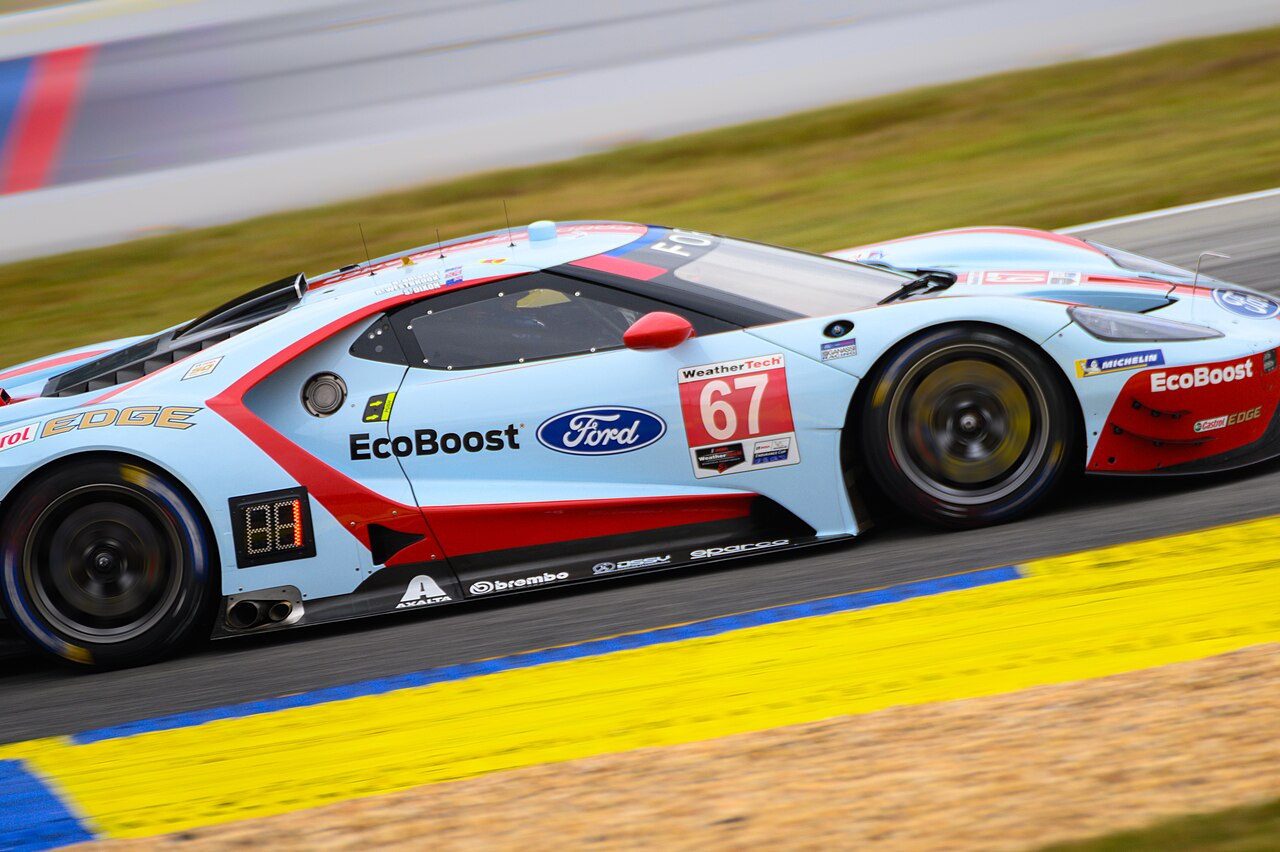
After months of teasers, Ford finally let the car be seen. The LMDh prototype ran at Circuit Paul Ricard on 17 August with its bodywork uncovered, still wearing blue and white camouflage over the lights and the finer bodylines, but no longer hidden.
The engine is the story
Ford has gone with a 5.4-litre V8 derived from the Mustang’s Coyote unit, producing 670 horsepower and breathing without assistance. On a grid where turbocharged sixes have become the default, that is a conspicuous choice. Only Cadillac has stayed with a large naturally aspirated V8, and the noise is a large part of why people notice it.
Balance of Performance means the engine choice will not decide the championship. But it decides how the car sounds across four hours of night running at Le Mans, and Ford has clearly weighed that.
The programme
Testing started on 5 August with several days of shakedown, which Ford has described as proceeding to plan, before the first full track running. Matt Campbell, Mike Rockenfeller and Tom Blomqvist were present for the shakedown; Campbell and Logan Sargeant took the first proper test. Two works entries will contest the 2027 World Endurance Championship, with the racing debut scheduled for March.
The chassis comes from Oreca, as LMDh regulations require a supplier from an approved list. That makes the powertrain, the bodywork and the operation the places where Ford can actually differentiate — which explains the emphasis on the engine.
Why Ford, and why now
Ford’s record at Le Mans is not a marketing line. The GT40 result in 1966 is the most retold story in endurance racing, and the GT that returned in 2016 won its class on debut. That history is an asset and a liability at once: it guarantees attention, and it sets a bar that a first-season LMDh is unlikely to clear.
What March will tell us is whether the reliability is there. Everything else — the noise, the history, the shark fin — is already working.
Related reads: The Ford GT Legacy