The Ford GT Legacy: Three Eras of Racing Excellence
The Ford GT name is rare because it isn’t a “model line” in the normal sense. It’s a recurring declaration of intent—a car Ford builds only when it wants to prove something.
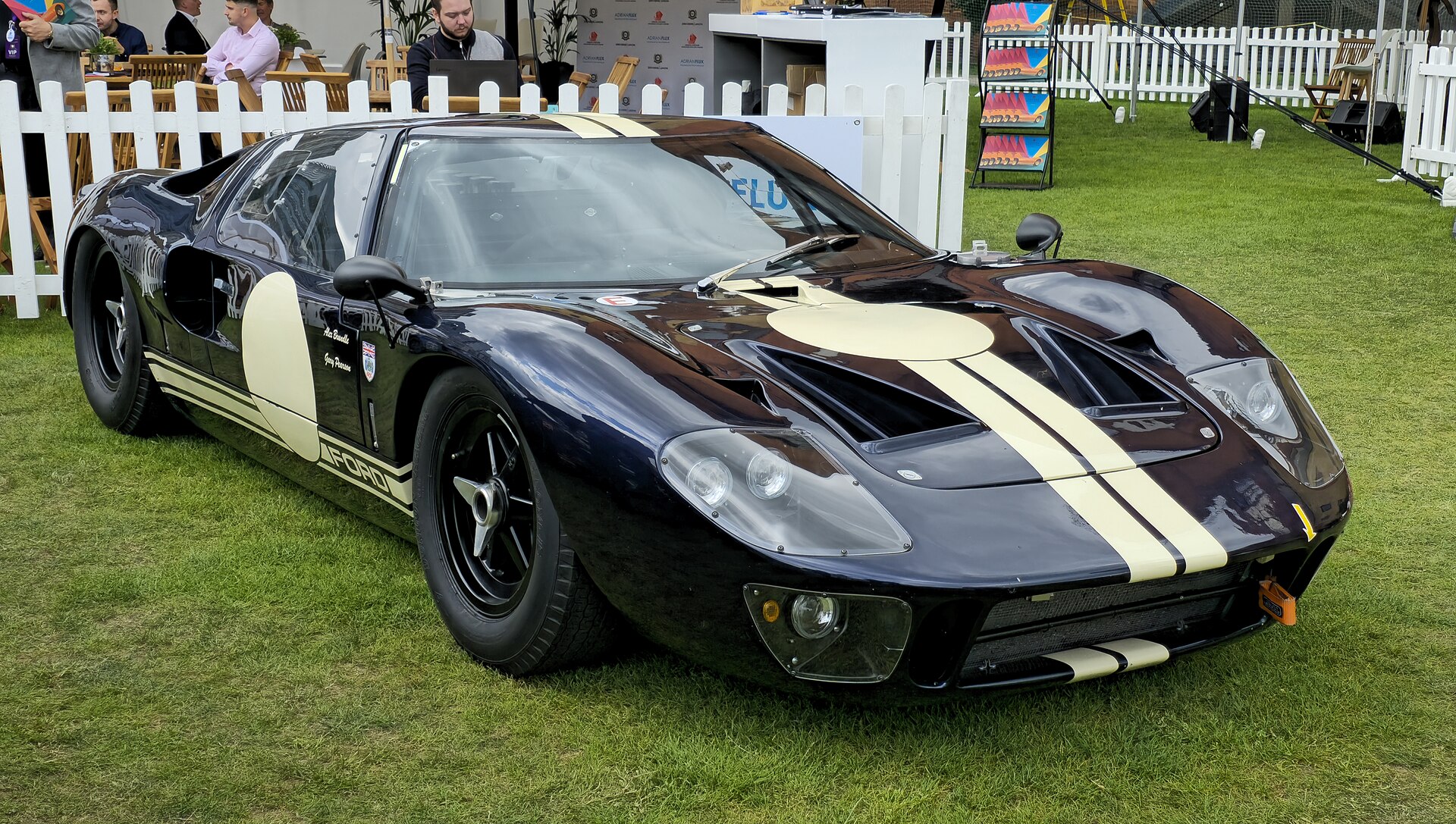
The Ford GT name is rare because it isn’t a “model line” in the normal sense. It’s a recurring declaration of intent—a car Ford builds only when it wants to prove something. In the 1960s, that “something” was simple: beat Ferrari at Le Mans. In the 2000s, it was: resurrect an icon with modern reliability and a supercharged V8. In the 2010s, it became: turn endurance-racing aerodynamics and carbon-fiber engineering into a road-legal weapon—then finish the story with track-only specials that are basically unfiltered engineering exercises.
This article walks the entire timeline, from the original GT40 program to the most recent Ford GT chapter.
1) Before the GT40: the moment Ford decided “we’re doing Le Mans”
The Ford GT40 story is inseparable from a defining business-and-ego collision: a failed attempt by Ford Motor Company to buy Ferrari. The details are complex and debated in pop history, but the outcome is clear: Ford committed serious resources to build a car that could win the 24 Hours of Le Mans overall. One influential thread in that origin story is how early GT40 development drew heavily from the work of Lola Cars founder Eric Broadley and the Lola Mk6 concept.
That first era wasn’t about building a “supercar.” It was about building a tool—a long-distance, high-speed endurance tool.
2) The GT40 era: four straight overall Le Mans wins (1966–1969)
The GT40 became one of motorsport’s most legendary machines because it achieved what almost no program ever does: repeatable dominance.
A widely referenced summary of the GT40’s Le Mans overall victories breaks down the winning variants and years like this:
- 1966: Mk II (7.0L V8)
- 1967: Mk IV (7.0L V8)
- 1968: Mk I (4.9L V8)
- 1969: Mk I (4.9L V8)
Two details matter here for the “why it became a myth” factor:
The 1966 shockwave
1966 wasn’t merely a win—it was an event that signaled a power shift: Ford’s program delivered the breakthrough overall victory at Le Mans after years of effort and rapid development.
The 1967 Mk IV milestone
1967’s win with the Mk IV isn’t just another checkmark. It’s central to the symbolism of the modern track-only Ford GT Mk IV name—Ford explicitly ties the modern Mk IV to that 1967 victory.
Why the GT40 era still matters today: it permanently linked “GT” to endurance racing credibility. Every modern Ford GT—no matter how different the powertrain—has been built under the shadow (and prestige) of those Le Mans years.
3) The long silence—and why the GT had to return as more than a tribute
After the GT40 era, the name didn’t continue as a normal production model. That’s part of the mystique: Ford didn’t “water it down.” The GT became something Ford brings back only when the product itself can justify the badge.
Which sets up the next big moment…
4) The modern comeback: 2005–2006 Ford GT (the analog supercar classic)
The 2005–2006 Ford GT is the model that many enthusiasts still call the sweet spot: modern enough to drive anywhere, analog enough to feel like a physical event.
The core engineering recipe
Ford’s own dealer/brochure-style literature for the 2005 GT highlights the essentials:
- 5.4L DOHC supercharged V8
- 550 horsepower
- 6-speed Ricardo manual transaxle
This generation’s appeal is how direct it feels. The car’s performance is huge, but the bigger story is the sensation: a supercharged V8 with a proper manual, paired to a shape that clearly nods to the 1960s without becoming a pure retro copy.
Production reality and rarity
A commonly cited total production figure for this first modern generation is 4,038 cars.
Ford also produced special “Heritage” variants inspired by historic racing liveries (including Gulf-style tributes).
Why it matters in the Ford GT arc: this was the “reintroduction” chapter—an icon reborn as a usable supercar, before Ford went even deeper into motorsport aerodynamics in the next generation.
5) The radical reinvention: 2017–2022 Ford GT (carbon fiber + active aero + Le Mans logic)
If the 2005 GT was a tribute done perfectly, the 2017 GT was a different mindset entirely: race car first, road car second.
The powertrain controversy that became a statement
Yes—Ford went V6. But it wasn’t a compromise in the way internet comments often assume. Ford published official technical specs for the 2017 GT showing:
- 3.5L EcoBoost V6
- 647 hp @ 6,250 rpm
- 550 lb-ft @ 5,900 rpm
- Track-minded hardware like dry sump lubrication and dual injection (port + direct).
Why a V6? Because the entire car was built around aerodynamic efficiency, packaging, and endurance-race style thermal management, not “largest cylinder count possible.”
Aerodynamics as the real headline
This generation’s silhouette is all function: flying buttresses, active rear wing, extreme underbody focus. Contemporary reviews emphasized how race-derived the whole package felt in motion, not just in styling.
6) Full-circle racing: Ford returns to Le Mans (2016) and wins its class
A key reason the 2017 GT exists is Ford’s return to Le Mans with a GT race program. Ford publicly framed the 2016 return as a major endurance statement.
In 2016, Ford won the LMGTE Pro class at Le Mans—an outcome widely reported and chronicled in race summaries.
This is the “bridge” moment of the modern GT story: 1960s dominance → modern return → modern class victory.
7) The application-only era—and the production extension to 1,350 cars
Unlike most supercars, the modern GT wasn’t simply “walk into a dealership and buy.” Ford used an application process and later extended production due to demand.
Ford’s own media center announcement (October 18, 2018) stated Ford would build approximately 1,350 Ford GTs because demand outstripped supply.
That production decision matters because it explains how the 2017–2022 generation exists in the real world:
- rare enough to stay mythical,
- but present enough to become a true modern icon.
8) The finale of the road car: 2022 Ford GT LM Edition
By 2022, Ford positioned the GT’s final model year as a celebration of its Le Mans narrative.
Ford’s official announcement for the 2022 Ford GT LM Edition described it as the final third-generation Ford GT special edition, celebrating the 2016 Le Mans class win and the historic 1966 1-2-3 podium sweep.
This is the “closing chapter” for the road-legal GT—built as a commemorative final note rather than a new performance direction.
9) Track-only GTs: when Ford removes the “street” constraints
Ford GT Mk II (45 units): the track-day monster
Ford introduced a track-only GT Mk II (debuted publicly at events like Goodwood Festival of Speed) as a version freed from road regulations.
A commonly cited outline of the GT Mk II concept includes:
- track-only (not street legal),
- major aero changes,
- limited run of 45 units.
Whether you see it as “too extreme” or “perfect,” the Mk II is the proof that Ford understood something: once you’ve built a carbon-fiber, aero-driven platform, the track version becomes the purest expression.
Ford GT Mk IV (67 units): the ultimate track-only “final form”
Ford’s official press release on the Ford GT Mk IV is very clear about what it is:
- track-only,
- built in collaboration with Multimatic,
- limited to 67 units,
- explicitly nodding to the year the original Mk IV won Le Mans (1967).
This is essentially Ford saying: the road car may end, but the engineering spirit of the GT badge will be allowed one last no-excuses moment.
10) What the Ford GT story really is: three different answers to the same question
If you step back, Ford GT history is not “one car evolving.” It’s three distinct philosophies, each optimized for its era:
- GT40 (1960s): maximum endurance racing focus, built to win the biggest stage.
- 2005–2006 GT: a modern homage with a supercharged V8 and a manual—high drama, real usability.
- 2017–2022 GT: carbon-fiber + active aero + race-bred packaging, built as a street extension of a race program.
- Mk II / Mk IV track cars: the “remove regulations and go all in” epilogue.
That’s why Ford GT fans argue endlessly about “the best one”—because they’re not really comparing the same type of car. They’re comparing three interpretations of greatness.
If you could pick one Ford GT era for a full weekend (roads + one track day), what’s your choice?
- GT40 era legend
- 2005–2006 supercharged manual icon
- 2017–2022 carbon + aero modern masterpiece
- track-only Mk II / Mk IV madness
Drop your pick in the comments and tell me why—engine, design, racing heritage, rarity, or pure driving feel.
Related reads: Ford brings a naturally aspirated V8 to a grid… · Understanding the Green Hell · Your First Track Day