Dallara Stradale: The Racing Car You Can Drive on the Road
There is a small town in the Parma hills of northern Italy called Varano de' Melegari. Population: about 2,500 people.
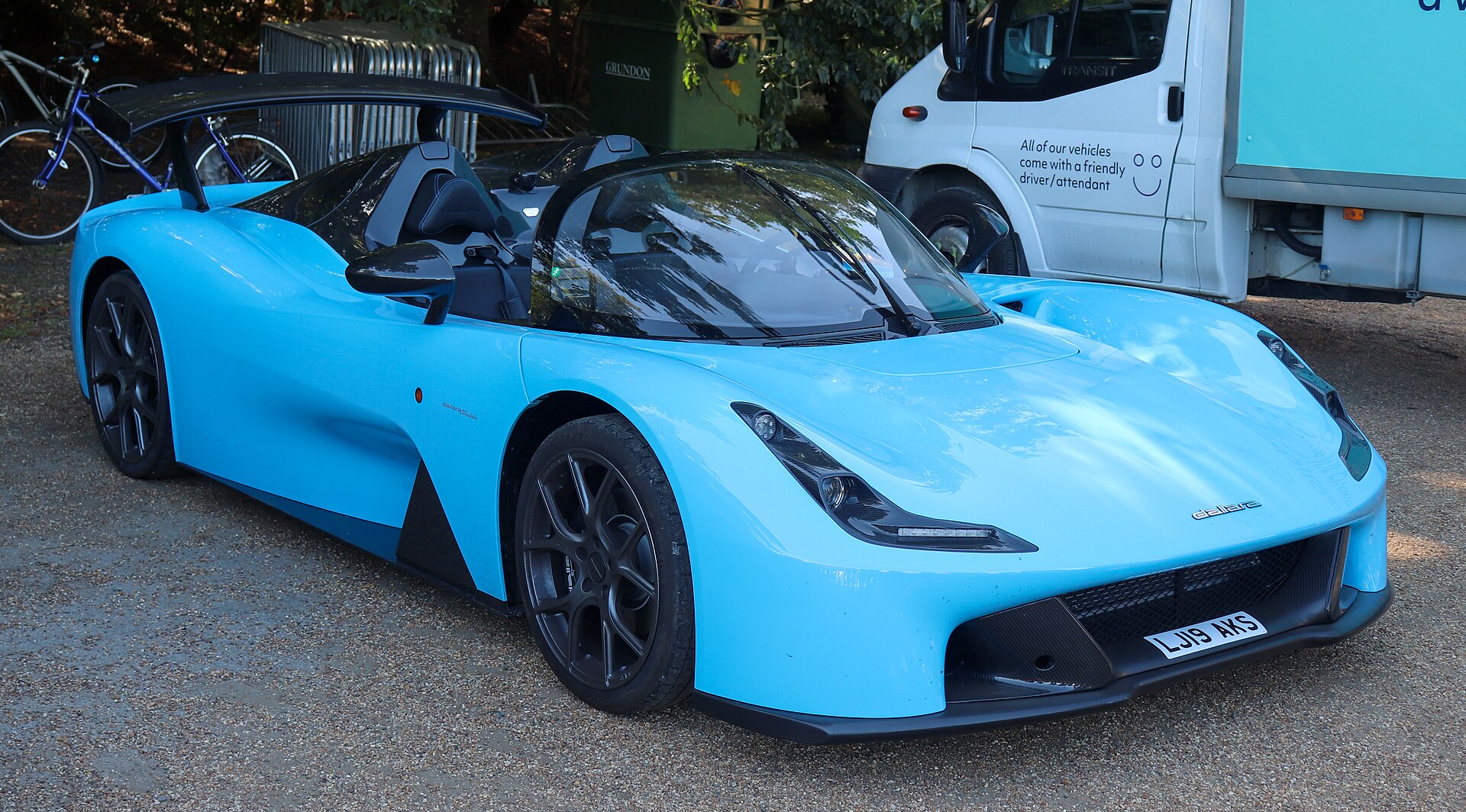
There is a small town in the Parma hills of northern Italy called Varano de’ Melegari. Population: about 2,500 people. It has a small racing circuit, a church, and a factory that has built the chassis of more racing cars than any other company on earth.
That factory is Dallara. And in 2017, after 50 years of building cars for everyone else, it finally built one for itself.
Who Is Dallara?
Most people who love cars have never heard of Dallara. Yet Dallara’s work is everywhere.
Giampaolo Dallara was born in 1936 in Parma, Italy. He studied aeronautical engineering and began his career at Ferrari in 1959, working under Enzo Ferrari himself. He then moved to Maserati, and in 1963 he joined the newly founded Lamborghini, where he became the chief engineer. He designed the chassis of the Lamborghini Miura — the very car that invented the modern supercar.
In 1972, Giampaolo Dallara left Lamborghini and founded his own company: Dallara Automobili, based in Varano de’ Melegari. His business model was unusual: he would build racing car chassis for other teams, not complete road cars under his own name.
Over the next five decades, Dallara became the dominant force in single-seater racing chassis. Today, Dallara builds the chassis for Formula 2, Formula 3, IndyCar, and several other major championships. More than 90% of all IndyCar chassis on the grid are Dallara. The company also built chassis and components for Ferrari, Alfa Romeo, McLaren, and Bugatti.
For 45 years, Giampaolo Dallara built cars for everyone except himself.
Then, in 2017, he turned 81. And his company gave him the only birthday present that made sense: the keys to the first road car ever built under his own name.
The Philosophy: Colin Chapman’s Ghost
Dallara built the Stradale around a single philosophy — one borrowed from Colin Chapman, the founder of Lotus, who famously said: “Simplify, then add lightness.”
Chapman believed that power was overrated. What mattered was weight. A light car accelerates faster, brakes shorter, and handles better than a heavy car with three times the horsepower. This philosophy defined Lotus and produced legendary cars like the Lotus Elise.
Dallara applied the same thinking to the Stradale with an almost obsessive commitment. The result is a car that weighs just 855 kg — less than a modern Honda Civic. Yet it produces 400 horsepower.
The power-to-weight ratio is extraordinary: 468 hp per tonne. For reference, the Ferrari F40 produced 478 hp per tonne. The Dallara Stradale, at a fraction of the Ferrari’s price, lives in the same performance universe.
The Engine: Ford Power in an Italian Racing Car
Here is where the Dallara Stradale surprises everyone.
The engine is a 2.3-liter four-cylinder turbocharged unit. It is the same base engine used in the Ford Focus RS and the Ford Mustang EcoBoost. Ford calls it the EcoBoost. It is an excellent engine — but it is not exotic. It is not a Ferrari V12. It is not a Lamborghini V10.
This was a deliberate decision. Dallara’s engineers, led by a partnership with Bosch, took the Ford engine and reworked it for maximum performance and reliability. In Dallara’s hands, it produces 400 horsepower at 6,200 rpm and 500 Nm of torque from just 2,000 rpm. Bosch also provided the electronics and engine management systems.
Using a Ford engine kept costs manageable. It also meant that the engine would be reliable, well-supported, and easy to service. In a car with no roof, no windscreen, and no doors in its basic form, the last thing you want is an unreliable engine.
Power goes to the rear wheels through a six-speed manual gearbox — also sourced from the Ford Focus RS — or an optional six-speed automated manual with paddle shifters. Both include a Quaife limited-slip differential.
The result: 0 to 100 km/h in 3.25 seconds. Top speed 280 km/h (174 mph). Numbers that put most Porsches and Ferraris to shame — from a car with a Ford engine and a price tag under €200,000.
The Chassis: Carbon Fiber from Racing
If the engine is surprising, the chassis is extraordinary.
The Stradale is built around a carbon fiber monocoque — the same construction method used in Formula 1 cars. The entire tub is a single hollow carbon fiber structure. It is extremely stiff and extremely light. This is the core competency of Dallara: they have been designing and building carbon fiber racing chassis for decades. The Stradale is simply the first time they applied that knowledge to a road car.
The suspension uses double wishbones at all four corners — racing car geometry applied to a road vehicle. Dallara used a driving simulator during development to calibrate the springs, dampers, and anti-roll bars with mathematical precision. The goal was that a driver should feel completely at home the moment they sat down, with no learning curve.
Brakes are by Brembo, with steel discs at all four corners. Dallara chose steel over carbon-ceramic deliberately — their engineers concluded that steel discs performed equally well on the road, with less complexity and cost.
Tyres are Pirelli P Zero Trofeo R, the same semi-slick tyres used on dedicated track day cars.
The Body: Four Cars in One
The Stradale’s most unique feature is its body — or rather, its lack of one.
In its most basic form, the Stradale is a barchetta: an open car with no roof, no windscreen, and no doors. This is the purest, lightest version. It is essentially a road-legal racing car. You wear a helmet. The wind is in your face. Nothing separates you from the road.
But Dallara designed the Stradale as a modular car. The same chassis can be converted into four different body configurations by installing interchangeable panels:
Barchetta — completely open, no roof, no windscreen. Pure racing experience. 855 kg.
Roadster — adds a small windscreen and roll hoops. More wind protection, same open feeling.
Targa — adds a removable roof panel. Halfway between open and closed.
Berlinetta — fully enclosed coupé with roof, doors, and windscreen. The most practical version for road use.
All body panels are carbon fiber. Switching between configurations takes a few hours with basic tools. Most owners own multiple configurations and change them depending on whether they are driving on track or on the road.
The Aerodynamics: 855 kg of Downforce
Dallara is an aerodynamics company. For the Stradale, they applied Formula 1-level aerodynamic thinking to a road car.
In standard configuration, the Stradale generates approximately 400 kg of downforce. Add the optional carbon fiber rear wing, and that figure rises to 820–855 kg — essentially equal to the car’s own weight. A 1:1 downforce-to-weight ratio on a road-legal car is extraordinarily rare.
The practical effect: at high speed, the Stradale is pressed into the road with the equivalent of its own weight in additional force. Cornering speeds that would be impossible for a heavier car become entirely manageable. Maximum lateral acceleration reaches 2G — a figure normally associated with dedicated racing cars.
The wing is adjustable. In its most aggressive setting, it creates enormous drag and downforce for circuit use. For road driving, it can be reduced or removed entirely.
The Interior: Racing Stripped Bare
Step inside a Dallara Stradale and you are in a racing car. The carbon fiber monocoque surrounds you. There are no carpets, no soft materials, no unnecessary surfaces. Everything is functional.
The steering wheel is from a motorsport supplier and contains virtually all the main controls — lights, wipers, drive mode settings. The instrument display is a motorsport-style digital screen mounted on the steering column, directly in the driver’s line of sight.
There are no storage spaces. There is no infotainment system. There is no sat nav. There is no touchscreen.
There are bucket seats and four-point harnesses. In the barchetta configuration, you wear a helmet. That is the intended experience.
The EXP: Taking It Further
In July 2021, Dallara introduced the EXP — a track-only version of the Stradale for customers who wanted even more. The EXP uses the same carbon monocoque but with more aggressive bodywork: large front dive planes, a massive rear wing, and no roof or windscreen.
In full aerodynamic configuration, the EXP generates 1,250 kg of downforce at top speed — nearly 50% more than the car’s own weight. The 0 to 100 km/h time drops to 3.2 seconds despite the additional aerodynamic drag.
The EXP is not road legal. It is a pure track weapon built by a company that has spent 50 years building pure track weapons.
Production and the Birthday Gift
Dallara planned to produce no more than 600 Stradales over five years, with a limited allocation each year. Price at launch was €191,000 before taxes — approximately $236,000 USD. Today, examples sell for around £170,000 on the used market.
The first completed Stradale was not delivered to a customer. It was delivered to Giampaolo Dallara himself, on his 81st birthday, at the factory in Varano de’ Melegari. The man who had spent his entire career building cars for Ferrari, Lamborghini, McLaren, and hundreds of racing teams finally held the keys to a car that bore only his name.
He drove it on his company’s own racing circuit.
Specifications
| Spec | Details |
|---|---|
| Engine | 2.3L Turbocharged 4-cylinder (Ford EcoBoost, tuned by Bosch) |
| Power | 400 hp @ 6,200 rpm |
| Torque | 500 Nm @ 2,000–5,000 rpm |
| Gearbox | 6-speed manual OR 6-speed automated manual |
| Drivetrain | Rear-wheel drive |
| Weight | 855 kg (dry) |
| 0–100 km/h | 3.25 seconds |
| Top Speed | 280 km/h (174 mph) |
| Downforce (with wing) | 820–855 kg |
| Production | Max 600 units |
| Price | €191,000 (launch) / ~£173,000 today |
Conclusion: The Purest Car Money Can Buy
The Dallara Stradale does not compete with Ferrari, Lamborghini, or McLaren. It exists in a different category entirely — alongside the Lotus Elise, the Gordon Murray T.50, and the Porsche 911 GT3. It is a car that prioritises the act of driving above all else.
It weighs less than any competitor. It generates more downforce than almost any road car. It can be four different cars depending on what body you install. It was built by the man who designed the Lamborghini Miura, using 50 years of racing knowledge applied to a single purpose: to remind you why driving matters.
In a world of electric hypercars with 2,000 horsepower and autonomous driving modes, the Dallara Stradale is a statement. It says: the point was never the destination. The point was always the road.
Related reads: Understanding the Green Hell · Your First Track Day · Misunderstood Supercars History