Chiron Super Sport 300+ vs Venom F5 vs Tuatara: Top Speed Showdown
Chiron Super Sport 300+ vs Venom F5 vs Tuatara — who really holds the top-speed crown? The top-speed war never ends because it’s not just about physics—it’s about definition.
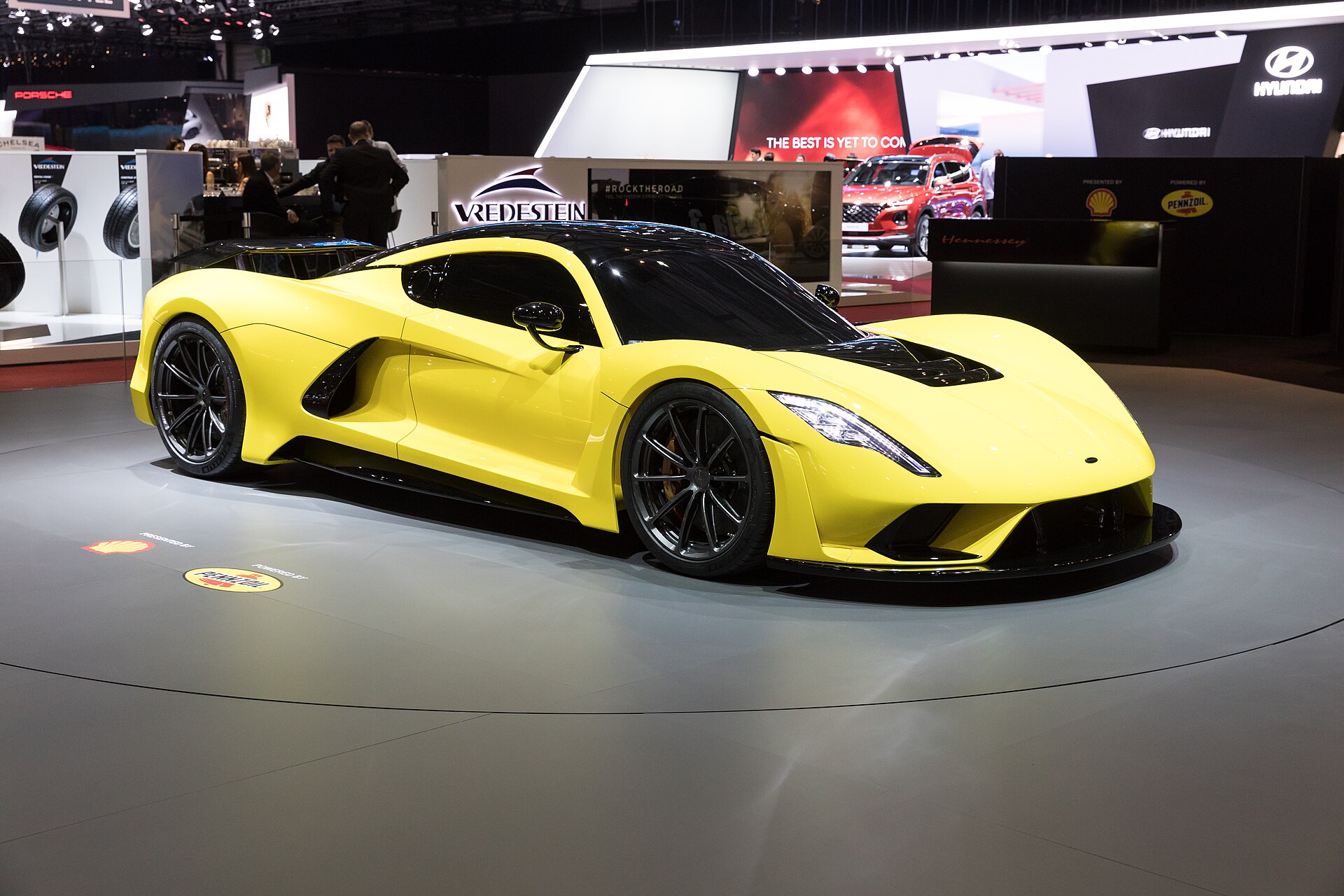
Chiron Super Sport 300+ vs Venom F5 vs Tuatara — who really holds the top-speed crown?
The top-speed war never ends because it’s not just about physics—it’s about definition. “Fastest production car” can mean:
- fastest one-way verified top speed
- fastest two-way average (out-and-back, to cancel wind/slope)
- fastest customer car (not a prototype)
- fastest with independent timing and transparent data
- fastest on a public road vs a private proving ground vs an oval
So before we crown a king, we need a fair rulebook.
1) The benchmark: what counts as a “real” record?
In the modern era, the most credible attempts usually share four ingredients:
- Two-way runs (same day, opposite directions)
- Independent instrumentation (GPS/VBOX, radar, verified telemetry)
- A production-spec car (or clearly declared prototype status)
- Transparent reporting (data logs, methodology, third-party witnesses)
When any of these are missing, the number may still be impressive—but the crown becomes debatable.
2) Bugatti Chiron Super Sport 300+: the first to break 300 mph — but with an asterisk
Let’s start with the most famous number of the last decade: 304.773 mph / 490.484 km/h.
- Bugatti’s 300+ project is documented as breaking the 300 mph barrier with Andy Wallace at Ehra-Lessien.
- Multiple sources also note a key point: the headline 304.773 mph run was one direction, not a two-way average.
- Separately, Bugatti lists the customer Chiron Super Sport 300+ / Super Sport as 440 km/h top speed in “production” form.
What this means:
- If your definition is fastest verified one-way top speed, Bugatti is the strongest case inside this trio.
- If your definition demands a two-way average, Bugatti’s famous 490.484 km/h number doesn’t qualify under the strictest “out-and-back average” standard.
Why the Chiron approach works: brute stability + aero refinement + tire science. Wired’s deep dive highlights how critical the bespoke Michelin tires and aero changes were for that run.
3) SSC Tuatara: the most “record-formatted” proof — and the comeback story
The Tuatara’s record narrative is basically a case study in why transparency matters.
The cleanest validated figure: the two-way average
SSC published a Racelogic-certified result for January 2021:
- Run 1 max: 279.7 mph (450.1 km/h)
- Run 2 max: 286.1 mph (460.4 km/h)
- Two-way average: 282.9 mph (455.3 km/h)
That’s the kind of “out-and-back average” number record purists want—measured with Racelogic VBOX equipment and publicly reported.
The faster “single run” number (also independently logged)
In May 2022, SSC reported a 295.0 mph (474.8 km/h) top speed recorded with dual VBOX systems, with additional oversight measures described in their release.
Hagerty covered the same 295 mph result as verified.
What this means:
- If your definition is fastest two-way average among these three, the Tuatara’s 282.9 mph average is the strongest “record-style” claim.
- If your definition is fastest independently logged top speed (single run) among these three, Tuatara’s 295 mph is huge—but still below Bugatti’s 304.773 mph headline.
Also note the context: this was a “credibility rebuild” after earlier controversy—SSC itself has acknowledged problems with the initial 2020 attempt and re-ran the tests.
4) Hennessey Venom F5: the 300+ mph promise — still waiting for the public receipt
The Venom F5 is built for the 300+ mph club. But in the “who holds the scepter?” debate, it currently has a simple issue:
There isn’t a widely published, independently verified 300+ mph top-speed result yet (as of the sources available).
What we do have:
- Hennessey publicly stated plans for the Venom F5 to exceed 300 mph (timed around 2024 planning and messaging).
- Documented performance achievements exist (e.g., a half-mile record listed on the model page summaries), but those are not the same thing as a top-speed crown.
What this means:
Right now, the Venom F5 is the challenger with the clearest intent, but it doesn’t “hold the throne” until it posts a transparent, independently measured top-speed number that meets commonly accepted record criteria.
(And yes—tires, runway length, conditions, and data transparency will matter as much as horsepower.)
5) So… who holds the crown really?
It depends on the rule you choose. Here’s the fairest way to answer:
If you mean “fastest verified absolute top speed (single direction) among these three”
Winner: Bugatti (304.773 mph / 490.484 km/h) — verified and widely documented, but achieved as a one-way run.
If you mean “fastest two-way average with third-party instrumentation among these three”
Winner: SSC (282.9 mph / 455.3 km/h two-way average) — this is the most “record-formatted” published result here.
If you mean “who is closest to a true 500 km/h+ verified production claim”
Nobody (yet)—at least not with the same level of broadly accepted, fully transparent verification in the materials above. Bugatti’s famous run is ~490.5 km/h; Tuatara’s clean public results are below that; and the F5’s 300+ mph run is still pending in public record terms.
6) Reality check: the crown may have moved outside this trio
If we widen the lens to “fastest production car in the world” as of late 2025 reporting, multiple reputable outlets reported the Yangwang U9 Xtreme hitting 308.4 mph (496.22 km/h) at Papenburg—surpassing Bugatti’s 2019 headline speed.
Whether everyone in the enthusiast community accepts that as the definitive “production” benchmark will come down to the same arguments (production definition, spec, repeatability, transparency). But it’s a major development in the speed narrative.
7) Why top speed is becoming harder (and more expensive) to “prove”
Even if you have the power, modern top-speed validation is bottlenecked by:
- tires (certification, heat, centrifugal forces)
- runway length & venue access (safe, legal, repeatable)
- stability engineering (aero + suspension + control systems)
- data credibility (independent logging, publishable methodology)
That’s why fewer brands chase the number publicly—and why when they do, it becomes a media event.
If you were writing the rulebook, what should count as “the real crown”?
- Fastest single top speed (one-way)
- Fastest two-way average (out-and-back)
- Fastest customer-delivered car, stock spec, independent data only
Drop your definition in the comments—and tell me which car you believe is most likely to deliver a clean, undeniable 500 km/h+ attempt next: Chiron’s successors, the Venom F5 program, or SSC’s next run.
Related reads: Bugatti Tourbillon · Bugatti History · Bugatti Divo