Bugatti Divo: Redefining Hypercar Dynamics
Introduction — A Different Kind of Bugatti Bugatti is traditionally associated with one thing: top speed.
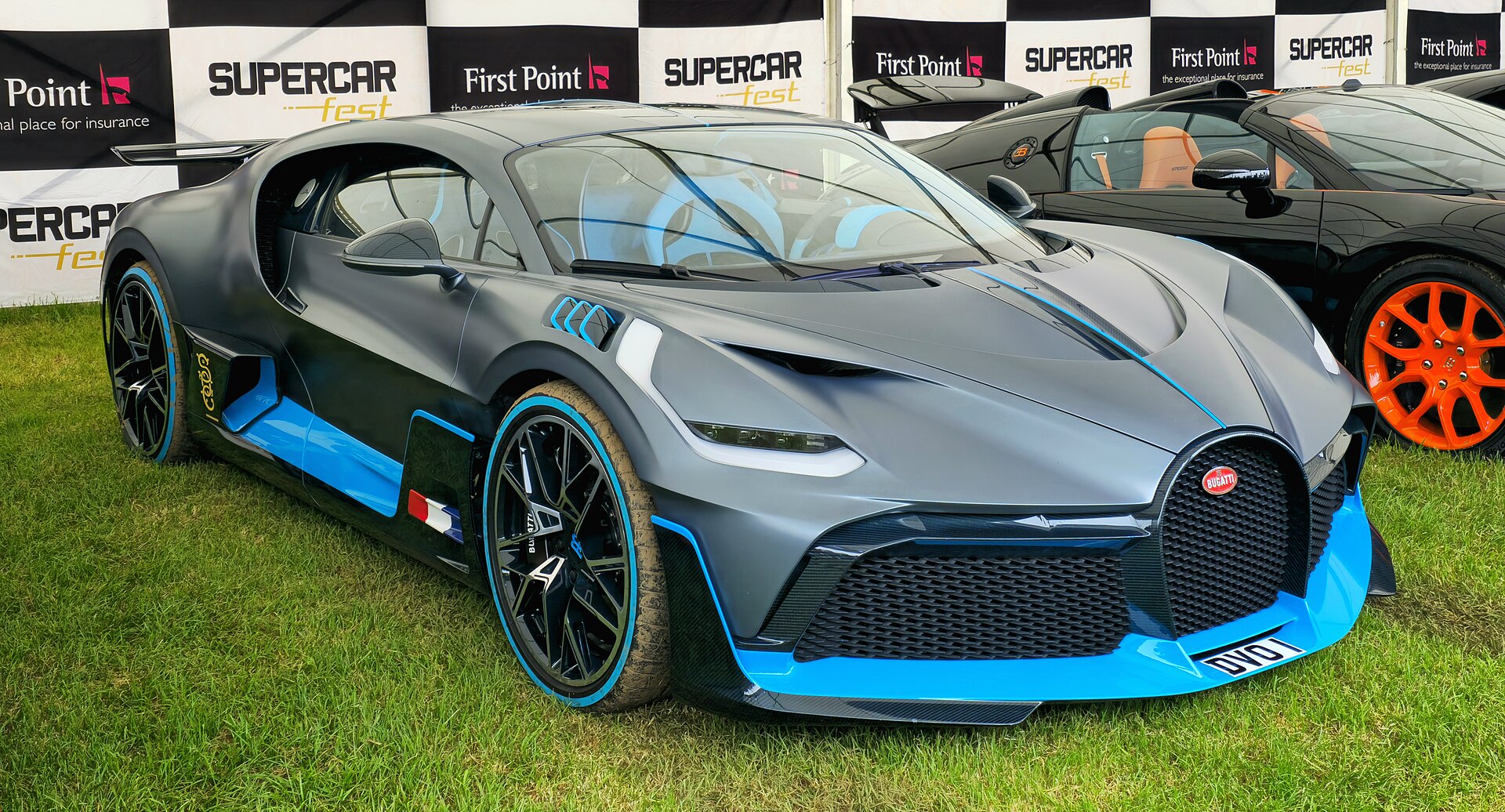
Introduction — A Different Kind of Bugatti
Bugatti is traditionally associated with one thing: top speed. For decades, the brand has pursued straight-line dominance — breaking records, redefining what is mechanically possible, and building cars whose primary purpose was to move as fast as physics would allow. The Bugatti Divo is different. It is not about top speed. It is about control. The Divo represents a philosophical shift inside Bugatti: a move away from pure velocity and toward dynamic performance, cornering precision, and driver engagement. It is Bugatti’s first attempt to answer a question it had never seriously asked before:
What happens if a Bugatti is built for corners instead of records?
1. From Chiron to Divo: A Change in Priorities
The Divo is based on the Bugatti Chiron platform, but it is not a Chiron variant in the traditional sense. It is a reinterpretation. Bugatti engineers took the Chiron — one of the most stable, powerful, and complex cars ever built — and deliberately changed its priorities. They focused on:
- Reducing weight
- Increasing downforce
- Sharpening response
- Improving lateral grip
- Enhancing driver feedback
The result was a car that is:
- Slower in a straight line
- Faster on a circuit
- More demanding
- More communicative
In other words: more alive.
2. Aerodynamics: Sculpting Air for Stability
The Divo produces significantly more downforce than the Chiron. This is achieved through:
- A redesigned front splitter
- Larger front air intakes
- Extended side sills
- A fixed rear wing
- A longer rear diffuser
- Optimized underbody airflow
These changes increase aerodynamic load, especially at high speed, pressing the car into the road and allowing higher cornering speeds. The car is not shaped for beauty. It is shaped for air. That is why the Divo looks more aggressive, more angular, more technical than the Chiron. Every surface exists to control airflow.
3. Weight Reduction: Fighting Mass in a 1,500 HP World
One of the main challenges of the Divo was weight. The Chiron is heavy — not because of poor engineering, but because controlling 1,500 horsepower safely requires enormous structural strength, cooling systems, and mechanical robustness. Bugatti engineers managed to remove significant mass by:
- Using lighter wheels
- Reducing interior insulation
- Simplifying trim
- Using lighter materials in selected components
Even small reductions matter at this level. In a hypercar, weight is not just mass — it is inertia, braking distance, tire load, and heat generation. Reducing weight improves everything.
4. Suspension and Chassis Tuning
The Divo uses a retuned suspension system with:
- Stiffer springs
- Revised dampers
- Sharper steering calibration
- More aggressive electronic control
The goal was not comfort. The goal was clarity. The Divo is meant to communicate load transfer, grip limits, and vehicle behavior more directly to the driver. It is still a Bugatti — refined, controlled, and civilized. But it is no longer distant.
5. Why the Divo Exists
The Divo exists for a very specific type of customer. Not the one who wants to own the fastest car. But the one who wants to drive the fastest car. It is a car for:
- Collectors who also drive
- Owners who value feedback over numbers
- Enthusiasts who understand physics
- Drivers who enjoy precision more than spectacle
The Divo is not meant to impress others. It is meant to satisfy its owner.
6. Cultural Meaning: A Turning Point for Bugatti
The Divo marks a turning point. It shows that Bugatti is no longer defined solely by:
- Speed
- Luxury
- Excess
It is now also defined by:
- Handling
- Control
- Engineering nuance
It signals a maturation of the brand. Bugatti no longer needs to prove that it can be the fastest. Now it wants to prove that it can be the best.
Conclusion — Mastery Over Power
The Bugatti Divo is not about dominating physics. It is about cooperating with it. It transforms overwhelming power into something usable, controllable, and meaningful. It is not a missile. It is a scalpel. And that is why the Divo is one of the most important Bugattis ever built. Not because it is the fastest. But because it is the most thoughtful.
Bugatti Divo — Technical Specifications
Bugatti Divo: manufacturer Bugatti Automobiles; production years 2018–2020; production units 40; layout mid-engine, all-wheel drive; engine 8.0-liter quad-turbocharged W16 producing 1,500 hp at 6,700 rpm and 1,600 Nm of torque, 0–100 km/h in approx. 2.4 s, 0–200 km/h in approx. 6.1 s, top speed limited to 380 km/h for increased downforce, transmission 7-speed dual-clutch automatic; chassis carbon fiber monocoque with carbon composite body panels; kerb weight approx. 1,960 kg; suspension double wishbone front and rear with adaptive dampers; brakes carbon-ceramic discs with 8-piston front and 6-piston rear calipers; aerodynamics significantly revised high-downforce package with fixed rear wing, larger diffuser and optimized front aero producing up to 90 kg more downforce than the Chiron, no variable top-speed mode.
Related reads: Chiron Super Sport 300+ vs Venom F5 vs Tuatara · Bugatti Tourbillon · Bugatti History